book reviews
Book reviews for scholastic growth; read material from the world's top educators with our collection of novels, memoirs, biographies, philosophical texts and textbooks.
When Learning Feels Like War: A Child’s Hidden Struggle With Words
Every morning, the school bell sounded like the beginning of a battle. For most children, school was a place of friends, laughter, and learning. But for nine-year-old Arman, it felt like stepping onto a battlefield where he was already losing.
By imtiazalamabout 3 hours ago in Education
Short Tempers and Legal Threats: UK Teachers Report Rise in Problem Parents. AI-Generated.
A growing number of teachers in the United Kingdom are reporting confrontations with parents, including displays of short tempers, verbal abuse, and even threats of legal action, according to a recent survey conducted by the National Education Union (NEU). The findings highlight increasing pressure on school staff as they navigate complex interactions with parents while maintaining standards of education and safeguarding children. The NEU survey, which collected responses from over 15,000 teachers across England, Wales, Scotland, and Northern Ireland, found that more than 60% of respondents had experienced at least one incident of aggression or intimidation from parents over the past academic year. Around 15% of teachers said they had faced explicit threats of legal action, often over disciplinary decisions, homework disputes, or perceived issues with the school environment. Many educators report that the rise in confrontations is being driven by heightened stress among parents, who face pressures from work, finances, and social media scrutiny. “Parents today are under immense pressure, and unfortunately, that sometimes spills over into aggressive behavior towards staff,” said one teacher from a primary school in Manchester. “We try to engage constructively, but the short tempers can make communication extremely difficult.” The survey also revealed that secondary school teachers are disproportionately affected. Staff members teaching older students reported more frequent and intense confrontations, often related to disciplinary matters such as detentions, exam performance, or social media incidents involving students. Primary school teachers, while facing fewer threats, still reported incidents that caused stress and anxiety. Union leaders say that this trend is concerning because it affects both teacher wellbeing and the wider learning environment. “When staff feel intimidated or threatened by parents, it impacts their ability to teach effectively,” said Mary Bousted, co-general secretary of the NEU. “Schools are meant to be safe spaces for children and adults alike, and this rise in aggression undermines that principle.” Schools have also reported an increase in formal complaints lodged by parents over relatively minor issues. While many complaints are resolved amicably, others escalate to involve external legal advice, putting further strain on teachers and school leadership teams. Legal threats, even when ultimately unsubstantiated, can be intimidating and emotionally draining for staff. Experts suggest that social media and the ease of online communication have contributed to the rise in confrontations. Parents can quickly voice grievances publicly or privately, sometimes without full understanding of school policies or procedures. This has added a new layer of complexity to teacher-parent interactions and has occasionally led to public criticism of staff. Government officials acknowledge the challenges faced by educators. The Department for Education (DfE) has urged schools to adopt clear policies on parental conduct and to provide support for staff experiencing aggression. Guidance includes formal reporting mechanisms, training on conflict resolution, and consultation with local authorities or unions when necessary. Some schools have introduced proactive measures to reduce tensions, such as regular parent-teacher meetings, mediation services, and clear communication of rules and expectations. In addition, mental health support for both students and staff is being emphasized to mitigate stress-related behavior. Nevertheless, union representatives warn that systemic pressures—such as increasing class sizes, tighter budgets, and staff shortages—may exacerbate conflicts between teachers and parents. “We are asking parents to work with us, but they also need to understand the pressures on staff,” Bousted said. “Respectful communication is essential for a healthy school community.” The survey underscores the importance of balancing parental involvement with professional boundaries. While parental engagement is vital for student success, teachers are calling for greater recognition of their professional authority and protection from intimidation. As the new school term progresses, education leaders are monitoring incidents closely, emphasizing training, and seeking collaboration between parents and staff. Ensuring that schools remain safe, respectful, and supportive environments for both students and teachers is now a critical priority in the UK education system. The NEU survey concludes that tackling this issue will require a combined effort from parents, school leaders, and policymakers to reinforce positive engagement, protect teachers from aggression, and maintain a constructive environment for learning.
By Fiaz Ahmed about 5 hours ago in Education
My Heart Broke When Visa Crackdown Ended UK Dream, Says Afghan Coder. AI-Generated.
A 26‑year‑old Afghan software engineer has spoken of heartbreak after a recent tightening of the United Kingdom’s student visa policy dashed her hopes of studying in Britain, highlighting the impact of stricter immigration rules on individual lives and ambitions. Shahira Sadat, an IT graduate from Kabul with a degree in software engineering, had spent months preparing her application for a prestigious Chevening Scholarship—a UK government‑funded programme that supports future global leaders to pursue postgraduate study in Britain. She was shortlisted after securing offers from four UK universities, including University College London for a master’s in machine learning, a field at the cutting edge of artificial intelligence. “I put my heart into this journey,” Sadat wrote in a statement, describing how she treated each stage of the application process with seriousness and hope. She rewrote essays, endured sleepless nights refining her goals, and allowed herself to dream of studying, growing, and returning home equipped to make a positive contribution. When she received the interview invitation, she said, she felt immense joy and possibility. But that dream was cut short when the UK Home Office introduced a visa crackdown that suspended study visa applications from Afghanistan and other countries, including Cameroon, Myanmar and Sudan. The measure was part of a broader effort by Shabana Mahmood, the Home Secretary, to curb what officials describe as widespread abuse of student visa routes as a means to seek asylum in the UK. Critics contend the policy is overly broad and penalises legitimate applicants without distinguishing individual merit. As a result, Sadat’s Chevening application was terminated, and she was informed that her opportunities to take up offers from British universities were revoked. “When I read the cancellation email, my heart broke,” she said, explaining that the devastation stemmed not just from losing an academic opportunity, but from the collapse of hope and hard work tied to it. A Double Loss for Afghan Women For Afghan women in particular, the impact of the UK visa policy change is especially acute. Since the Taliban’s return to power in 2021, formal educational opportunities for women and girls in Afghanistan have been drastically curtailed, with many institutions barred to female students. In this context, scholarships like Chevening have represented far more than academic advancement—they have symbolised rare pathways to education, empowerment and global connection. Sadat noted that while she was fortunate to complete her undergraduate degree before major restrictions were imposed domestically, many other Afghan women have faced repeated barriers. For them, international study offers both academic and existential hope, a chance to sustain dreams that have been closed off at home. “This is not just a scholarship for me,” she told reporters. “It’s a symbol of trust in future leaders from different parts of the world. It’s hope when there is so little left.” Her plea included a call for the UK government and Chevening programme administrators to reconsider the visa suspension for Afghan applicants, emphasising that education should act as a bridge rather than another barrier. UK Policy Context and Debate The UK government’s visa action is part of a wider shift toward tighter immigration control. Officials argue that student visa routes have increasingly been exploited as backdoors for asylum claims, placing pressure on the immigration system. In recent debates, the Home Office rejected proposals to exempt exceptional students, including Chevening candidates, from the toughest aspects of the policy—even after criticisms from lawmakers and civil society. Opponents of the policy suggest that it undermines the UK’s longstanding reputation as an open destination for international education and collaboration. They point out that the volume of Afghan students affected is very small relative to the total number of student visas issued, and that blanket bans risk harming individuals with clear academic merit and genuine intentions to study and return home. A petition calling for reversal of the ban has garnered support from students and advocacy groups alike, underscoring the human impact of the rules. Personal and Broader Impacts Sadat’s experience underscores how immigration policies can reverberate far beyond abstract statistics and political debates, affecting real people’s lives and futures. For aspiring students like her, the opportunity to study abroad represented not just professional development, but a chance to break cycles of limitation and contribute to positive change in their communities. In her message, she reflected on how the dream of studying in the UK was about more than just academic credentials; it reflected a belief in possibility, connection and global investment in emerging leaders. Losing that opportunity was not only a personal setback but a symbolic loss of hope. It serves as a poignant reminder that behind every visa application are stories of ambition, sacrifice and human aspiration—stories that risk being overlooked in wider policy discussions about immigration and border control. Sadat’s plea resonates with many who see education as a universal right and a vital tool for empowerment, especially for those from countries where access to learning opportunities has been severely restricted. As the debates around UK visa rules continue, her story may come to represent the costs borne by individuals caught between policy and promise.
By Fiaz Ahmed a day ago in Education
Peter Ayolov’s Publications
Peter Ayolov is a media theorist and lecturer at Sofia University 'St. Kliment Ohridski', Faculty of Journalism and Mass Communication. His research focuses on the political economy of communication, propaganda models, digital media, narrative structures, and the transformation of language in contemporary technological environments. His work examines how digital communication systems organise dissent, amplify outrage, and reshape the relationship between media, public opinion, and political power.
By Peter Ayolova day ago in Education
The Digital Nomad Blueprint. AI-Generated.
In a not-so-distant future, where technology thrived and the world became increasingly connected, many people chose to break free from traditional lifestyles. Among them was a young woman named Mia. Mia was a digital nomad, traveling the globe with her laptop, working remotely while exploring new cultures. Her heart was set on living life to the fullest, but she was also searching for something greater—a sense of purpose.
By Hamad Afridi 3 days ago in Education
Justice Begins With Character
Conscience, Character, and Justice While laws and institutions are necessary to maintain order, they alone cannot create a truly just society. The foundation of justice is built within the hearts and minds of people, long before legal decisions are made or courtroom debates occur.
By A.Petrovski4 days ago in Education
The Value of Hard Work
Hard work is one of the most important qualities for success in life. It means putting effort, time, and dedication into our tasks and responsibilities. Many people dream of becoming successful, but success does not come easily. It requires patience, determination, and continuous effort. Hard work helps people achieve their goals and build a better future. It also teaches discipline and responsibility, which are necessary for personal and professional growth.
By aadam khan8 days ago in Education
The World’s Safest Countries: Where Doors Stay Unlocked and Police Rarely Carry Guns
In many parts of the world, locking doors, installing security cameras, and relying on heavily armed police forces are everyday realities. However, there are a few countries where life feels very different. In these places, crime rates are extremely low, communities are tightly connected, and trust among citizens is remarkably high. As a result, people often leave their doors unlocked, and in some cases, police officers patrol the streets without carrying firearms.
By Irshad Abbasi 8 days ago in Education
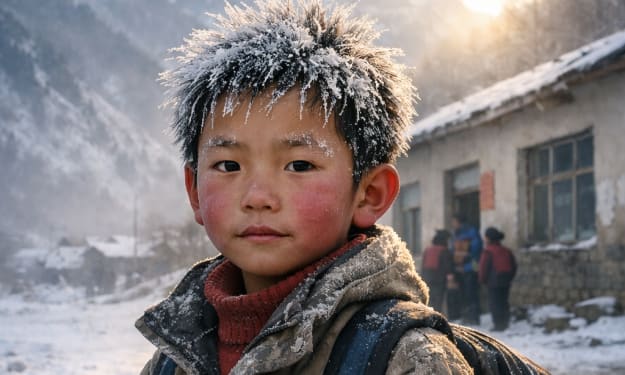
Ice Boy: The Frozen Morning That Changed a Child’s Destiny
In the winter of 2018, a single photograph from a remote village in China shocked the world. The image showed a young boy with hair and eyebrows frozen white from the bitter cold, his cheeks red and cracked, yet standing firmly in a classroom. That boy became known globally as “Ice Boy.” His real name was Wang Fuman, and in just one year, his life changed in ways no one could have imagined.
By Irshad Abbasi 10 days ago in Education
The “Slave Bible”: The Controversial Holy Book Designed to Prevent Rebellion
In the early nineteenth century, a heavily edited version of the Bible was printed with a singular and deeply troubling purpose: to control enslaved Africans and discourage rebellion. Today, this rare publication—commonly known as the “Slave Bible”—is one of the most controversial religious texts in history. Only four copies are known to exist in the world.
By Irshad Abbasi 10 days ago in Education
The Little Library on Maple Street. AI-Generated.
On a quiet street lined with tall oak trees and painted mailboxes, there was a tiny library that most people didn’t notice. It was called the Maple Street Library, and it was small—just a single room tucked between a bakery and a flower shop. But for anyone who walked through its little glass doors, it was a place where magic happened.
By Waleed khan10 days ago in Education