Latest Stories
Most recently published stories in Feast.
Traditional Christmas Food
Austria Austrians sit down on Christmas Eve to dishes prepared with carp. On Christmas Day the choice is either roast goose or roast duck with red cabbage and dumplings. Dessert includes Christmas cookies such as Lebkuchen (gingerbread) or Vanillekipferi (vanilla crescents).
By Rasma Raisters3 months ago in Feast
Delectable Spanish Tapas
Tapas are the main part of the signature cuisine of Spain. They are creative and delicious appetizers. Albondigas are juicy meatballs in a rich tomato sauce flavored with cumin and paprika. The ground meat is a mixture of beef and pork. Some like to add a small piece of hard-boiled egg or olive wrapped in each meatball.
By Rasma Raisters3 months ago in Feast
Is Cheese as Addictive as Drugs?
According to Dr. Neal Barnard, nutrition researcher, author, and adjunct professor at the George Washington University School of Medicine, cheese can be addictive. He believes it so much that he wrote an entire book on the subject called The Cheese Trap. In the book, Barnard says that cheese contains some of the same addictive ingredients as some drugs, and he even refers to cheese as “dairy crack.”
By Margaret Minnicks4 months ago in Feast
Rice Without Borders
The kitchen is a place where borders blur; it has always been. Ingredients travel, techniques adapt, and dishes evolve as they move from one culture to another. Rice, in particular, has a way of absorbing the flavors and traditions of the places it touches.
By Angela Ash4 months ago in Feast
Red Velvet Cake was never meant to be Red
Red Velvet Cake is a moist sweetest red-dish dessert that has ever been tasted. However, Red velvet cake wasn’t meant to be the color red. Red velvet cake is not red due to insufficient or poor-quality food coloring, using the wrong type of cocoa powder, or incorrect oven temperature and acidity balance. The cocoa can overpower the color, so using a high-quality red food coloring, natural (not Dutch-processed) cocoa, and an acidic liquid like buttermilk is crucial, as is baking at the correct temperature. In the 19th century and into the early 20th, bakers described certain cakes as “velvet” simply because their crumb was more delicate than traditional cakes. These cakes often used cocoa powder (or almond flour or cornstarch) instead of rich chocolate bars or heavy flourIn its original form, red velvet’s reddish hue was subtle, a warm, slightly reddish-brown the result of natural cocoa + acidic ingredients + baking chemistry. That version of red velvet was defined as much by its texture (“velvet” crumb) and mild cocoa flavor as by its color. When some of these early “velvet cocoa” or “mahogany” cakes used cocoa powder plus acidic ingredients (like buttermilk or vinegar), bakers noticed the result — a cake with a faint reddish or mahogany-tinged hue. Over time, as recipes evolved and merged with darker cakes (like devil’s food), what we now call red velvet emerged.
By Gladys W. Muturi4 months ago in Feast
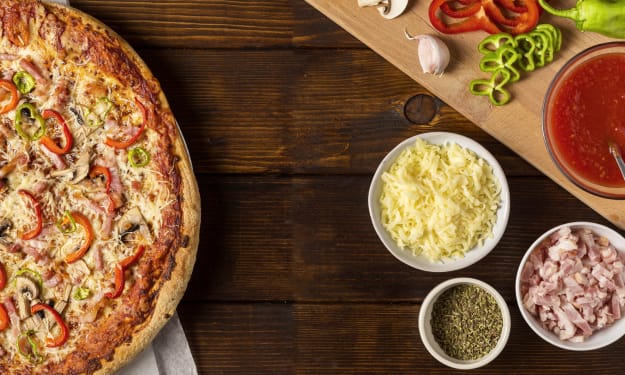
Perfect Sauce Pairings for Every Type of Pizza Crust
The base of pizza holds the same level of importance as the entire range of toppings. The sauce you choose for your pizza serves as the main factor that determines the quality of your entire pizza experience. The right sauce selection for your pizza base creates a major difference between a traditional slice and deep-dish pizza, and other unconventional options.
By The Pizza Box Banksia Grove4 months ago in Feast