
I Built a System for My Money and Time Then Realized I Was the Problem
Why optimization fails when you ignore energy, mood, and the limits of being human

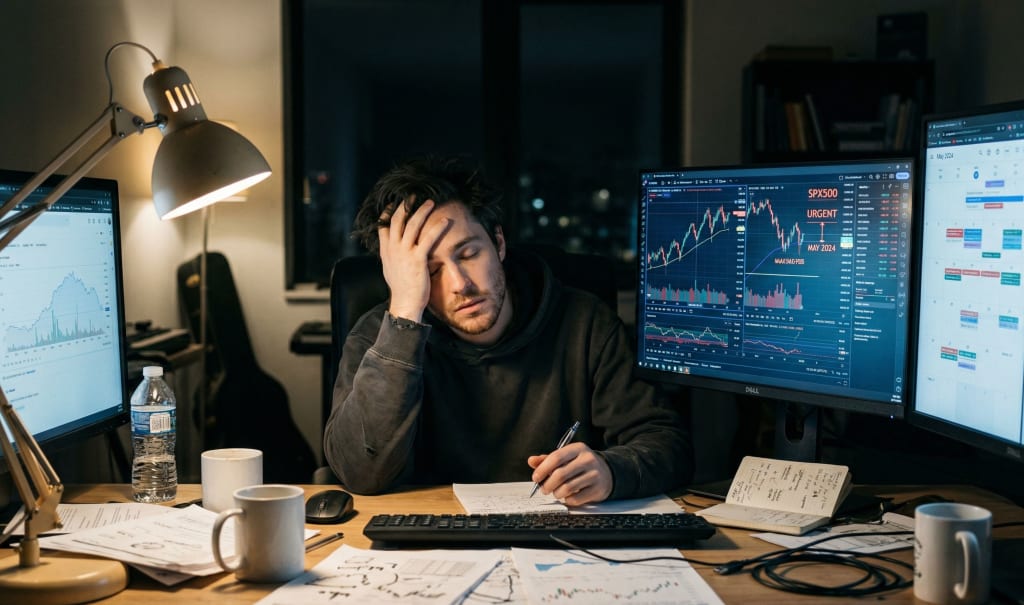
Three winters ago, I opened my banking app expecting to feel proud.
I had done everything “right.”
Spent less. Automated investments. Read the books. Followed the advice.
The number on the screen wasn’t bad.
That was the problem.
It was fine.
Not freedom. Not progress. Just… maintenance. Like running on a treadmill and calling it movement.
Later that night, I checked my screen time.
5 hours and 41 minutes.
That’s how long I’d spent on my phone while telling myself I was building a more disciplined life.
Money: under control.
Time: leaking everywhere.
Energy: gone.
That was the first moment I saw the gap clearly.
I had optimized the spreadsheet part of life.
I had completely ignored the human part.
The Way I Used to “Manage” My Life
For most of my 20s, my system was simple:
Work more.
Spend less.
Don’t overthink it.
I had a budget template at some point. I used it for a few weeks, then stopped. After that, I “tracked” things mentally, which is just a polite way of saying I didn’t track them at all.
I said yes to work because it felt productive.
I said no to social plans because they felt expensive.
On paper, I looked responsible:
Saving regularly
No reckless debt
Keeping expenses reasonable
But internally, it didn’t match:
Constant low-level anxiety about money
Guilt every time I spent on something non-essential
A weird feeling that I was doing everything right and still going nowhere
Every few months, I’d try to fix it.
New system.
New goals.
New burst of motivation.
Same result.
The Moment Optimization Started Feeling Wrong
The turning point wasn’t dramatic.
It was a Sunday.
No work. No plans. No pressure.
And I didn’t know what to do.
I sat there with coffee, scrolling, half-aware that I was wasting time and half-unable to stop.
By evening, I felt worse than if I had just worked all day.
That’s when it clicked:
I had accidentally turned productivity into my only way of feeling okay.
If I wasn’t optimizing, improving, or earning, I felt like I was falling behind.
That’s not discipline. That’s dependency.
So I Built a System for Everything
Instead of chasing motivation again, I decided to treat my life like a system.
Not just money. Not just time.
Everything.
I gave myself one year to figure out something that actually worked in real life—not just on paper.
It ended up breaking into three parts:
Money
Time
Psychology
And the last one turned out to matter the most.
1. Money: From Control to Structure
I stopped budgeting in detail.
Instead, I split my money into three simple buckets:
Future Me
Savings, investments, long-term goals. This happened automatically.
Present Me
Rent, food, bills—everything needed to run life.
Optional Me
The part I could spend freely without guilt.
That was it.
No constant checking. No overthinking every purchase.
If something came from the “optional” bucket, it was already decided. I didn’t need to debate it ten times.
The biggest change wasn’t financial.
It was mental.
I stopped negotiating with myself all day.
2. Time: Stop Pretending Every Hour Is Productive
Before this, I treated time like a to-do list.
Every evening was overloaded with things I “should” do.
Most of them didn’t happen.
Then I’d feel behind.
So I simplified it.
I stopped planning tasks and started labeling time:
Work (income)
Life maintenance (sleep, food, errands)
Growth (learning, writing, health)
Low-value time (scrolling, watching, doing nothing)
The last one mattered more than I expected.
Instead of pretending I wouldn’t waste time, I planned for it.
One hour of intentional “do nothing” is very different from three hours of accidental scrolling.
It removed the guilt.
And strangely, it reduced the total wasted time.
3. Psychology: The Part I Had Ignored for Years
This is where everything shifted.
I added a few simple rules:
No important decisions when I’m tired or emotional.
If something feels urgent, it probably isn’t.
No tying my self-worth to productivity.
Some days are slow. That doesn’t mean they’re failures.
One weekly check-in.
Not numbers. Just questions:
What worked?
What didn’t?
Where did I feel off?
Over time, patterns started showing up:
I made worse decisions when I slept less
I overworked when I felt uncertain
I wasted time when I avoided something uncomfortable
None of this was surprising.
But seeing it consistently changed how I reacted.
The Real Shift (It Wasn’t What I Expected)
About five months in, something small happened.
I bought a coffee and a pastry, sat down, and didn’t feel guilty.
That used to be rare.
Not because I couldn’t afford it, but because I always felt like I should be doing something more “useful.”
This time, I wasn’t thinking about it.
It fit inside the system
That’s when I realized the following:
The system wasn’t about control.
It was about permission.
Permission to spend.
Permission to rest.
Permission to not be “on” all the time.
What Actually Changed
Not everything.
But enough.
My savings rate improved without obsessing over it
I worked fewer hours, but more intentionally
My screen time dropped, mostly because I stopped lying to myself about it
More importantly:
I stopped feeling like I was constantly behind
I stopped treating every decision like a test
I stopped trying to act like a machine
What Didn’t Work
Some things didn’t magically fix themselves.
I still overplanned sometimes.
I still had unproductive days.
I still slipped back into old patterns.
And the system didn’t transfer perfectly to every part of life.
That idea—“once you fix one area, everything follows”—isn’t true.
Each area needs its own version of “simple enough to survive bad days.”
The Real Lesson
I started this thinking I needed better optimization.
Better tools. Better structure. Better discipline.
What I actually needed was something simpler:
A system that assumes I’m human.
That I’ll get tired.
That I’ll get distracted.
That I won’t always feel like doing the right thing.
Once I stopped fighting that, things started working.
Not perfectly.
But consistently enough.
If There’s One Thing Worth Taking From This
Don’t build systems for your best days.
Build them for your worst ones.
Anyone can be disciplined when everything is going right.
The real test is whether your system still works when you’re tired, distracted, or just not in the mood.
That’s where most systems break.
And that’s where the real ones prove themselves.
About the Creator
abualyaanart
I write thoughtful, experience-driven stories about technology, digital life, and how modern tools quietly shape the way we think, work, and live.
I believe good technology should support life
Abualyaanart
Keep reading
More stories from abualyaanart and writers in Futurism and other communities.
Your Website is a Ghost Town (and That’s Okay)
I finally did it. I followed the "expert" advice. I bought the domain, obsessed over a minimalist WordPress theme, and told myself that if I posted twice a week, the audience would eventually find me. I treated my blog like a Field of Dreams: if I built it, they would come.
By abualyaanart7 days ago in Futurism
The Fears of AI And How Much Fun It Can Be
ChatGPT has come a long way, as has AI in general. There are those people who are scared of it, and for understandable reasons. People fear that as technologies advance, they’ll be replaced in the workforce. Then, there are the fears that AI could evolve into something that brings us to the brink of extinction.
By The Man Behind The Maska day ago in Futurism
Food Service Pasta Market Overview: Product Types, Distribution & Demand Forecast
According to IMARC Group's latest research publication, global food service pasta market size reached USD 5,355.2 Million in 2025. Looking forward, IMARC Group expects the market to reach USD 6,724.8 Million by 2034, exhibiting a growth rate (CAGR) of 2.60% during 2026-2034.
By sujeet. imarcgroupa day ago in Futurism




Comments
There are no comments for this story
Be the first to respond and start the conversation.