science fiction
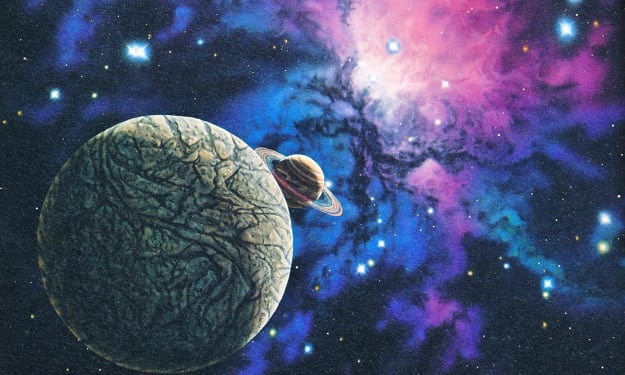
The bridge between imagination and technological advancement, where the dreamer’s vision predicts change, and foreshadows a futuristic reality. Science fiction has the ability to become “science reality”.
Al Hirschfeld's Legendary 'Star Trek' Illustrations
Iconic illustrator Al Hirschfeld was drawn to Star Trek. His first vision of the classic Star Trek came at the behest of TV Guide who commissioned him in 1966 to be part of a review of the premiere. The Image was of Kirk and Spock holding ray guns and what looks like a fluorescent lightbulb. Hirschfeld Hirschfeld said his contribution was to "take the character, created by the playwright, script or portrayed by the actor, and reinvent it for the reader".
By Frank White9 years ago in Futurism
The Legacy of Hard Science Fiction
Hard science fiction embodies the essence of the genre, though science fiction does not always adhere to its principles. They do not call it science fiction for nothing, though sometimes it might seem that way. The mushy physics, galaxy-hopping adventures, and even outright mysticism of Star Wars and Star Trek may hark back to the pulp science fiction of E. E. "Doc" Smith and Edmond Hamilton, but they do not say a lot for the average level of science education among Hollywood producers. Nevertheless, there is a long and healthy tradition of more scientifically faithful science fiction, running from Jules Verne and H. G. Wells through writers of the 1930s, 1940s, and 1950s (think of Arthur C. Clarke and Hal Clement) and on into the 1960s and 1970s in the hands of Larry Niven, Gordon R. Dickson, and others. Hard science fiction stands for some readers as the true heart and soul of the genre, and it continues vigorously today, as is evidenced by a look at publications since the Golden Age of science fiction.
By John Foley9 years ago in Futurism
The Mind Job
It was past midnight when Detective Jensen received a thought from the Mental Larceny Division. A mind jobber had been busted. The huge cache of stolen memories would have to be read, as well as the jobber's mind. The download would take days, but would likely lead to breakthroughs in several of her cases. She thought about what particular memories, people, and places she was looking for more evidence on, and the computer recorded all faithfully. The systems would let her know when new evidence was available, at the speed of thought.
By David Hallquist9 years ago in Futurism
Write For OMNI Today
OMNI has now joined the Vocal platform, letting fans from all over the world contribute to the iconic brand. A staple in the science fiction, fantasy, and hard science community for the past 40 years, OMNI enables dreamers of today to become thought leaders of tomorrow.
By Futurism Staff9 years ago in Futurism
Can Science Fiction Predict the Future?
"Well, you know, William Gibson was writing about that in 1984." It's become a running joke among my friends that I say something like this every few months, usually when discussion turns to the increasingly science fictional resonances of our everyday world. Science fiction writers can be a prescient lot, by trade. But William Gibson, in particular, has a remarkable track record for what seems like genuine prophecy, starting with his very first short stories, published in—surprise—OMNI magazine.
By Glenn McDonald9 years ago in Futurism
As You Know Bob - I Don’t Exist
As you know Bob, I don’t exist—but I am, for all intents and purposes, immortal. You must have wondered many times of course just what is meant by the word "self." Certainly there is conscious awareness, but where does that awareness stand? What is its platform? Personality, as we understand it, is a combination of memory and action—declarative memory of the sort that tells you that Paris is the capital of France and it is procedural memory that enables you to ride a bicycle. Personality though? Well then, think of a unit of memory and a single star and personality is a vast and dense constellation of memories in the galaxy of your brain. Stars are born, the age, they flare and they die and as they orbit the center; those constellations change their form and spread… and there can be many constellations in that neural galaxy.
By Brett Davidson9 years ago in Futurism
The Third World War by Sir John Winthrop Hacket
Over 6,200 paperbacks line shelves in my apartment. My wife is an artist, and uses our apartment as her gallery. There was a fight for wall space and I recently lost a skirmish. My solution was logical. Consolidate and toss books that I have read which honestly I think is about 500 - 600. Part of my cathartic process is to write a quick review of the books I remember. Sometimes a quick skim ignites a memory of something particular I liked about the book. The Third World War by Sir John Winthrop Hacket was a sort of alternate reality novel, I remember reading in 1986 as a freshman in college. I must say there are some very detailed sections of, military briefings that can be skimmed through with no real impact. It seems still relevant these days with such uncertainty in American ideology and political stability.
By Arnold Seleskey9 years ago in Futurism
Franz von Paula Gruithuisen's Venus Science Fiction
The fascinating story of Franz von Paula Gruithuisen, a German astronomer who became prominent early in the nineteenth century, has inspired sci-fi writers to ponder exploring distant worlds like Mars and Venus. His attempts at explaining the wonders of space were filled with promise of mystery and awe. He was a fairly good observer who concentrated on the moon and the planets, but his imagination was, somewhat vivid. For instance, he discovered what he believed to be an artificial structure on the moon and described it as a collection of dark, gigantic artistic ramparts.
By Izzy Erlich9 years ago in Futurism
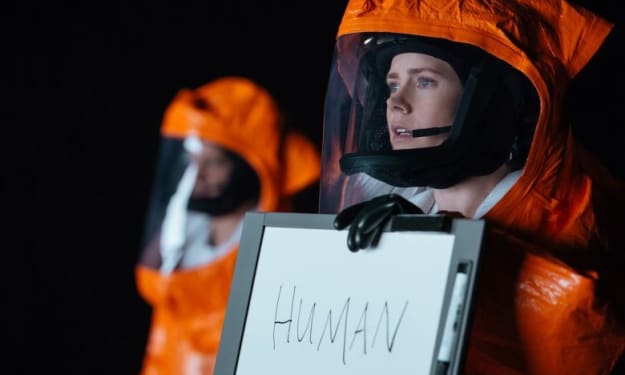
Mental Time Travel: Is the Plot of Arrival Coherent?
Time travel is a bit of a trope in sci fi. The device has been used in literature since ancient times, with Hindu mythology portraying people going far into the future. This kind of travel isn’t logically impossible – in fact, with Einstein’s discovery of relativity, we must accept this discrepancy between personal and external time as a necessary feature of reality. The faster an object travels, the slower its time moves: ISS astronauts returning from missions have aged slightly less than had they remained on earth (due to different accelerations).
By Ed Venables9 years ago in Futurism
The Mightiest Motion Picture of Them All
After several years of production, design and location shooting, Walt Disney released his first Hollywood produced live-action motion picture in 1954. If the advertising was to be believed, it was in fact the mightiest motion picture of them all. Considering that the film was 20,000 Leagues Under the Sea, this is a credible claim.
By Cory Gross9 years ago in Futurism