science fiction
The bridge between imagination and technological advancement, where the dreamer’s vision predicts change, and foreshadows a futuristic reality. Science fiction has the ability to become “science reality”.
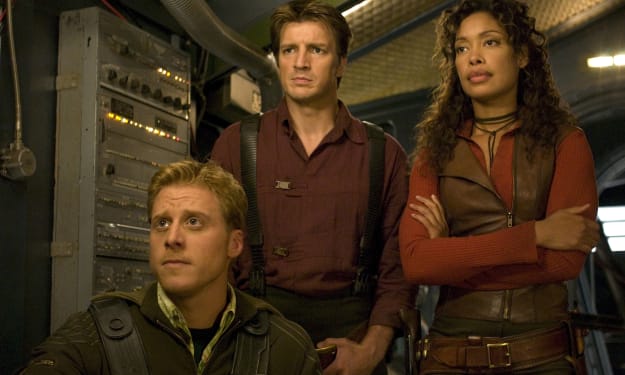
Best Sci-Fi & Fantasy Movies of 2016
Deciding on the best sci-fi movies of 2016, with the exception of a few original films, was more about our favorite franchises than actual sci-fi qualifications. While Star Trek Beyond did not break any new ground fundamentally, the destruction of the Enterprise juxtaposed with Captain Kirk battling aliens from a vintage motorcycle is not to be missed. Then, on the other end of the spectrum, was the amazing film Arrival. While it may seem like an update of Jodie Foster's 1997 Contact, it is not. It is the Interstellar of 2016 and reinforces the need for original sci-fi fare mixed with the annual sequels, reboots, and updates.
By Frank White9 years ago in Futurism
Is Vernor Vinge's Singularity The End Of Days?
Vernor Vinge is a former San Diego State University math professor and a Hugo award-winning science fiction novelist. He is best known for his novels and novellas A Fire Upon the Deep (1992), A Deepness in the Sky (1999), Rainbows End (2006), Fast Times at Fairmont High (2002), and The Cookie Monster (2004). In Vinge's 1993 essay "The Coming Technological Singularity" Vinge wrote, "Within thirty years, we will have the technological means to create superhuman intelligence, also referred to as the singularity. Shortly after, the human era will be ended." The singularity, in essence, is the end of days.
By Joshua Samuel Zook9 years ago in Futurism
Thought Provoking Political Dystopian Books
If 2016 can teach us anything, it is that fiction can become reality. As a common rule, humanity strives for constant progress; movement towards a superior standard of living. But what happens when everything goes wrong instead? As humans we constantly question the 'what if' scenario. The dystopia genre is the anthesis of utopia and is a mainstay of science fiction writing over the years. The genre has taken the 'what if' to speculate about a future where every aspect of life has taken a distinct and frightening turn for the worse. Within the classic dystopian genre there lies the more thought provoking political dystopian theme. A typical tale involves a future society with an oppressive government that demands conformity. Sometimes this is in the wake of a disaster that has befallen humanity or society as a whole has taken a dark and oppressive turn for the worse. Often times there are no beautiful endings in these political dystopian books, only a joyless and dysfunctional future with glimpses into the light.
By George Gott9 years ago in Futurism
Dan Simmons' Hyperion
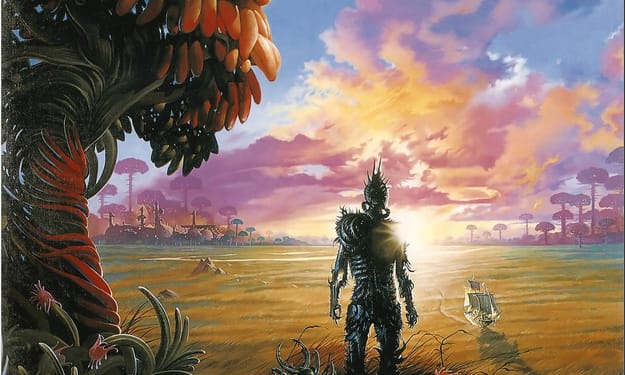
In Hyperion, Dan Simmons accomplished the creation of one of the most beautifully rendered science fiction universes ever encountered in the readers mind. Hyperion tells the story of a group of seven strangers on their way to the distant world of Hyperion. Earth is dead, but humanity has spread among the stars in a web of worlds (connected by an FTL transportation system called The Web) known as the Hegemony. There are worlds humans live on which are not a part of the Hegemony, but that number is in constant decline as the benefits of conformity outweigh the benefits of independence. Somewhere in the galaxy, a self-aware collective of artificial intelligence known as the TechnoCore have made their home, helping the Hegemony to care for its technology. Also spread in between the stars are the Ousters, “barbarians,” who roam in Zero-G mobile cities and flotilla, attacking Hegemony targets whenever the opportunity presents itself.
By Joshua Samuel Zook9 years ago in Futurism
Computer, Obey Me! Hollywood’s Best Sci-Fi Computer & Robot Voices
“I'm afraid, Dave. Dave, my mind is going. I can feel it. My mind is going. There is no question about it. I can feel it. I can feel it. I can feel it. I'm afraid. Good afternoon, gentlemen. I am a HAL 9000 computer. I became operational at the H.A.L. plant in Urbana, Illinois on the 12th of January 1992. My instructor was Mr. Langley, and he taught me to sing a song. If you'd like to hear it I can sing it for you.” - HAL 9000
By Will Stape9 years ago in Futurism
The Suitcase of Amontillado
First and foremost, dear reader, be assured the fault for his end was not mine, but Fortunato’s. I am the most tolerant of nobles and thoroughly acquainted with the travails of modern travel; I well know the occasional loss of a bag to the random vagaries of moronic computerized airport luggage-tracking systems is only to be expected for one whose obsession requires him to travel widely, but Fortunato’s tracking system, Fortunato’s tracking system was the worst of them all, an obscene beast that couldn’t track a bald man through a crowd of beehive-hairdoed Sixties chanteuses, and I was forever forced into its vile clutches by the malign fact his airport was the only one in the Montresor family’s ancient seat.
By Jeffrey A. Corkern9 years ago in Futurism
Universe Collecting
“People still read books! This generation has hope!” – Harlan Ellison I love science fiction because I collect universes. Each novel, each story, is another world unto itself. I started collecting, or hoarding, as some family members might call it, when I was ten years old.
By Joshua Sky9 years ago in Futurism
The Science Fiction of Music
My first novel, Big in Japan, is about a neurotic American prog-rocker coming of age in Japan. My second, Jellyfish Dreams, is about a biologist’s quest to reanimate his dead fiancée at the instigation of a black hole beneath his sofa. Readers who’ve read both books usually remark on how different they are, but I don’t see it that way. For one thing: crazy artist, mad scientist—same difference. For another, even if you agree with (a quote I’ve seen attributed to) sf comics genius Warren Ellis that “Prog rock was sick and wrong then and it is sick and wrong now,” one can’t deny that prog drinks as liberally from the sf well as it does from the epic and fantasy ones. And so, a primer on some of history’s more salient prog-sf conjunctions:
By M. Thomas Gammarino9 years ago in Futurism
Sci-Fi's Obsession with the American West
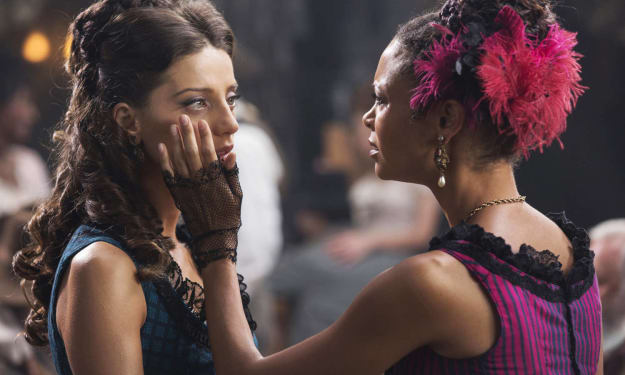
I was once in Big Bend National Park and thought I’d stepped onto another planet. If you’ve had the misfortune never to have visited, it’s a mostly parched desert wonderland with the strangest flowers, succulents, and eerie hills that you can imagine. Toss in the sexy wild lawlessness of the historical American West and you can see why science fiction would create some of its most memorable works against such an awe-inspiring backdrop. From cartoons like Cowboy Bebop and Trigun to animated shows like Galaxy Rangers and Bravestarr, science fiction clearly has a great big ol’ crush on the American West. There’s DC Comics’ Jonah Hex, a whole slew of terrible B-movies, and then there are the great ones: films like Westworld and Back to the Future Part III, books like The Gunslinger, and shows like Firefly (*sniff*). If you haven’t seen them yet, check out these incredible tributes to science fiction and the West all in one beautiful biomechanical horse meets pony-express package.
By Sarah Quinn9 years ago in Futurism
Buried Screwball Facts About Nikola Tesla
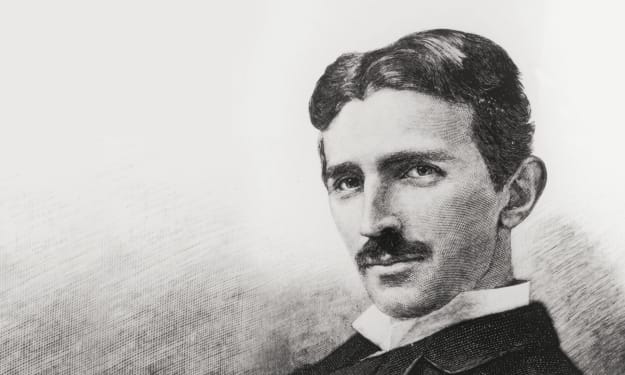
Travel anywhere outside the United States and the name of Nikola Tesla is known. Ask the average person on an American sidewalk? They’re apt to recall the 80’s rock band. Or they’ll nod and mumble about Elon Musk’s motor company.
By Matt Cates9 years ago in Futurism