
Evony by Top Games: Setting Its Own Path and Proven Over Time
Targeted acquisition and high-value users drive core growth

Genres such as SLG and RPG are showing signs of slowing growth, prompting developers to explore hybrid gameplay models—blending mechanics like tower defense with idle systems or combining RPG elements with simulation—to sustain innovation and maintain player engagement. At the same time, creative fatigue is emerging as a growing challenge across the industry. The pace of creative iteration has accelerated dramatically, moving from quarterly updates to monthly cycles, and, in many cases, now to weekly refreshes. In mature markets especially, the average lifespan of a creative asset has shrunk to less than five days, placing mounting pressure on teams to produce advertising content that is not only faster but also more precise and effective. Meanwhile, compared with the broad, volume-driven acquisition strategies of 2022–2023, the first half of 2025 reflects a clear shift toward precision targeting—focusing on users with higher retention potential and stronger lifetime value, particularly within the iOS ecosystem.
IP Partnerships That Resonate
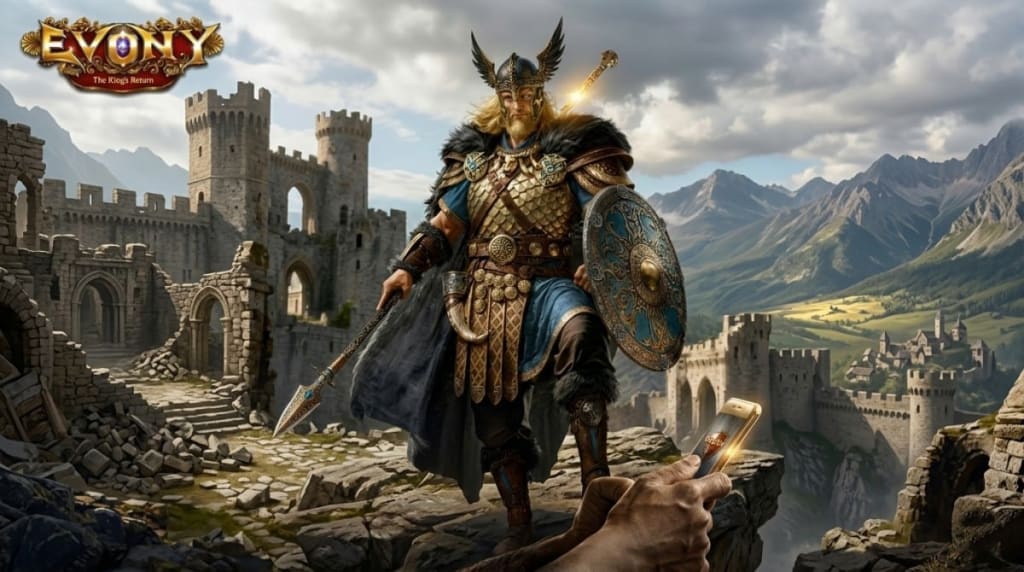
Against this backdrop, a handful of titles continue to demonstrate what longevity looks like in practice. Evony: The King’s Return is one of them. Having surpassed 300 million downloads, the game has spent over nine years cultivating a global player base.
As one long-term player shared:
"I’ve got three castles now—all earned during the Dwarf Event. What I love most about this game is the friendships I’ve made with people from all over the world. We often hop on voice calls during battles and sometimes end up chatting for hours. That feeling of fighting side by side and growing together is what keeps me coming back. It’s not just about power—it’s about the friends you make along the way."
Developed by Top Games Inc., it stands as a case study in sustained engagement. Since its launch in 2016, Evony has evolved through continuous updates, building a deeply social ecosystem where players form alliances, share resources, and coordinate large-scale wars across borders.
Crucially, its evolution hasn’t been limited to systems alone. Evony has also tested the boundaries of creative collaboration, partnering with recognisable IPs—from Kong: Skull Island to Godzilla and Napoleon. These crossovers aren’t superficial tie-ins; they function as engagement spikes, moments of novelty that re-energise the player base. Feedback suggests that players respond strongly to these collaborations, with Godzilla in particular striking a chord.
Culture in Motion
“At TGI, we’ve never been content to follow,” the team notes. “We build, we test, and we evolve—always with the player at the centre. We don’t just want to ship games; we want to create experiences that stand apart and stand the test of time.” It’s a philosophy that explains much of Evony’s staying power. Years of iteration have deepened its mechanics and expanded its feature set, allowing it to remain competitive—not just in player engagement, but in monetisation performance within an increasingly crowded strategy space.
That same mindset extends beyond design into company culture. At TGI, active listening and data-informed decision-making are not slogans but operating principles. Player experience is treated not as a soft metric, but as a core measure of success. This approach feeds directly into how the team handles marketing and growth. With more advanced decision-making tools and a clearer understanding of player behaviour, the focus has shifted from installs to deeper KPIs—lifecycle value, retention, and revenue per user. The result is a marketing strategy that is more efficient, more targeted, and, crucially, more creative.
All of these points to a broader industry direction. As competition intensifies and costs continue to rise, more developers are turning inward—refining existing titles rather than chasing the next hit. Investment is flowing toward core systems and meaningful data, shaping strategies that are increasingly targeted and personalised. In the end, differentiation is no longer optional. Only by grounding decisions in player experience—and by uncovering what makes each game distinct—can developers hope to attract new audiences while keeping existing players invested for the long haul.
About the Creator
Cool Gamer
With 5+ years in mobile gaming, I see it as more than fun—it enriches life. Here to share trends, insights, and joy. Let's have some fun!
Keep reading
More stories from Cool Gamer and writers in Gamers and other communities.
Mashle Academy Review – Magic School RPG on Roblox
There’s something instantly appealing about the idea of a magical academy. Maybe it’s the promise of hidden power, maybe it’s the rivalries, or maybe it’s just the chaos that inevitably follows when you throw a bunch of spellcasters into one place. Mashle Academy on Roblox leans into all of that—and then cranks it up a notch.
By Serhii Biloshytskyi6 days ago in Gamers



Comments