
Animal Worship in Ancient Egypt
From domestic companions to fearsome predators, animals embodied divine power in Egyptian belief

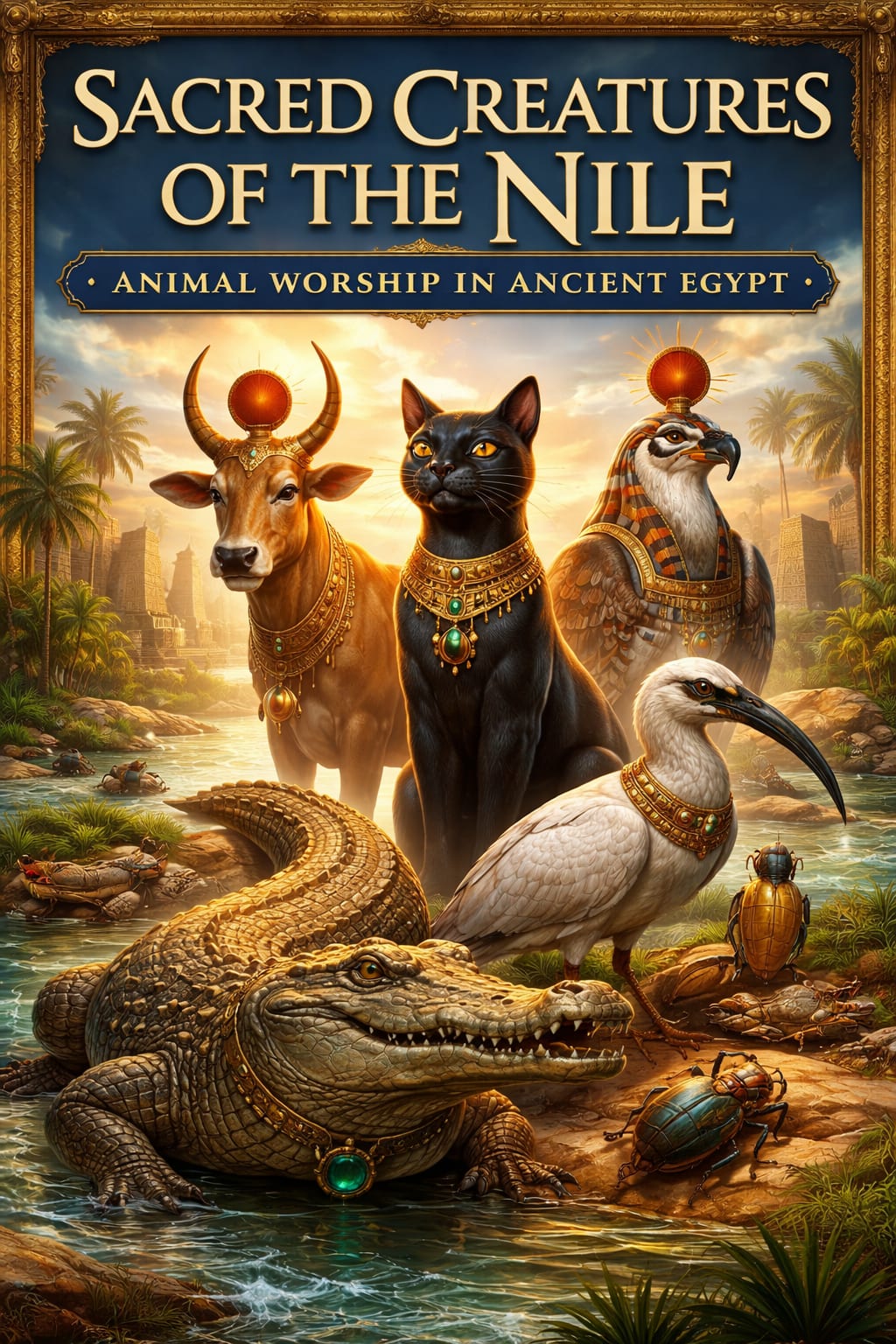
Ancient Egyptian civilization is often remembered for its monumental pyramids, intricate hieroglyphs, and powerful pharaohs. Yet one of its most fascinating aspects lies in its deep reverence for animals. From cats and cows to crocodiles and ibises, animals were not merely part of daily life—they were seen as living manifestations of divine forces. This unique blend of religion and nature shaped Egyptian culture for thousands of years.
The Egyptians believed that gods could take animal forms or share characteristics with them. Rather than worshipping animals themselves in a simplistic sense, they saw these creatures as vessels through which divine qualities were expressed. Strength, fertility, protection, and wisdom were all symbolized through different animals, making them sacred in both temples and households.
Cats, for example, held a particularly special place in Egyptian society. They were associated with protection, grace, and domestic harmony. Killing a cat, even accidentally, was considered a grave crime. Families often kept cats as cherished pets, and when they died, they were sometimes mummified and buried with care. This reverence reflected the belief that cats embodied protective divine energy, watching over homes and warding off evil.
Cows were another important symbol, representing motherhood, nourishment, and fertility. The gentle and life-sustaining nature of cows made them ideal representations of nurturing power. In agricultural communities along the Nile, where survival depended on fertile land and consistent harvests, such symbolism carried deep meaning. The cow was seen not just as livestock, but as a sacred being connected to the cycle of life.
Perhaps more surprising to modern readers is the worship of crocodiles. These powerful and dangerous creatures lived in the Nile River, a vital source of life for Egypt. While crocodiles could be deadly, they were also respected as symbols of strength and control over the waters. Temples were even dedicated to crocodile deities, and in some regions, crocodiles were kept in sacred enclosures, adorned with jewelry, and honored by priests.
Birds also played a significant role in Egyptian religious thought. The ibis, for instance, symbolized wisdom and knowledge. Its long beak and calm demeanor made it a fitting representation of intellectual and spiritual insight. Falcons, with their sharp vision and commanding presence in the sky, were linked to kingship and divine authority. These birds connected the earthly world with the heavens, reinforcing the Egyptians’ belief in a universe filled with interconnected forces.
Animal worship extended beyond symbolism into daily rituals and temple practices. Priests cared for sacred animals, feeding and housing them with great attention. When these animals died, they were often mummified in elaborate ceremonies similar to those of humans. Vast burial sites filled with animal mummies have been discovered, revealing the scale and seriousness of this practice.
This deep respect for animals was also tied to the Egyptians’ understanding of balance and harmony, often referred to as cosmic order. Every creature, from the smallest insect to the largest predator, had a role to play in maintaining this balance. By honoring animals, the Egyptians believed they were preserving the natural and divine order of the world.
However, animal worship was not uniform across all of Egypt. Different regions favored different sacred animals depending on local traditions and environments. What was revered in one city might not hold the same importance in another. This diversity reflects the richness and adaptability of Egyptian religious life.
Today, the legacy of animal worship in ancient Egypt continues to captivate historians and enthusiasts alike. It offers a glimpse into a worldview where humans, animals, and gods were deeply interconnected. In a land shaped by the rhythms of the Nile and the mysteries of nature, animals were not just companions or resources—they were sacred bridges between the earthly and the divine.
Through their reverence for animals, the ancient Egyptians expressed a profound respect for the natural world. Their beliefs remind us of a time when humanity saw itself not as separate from nature, but as an integral part of a larger, sacred whole.
About the Creator
Irshad Abbasi
Ali ibn Abi Talib (RA) said 📚
“Knowledge is better than wealth, because knowledge protects you, while you have to protect wealth.
Keep reading
More stories from Irshad Abbasi and writers in History and other communities.
Why Egypt’s First Pharaohs Revered the Humble Catfish
Long before pyramids pierced the desert skyline and monumental temples defined the banks of the Nile, ancient Egypt’s earliest rulers were forming a culture deeply rooted in nature. Among the many creatures that thrived in the life-giving waters of the Nile River, one stood out in both practical and spiritual life: the catfish. To modern readers, the idea of powerful pharaohs revering such a modest creature might seem unusual. Yet for Egypt’s first rulers, the catfish was far more than a source of food—it was a symbol of power, survival, and divine connection.
By Irshad Abbasi 2 days ago in History
Corinne Griffith (1894-1979)
By Brian D’Ambrosio Corinne Griffith, born November 21, 1894, in Waco, Texas, became one of the most admired figures of the silent film era, celebrated for her elegance, poise, and expressive subtlety on screen. Known as “The Orchid Lady of the Screen,” Griffith cultivated an image of refinement and emotional restraint that set her apart from her contemporaries. Beneath the Hollywood persona lay a Texas childhood shaped by her Italian ancestry and the civic prominence of her maternal family, whose accomplishments left a lasting impression on her sense of artistry, ambition, and cultural awareness.
By Brian D'Ambrosio 3 days ago in History
5 Battles in History Where Divine Intervention Changed Everything
War has been a part of human history for as long as we can remember. From defending territories to protecting loved ones, humans have always found a reason to fight. While strategy, planning, and leadership often decide the outcome of battles, there are moments when fate or perhaps something greater intervenes to tip the scales. Here are five of history’s most decisive battles that were allegedly won thanks to divine intervention.
By Areeba Umair4 days ago in History



Comments
There are no comments for this story
Be the first to respond and start the conversation.