
Fear on the High Seas: Comparing The Flying Dutchman and the Mary Celeste Tragedy
One of the oddest prompts given to me to write was an opinion about a folktale and a real-life event that had little in common. Whereas the two had something to do with “ghost ships” on the high seas, the similarities stop there. However, the prompt stated which one was the scariest. It boils down to superstition or a real mystery.

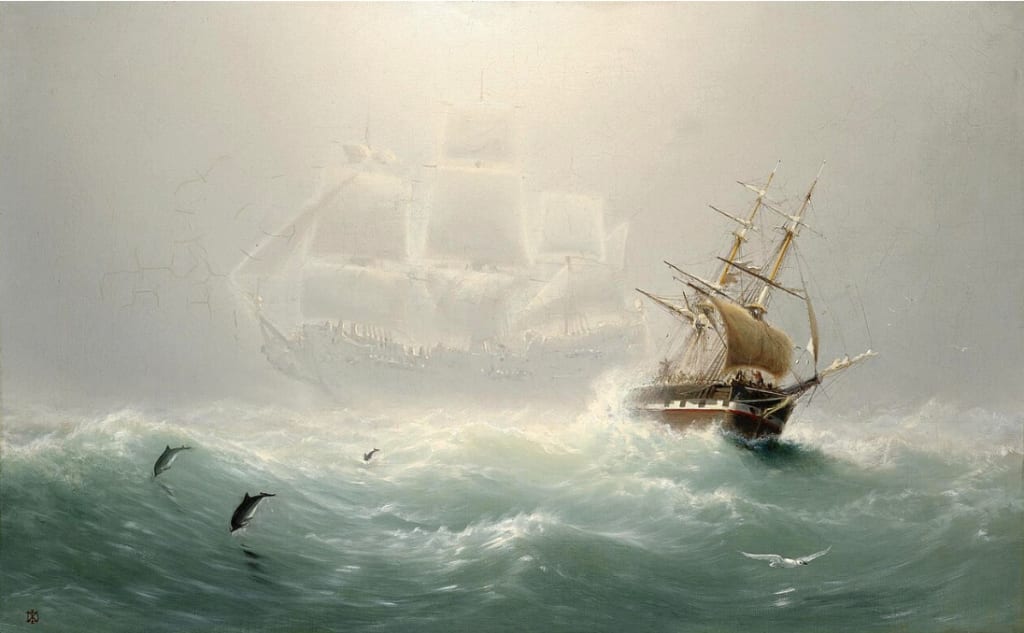
Commentary
Hauntings on the High Seas
Anything that haunts will usually frighten: and it doesn’t matter if it's a legend or an actual event in history. Still, which account will keep you up at night or make you wary of doing certain things such as going out on the open sea? No doubt, a real-life mystery such as the Mary Celeste can bring out the fear. But, in a twist of irony, it’s a legend that has had a lasting impact and may have affected the sailors' wellbeing.
Don’t let the truth ever get in the way of a good story, as the old saying goes. This is a rule that can be applied to the debate between The Flying Dutchman and Mary Celeste’s popularities as “ghost ships.” While the mystery behind the ship, Mary Celeste, is well recorded by numerous accounts and logs, the Flying Dutchman’s existence is based on eye-witness accounts and oral tradition. Yet, it’s the Flying Dutchman that has struck fear in the hearts of sailors and captured the imagination of the general population.
Myth Vs. Reality
As mentioned, the Flying Dutchman is a myth while the Mary Celeste mystery is real. One involves a demonic spirit and his ghost ship while another is a strange and tragic case of disappearance of an entire crew on the high seas. However, the real legacy of these two legends is that one is simply a better story than the other.
The Flying Dutchman – like most legends – serves as a warning and a lesson. While some sailors took the story and the curse it created seriously, most will not realize the moral lesson it created such as:
- Power corrupts; ambition can kill;
- never tempt or challenge nature; or
- “one’s ego can kill others”
These are some of the underlying lessons behind this myth. These are lessons that can be applied to one’s daily life – even if a person is not a sailor or lives by the sea.
The Flying Dutchman and Its Ruthless Captain
The story of the Flying Dutchman varies. Most of the stories are passed down by oral tradition. It tends to tell the story of a captain of the ship trying to sail through treacherous, stormy waters around a strait or cape (most stories point to the Cape of Good Hope). Despite the warnings from his crew, the stubborn and cruel captain does not heed the warnings (in some tellings, he makes a deal with the devil to make this trip, or that he was actually the captain of a slave ship). As a result, the captain and the crew of the Flying Dutchman perish.
However, death is not the end of this story. The Flying Dutchman emerges from murky depths as a ghost ship, forever sailing the ocean. Later, the legend would include a curse; if a sailor saw this ship, doom was to strike that person or the ship he was on.
While there’s never been any official or solid evidence that a ghost ship is sailing the oceans of the world – and for that matter, there’s no hard, definitive evidence that the ship, its captain and its fate, ever existed – the legend and curse was enough to make superstitious sailor wary about seeing a “ghostly” ship on the horizon.
Lesson from the Mary Celeste
One can argue that lessons can be learned from the Mary Celeste; that is, if anyone can find out what happened to the crew of this 19th century merchant ship. While this ship was anything but a ghost ship, the mystery surrounding it has made it a modern legend.
On December 4, 1872, the crew of the Canadian ship, Dei Gracia spotted the American brigantine merchant ship Mary Celeste “sailing” in the Atlantic Ocean. They noticed the ship was yawing slightly and its sails appeared to “not look right.” The decision was made to contact and/or board the ship. After contact failed, the decision was made to board the ship.
Soon, upon boarding the ship, the Dei Gracia crew soon discovered that the ship was empty. The mystery deepened when it was discovered that the ship still had its cargo, six months supply of food.
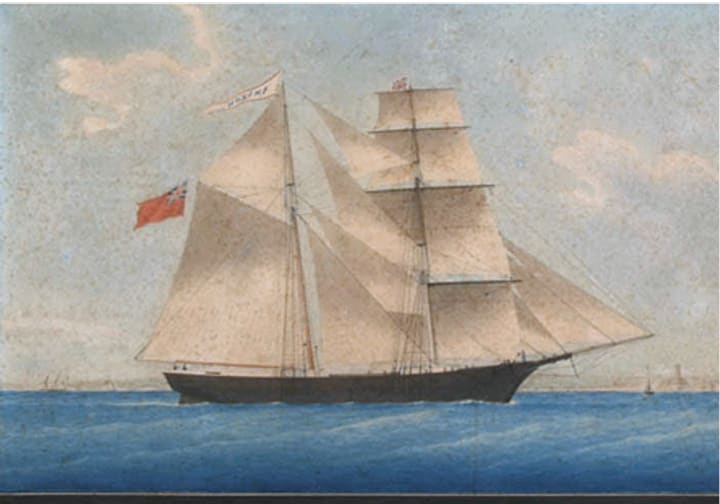
There were many accounts and facts that were documented:
- the ship was headed by Captain Benjamin Briggs, who also had his wife Sarah and baby daughter Sophia on board;
- the cargo was mostly untouched;
- personal belongings of the crew and passengers were still in place; and
- The crew was never seen or heard from again.
Many speculations have been made about the crew’s disappearance. Some believed pirates were responsible (which doesn’t make sense, since nothing of value was removed from the ship). Some modern “researchers” speculate that sea-monsters, UFOs, and the Bermuda Triangle were responsible.
However, more credible suggestions have been made. These take into account several items: the absence of a lifeboat, a disassembled water pump, a frayed rope tied to the ship and trailing behind the ship, and a cargo full of potent alcohol.
It is believed that fumes from the alcohol may have become so powerful that the crew decided to abandon the ship temporarily on a life-boat in order to allow the fumes to dissipate. However, the rope didn’t hold the boat and snapped, leaving the Captain, his family and crew now lost at sea.
It’s a mystery, and there are a lot of speculations; however, as a myth or legend, there is little one can learn from it. Logs, eye-witness accounts, and the physical presence of the ship make this an actual fact, not a legend like the ghost ship, The Flying Dutchman.
It should be noted that the legacy of Mary Celeste was made possible by some bogus accounts. For one thing, the popular belief that food and hot drinks were found on board was never confirmed. Dei Gracia never reported this. Many researchers believe that this story may have been embellished by the writer Sir Arthur Conan Doyle – the creator of the Sherlock Holmes stories.
What We Don't Know, Scares You
While the Mary Celeste is a real mystery, it’s not a ghost ship in the classic sense. Also, it’s not as well known as the Flying Dutchman – a ship that has yet to be discovered. This makes the Flying Dutchman a genuine ghost ship, and a very popular one at that.
In addition, the Flying Dutchman is a warning as well as a good ghost story. It is meant to create fear in order to keep sailors on the straight and narrow and to be aware of their surroundings. While the Mary Celeste event is heightened by the way it has been told over the years, it’s still a story that gets altered when new facts are discovered or reported. The Flying Dutchman is fueled by superstition that seemingly has a stronger hold on an audience than a true story because it appeals to our ability to fear the unexplainable events that can’t be solved.
About the Creator
Dean Traylor
I wrote for college and local newspapers, magazines and the Internet (30 years). I have degree in journalism, masters in special education (and credentials), and certificate in screenwriting. Also, a special ed. teacher (25 years)
Keep reading
More stories from Dean Traylor and writers in Horror and other communities.
No, The Mothman Isn’t an Alien
Commentary A Lot of Things to a Lot of People The legendary Mothman has been a lot of things to a lot of people. And, in many respects, his mostly complex and evolving legend as a mythological creature made him one of the most unique and fascinating beings of his kind. That is until somebody – possibly a blogger on a cryptid or paranormal site – began to speculate that the Mothman is actually an alien.
By Dean Traylor9 days ago in Horror
Close encounter at the midnight hour.
Close Encounters of the Midnight Hour It’s a quarter to 4, just a few hours before dawn. The room is dark; silence engulfs it. I lie in bed and fall asleep. In just a few hours, I will wake up and go through my morning routine. I’m not a morning person—just a bit tired from those sleepless nights.
By Rickles Pez6 days ago in Horror




Comments
There are no comments for this story
Be the first to respond and start the conversation.