
Why We Seem to Attract What We Try to Avoid:
The Psychology Behind Unwanted Encounters

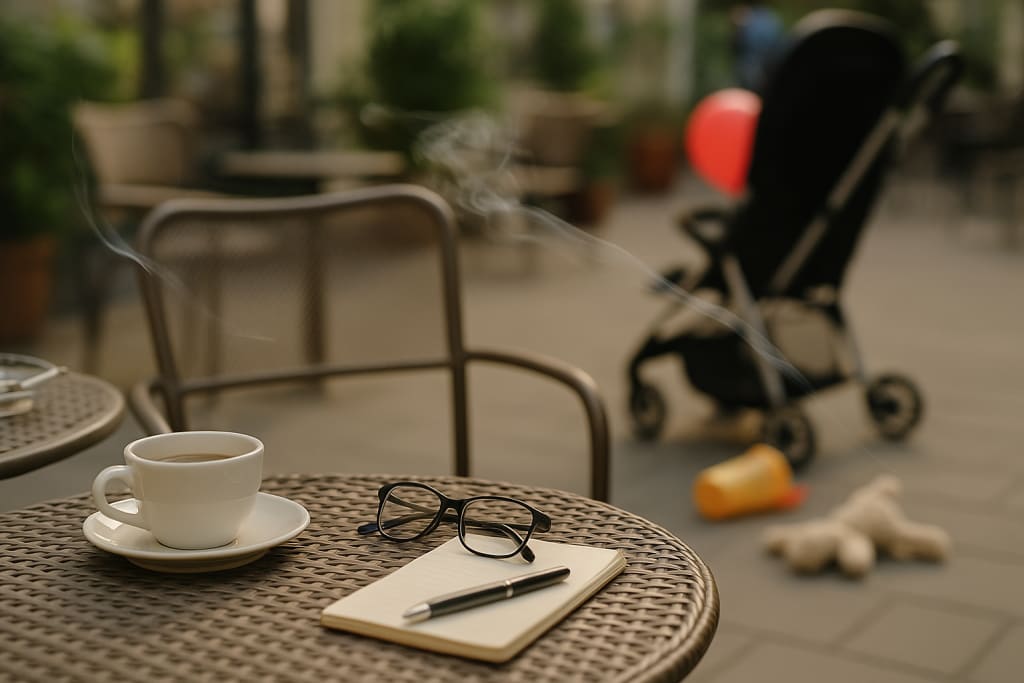
There is a familiar experience many people hesitate to describe out loud because, said too quickly, it sounds half mystical.
- A non-smoker steps outside for clean air and cigarette smoke finds them anyway.
- Someone who pays for the quiet corner ends up seated beside the loudest table in the room.
- An introvert boards a plane hoping for silence and lands next to the one stranger who treats public space like open-mic night.
After enough repetitions, the whole thing starts to feel targeted.
Truth is, this is all less mystical and more mechanical.
Human attention does not register peace with the same force it gives disruption. The nervous system is built to notice interference faster than ease, especially when the interference has been stressful before. Smoke, shrill noise, abrupt proximity, restless motion, and socially intrusive energy move to the front quickly. Neutral conditions usually do not leave the same trace in memory, so the person is not always encountering the unwanted thing more often in a literal sense. They are often encoding it harder and recalling it faster.
That is a large part of why recurrence can feel eerie. Once the brain tags something as a likely problem, it starts scanning for it before the person is fully aware of doing so. Cognitive psychology has described this for years in work on salience, expectancy, and selective attention. Trauma science describes the same general process in a language closer to lived experience. The system learns what has disrupted safety before, then checks the room for it again. Not because the person wants it. Because the body would rather detect trouble early than be surprised by it again.
There is an irritating part to this because it seems unfair.
Other human beings are constantly making fast judgments from posture, facial tension, voice, pacing, eye behavior, and how much space someone appears willing to occupy. They do not need a conscious theory for this. They sort the room and move. A person who dislikes friction, tries not to impose, and keeps their own volume low can look like the safest available target for approach. In practice, the loud stranger usually does not open with the person giving off the sharpest edge. The child looking for an easy emotional landing usually does not run first toward the adult who looks ready to shut the door.
Withdrawal is where this often goes wrong.
From the inside, pulling inward feels protective. From the outside, it can register as low resistance. Shoulders narrow. The face softens. The voice drops. Eye contact becomes careful. The person tries to reduce impact and avoid drawing force. Unfortunately, people with weak boundaries are often very good at picking up exactly those cues, even if they could never explain what they saw. They move toward whoever looks easier to enter.
In my experience, the calmest person in the room often gets assigned the room’s overflow. Not because calm deserves invasion. But because uncontained people tend to offload where resistance appears lightest.
Personal history adds another piece.
Someone raised in noise often becomes highly efficient at detecting noise. Someone trained early to steady everyone else may keep broadcasting steadiness long after they are tired of doing that work. The old role travels. Then it shows up in restaurants, waiting rooms, offices, church foyers, airports, and all the other ordinary places where a person would prefer not to repeat family labor with strangers.
Several mechanisms are usually operating at the same time.
Threat-biased attention is the first piece. Bad experiences leave a brighter mark than neutral ones, and the brain gives them premium storage. A person may have ten uneventful dinners and one noisy disaster, then remember the noisy disaster with much greater clarity. Over time the private record becomes lopsided. That can make the unwanted encounter feel constant even when it is not constant.
Quiet body language is the second piece. Social-perception research has long shown that people make surprisingly fast judgments from very little information. They do it from faces, timing, posture, tone, and movement. Someone trying not to attract friction may come across as kind, approachable, and unlikely to reject. None of those qualities are defects. In the wrong company, though, they can function like an unlocked gate.
Early stabilizing roles are the third piece. In many families, one person becomes the absorber, the regulator, the one who keeps emotional weather from getting worse. Years later that same person may still project tolerance and steadiness without consciously choosing to. Other people detect it before the person has time to object. Then the familiar burden arrives wearing a new face, which is why the repetition can feel so old and so immediate at the same time.
Anticipation keeps the whole thing alive.
When a person expects interference, they brace. That bracing can sharpen attention, tighten memory, and alter body language all at once. It does not create every unwanted encounter, because randomness is still part of public life and some people are simply rude. It can increase visibility and shape how the person is approached, which is enough to make recurrence feel almost scripted.
The phrase people use is that they attract what they are trying to avoid. In most cases truth is far less dramatic. They are noticing it quickly, storing it intensely, and sometimes signaling less resistance than they intend. Add old survival habits to that mix and the result can feel personal, even when the underlying mechanisms are ordinary and well within what behavioral science would expect.
None of this means the burden belongs entirely to the person who wants peace.
- Some settings are objectively intrusive.
- Some adults do let their own lack of containment spill into shared space.
- Some strangers do treat quiet people like public property.
It helps no one to turn public discourtesy into a private character defect. Still, where there is leverage, it usually sits in awareness, posture, placement, timing, and firmer outer edges.
A person can change where they sit, how soon they speak, how much space they visibly occupy, and how quickly they close an opening that should never have been opened. They can choose the seat with fewer approach lanes, not just the seat that feels discreet. They can let the face stay neutral instead of over-accommodating. They can answer intrusion early rather than absorb it politely until resentment takes over.
None of that guarantees control. Public life offers no such guarantee, but it does improve the odds.
So the recurring nuisance is usually not fate, karma, or some hidden attraction law. More often it is a mix of selective attention, nervous-system priming, social cueing, and learned accommodation.
Sources That Don’t Suck
Ambady, N., & Rosenthal, R. (1992). Thin slices of expressive behavior as predictors of interpersonal consequences: A meta-analysis. Psychological Bulletin, 111(2), 256-274.
Baumeister, R. F., Bratslavsky, E., Finkenauer, C., & Vohs, K. D. (2001). Bad is stronger than good. Review of General Psychology, 5(4), 323-370.
Burgoon, J. K., Guerrero, L. K., & Floyd, K. (2016). Nonverbal communication. New York, NY: Routledge.
LeDoux, J. E. (1996). The emotional brain: The mysterious underpinnings of emotional life. New York, NY: Simon & Schuster.
Mathews, A., & MacLeod, C. (2005). Cognitive vulnerability to emotional disorders. Annual Review of Clinical Psychology, 1, 167-195.
Pessoa, L., & Adolphs, R. (2010). Emotion processing and the amygdala: From a “low road” to “many roads” of evaluating biological significance. Nature Reviews Neuroscience, 11(11), 773-783.
About the Creator
Dr. Mozelle Martin
Behavioral analyst and investigative writer examining how people, institutions, and narratives behave under pressure—and what remains when systems fail.
Keep reading
More stories from Dr. Mozelle Martin and writers in Humans and other communities.
Why Animals Entered Empty Cities:
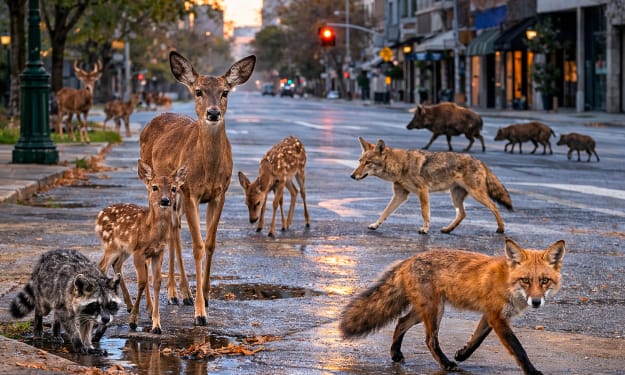
In 2020, cities did not become wild. They became quiet enough for wildlife to take different risks. Traffic dropped. Foot traffic faded. Public spaces lost the noise and motion that usually keep animals at the edge. Then came the images people remember: deer in roadways, coyotes in urban corridors, goats moving through town, boar entering city zones they normally avoided. Many people called it nature reclaiming the earth. That interpretation was poetic. It was also wrong.
By Dr. Mozelle Martin4 days ago in Humans
Is Full Cream Milk Good for Health? The Daily Habit Debate
Full cream milk has been a staple in households for generations, often associated with strength, nourishment, and overall wellness. However, with changing dietary trends and growing awareness around fat consumption, many people are now questioning their daily choices. This brings us to a common question: is full cream milk good for health? The answer depends on various factors including lifestyle, quantity, and individual health needs.
By Joe Jackson3 days ago in Humans


Comments
There are no comments for this story
Be the first to respond and start the conversation.