
Essential Oils Market Grows as Aromatherapy Moves Beyond the Spa
How mental health awareness, pharmaceutical interest, and shifting consumer habits are building a $31 billion industry

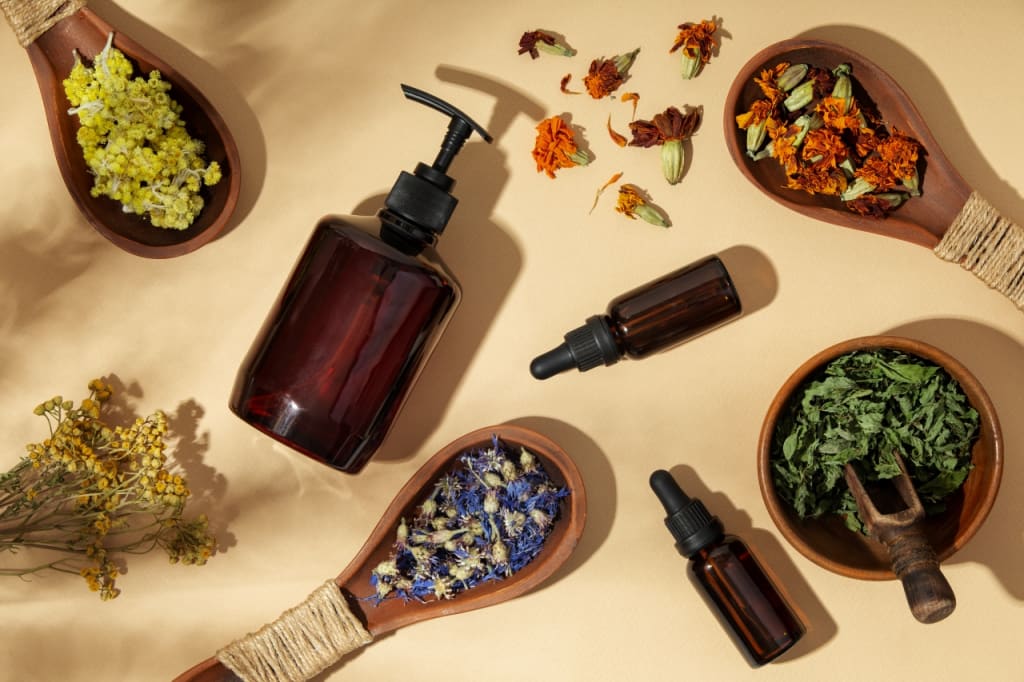
There was a time when essential oils belonged to a fairly specific world. Spa treatments. Wellness retreats. The shelves of health food stores are frequented by a particular kind of consumer. Pleasant, perhaps beneficial, but niche by most definitions.
That world has expanded considerably.
Essential oils are now being studied by pharmaceutical researchers for their antimicrobial and anti-inflammatory properties. They are being diffused in hospital corridors and corporate offices. They are showing up in mainstream personal care products bought by people who would never describe themselves as wellness enthusiasts.
According to Mordor Intelligence, the global essential oils market size was valued at USD 18.58 billion in 2025, growing to USD 20.26 billion in 2026, and projected to reach USD 31.27 billion by 2031 at a 9.07% CAGR. That growth rate sits well above many comparable consumer markets and points to a genuine broadening of where essential oils fit in everyday life.
What Are Essential Oils and Why Do People Use Them
Essential oils are concentrated plant extracts obtained through distillation or cold pressing of flowers, leaves, bark, roots, and rinds. Each oil carries the natural fragrance and active compounds of the plant it comes from.
People use essential oils for several practical reasons. Aromatherapy uses inhaled oils to support mood, reduce stress, and promote relaxation. Topical applications use diluted oils on skin for antimicrobial, anti-inflammatory, and moisturizing effects. Personal care products use essential oils as natural fragrance and functional ingredients. Pharmaceutical research is exploring their medicinal properties in antimicrobial and respiratory applications.
The oils most widely used globally include lavender, peppermint, tea tree, eucalyptus, lemon, frankincense, rosemary, and orange. Each has a distinct chemical profile that determines its properties and applications across industries.
Mental Health Awareness and the Aromatherapy Shift
The most significant driver of recent growth in the essential oils market is the mainstreaming of mental health as a serious and widely discussed personal concern. This has created a new context for aromatherapy that extends well beyond its traditional associations.
When mental health became a topic that people talked about openly, the tools associated with stress management and anxiety reduction gained a new kind of legitimacy. Aromatherapy, long understood to have calming and mood-supporting effects, found itself relevant to a much wider audience than it had previously served.
The practical consequence has been a migration of aromatherapy from spa settings into environments where stress is a daily reality. Hospitals have begun incorporating diffused essential oils into patient care environments. Workplaces focused on employee wellbeing have introduced aromatherapy as part of broader wellness programs. Schools and therapeutic settings have followed similar paths.
Each new context brings a new category of buyer and a new set of product requirements, adding both volume and complexity to the market in ways that support continued growth.
What Is Driving the Essential Oils Market Growth
Several distinct forces are driving the essential oils market forward simultaneously.
The first is the mental health and wellness movement, which has expanded the legitimate use cases for aromatherapy into clinical, corporate, and educational settings that were not previously part of the market.
The second is a pharmaceutical research interest. Scientists are investigating essential oils for antimicrobial properties relevant to antibiotic resistance, anti-inflammatory applications for chronic conditions, and respiratory health uses. This research adds scientific credibility and opens entirely new commercial pathways for producers who can meet pharmaceutical-grade quality standards.
The third is the clean beauty movement in personal care. Consumers actively reducing synthetic ingredients in their routines are turning to essential oils as functional natural alternatives, creating sustained demand that flows back through the supply chain to growers and processors worldwide.
The fourth is the food and beverage industry, where essential oils derived from citrus, mint, vanilla, and herbs function as natural flavoring agents. As consumer preference for natural ingredients over synthetic compounds strengthens, this application segment grows alongside the wellness-driven categories.
Essential Oils in Pharmaceutical Research
Perhaps the most structurally interesting development in the essential oils market is the growing attention from the pharmaceutical industry.
Researchers are actively investigating the antimicrobial properties of oils like tea tree, thyme, and oregano in the context of antibiotic resistance, one of the more serious long-term challenges facing modern medicine. The anti-inflammatory properties of frankincense-derived oils are being studied in relation to chronic inflammatory conditions. Respiratory applications have attracted significant research interest following heightened global focus on respiratory health.
This does not mean essential oils are on the verge of replacing pharmaceutical drugs. The research is early in many areas and the regulatory pathway from natural compound to approved medication is long and demanding. But pharmaceutical attention brings research funding, credibility, and the possibility of entirely new product categories sitting at the intersection of natural wellness and clinical application.
Where Is the Essential Oils Market Growing Fastest
Europe remains the largest market by value, driven by strong consumer demand for natural personal care products, well-developed aromatherapy traditions, and a regulatory environment that has established quality standards across the industry.
Asia-Pacific is where the growth story is most dynamic, and it is happening on both the production and consumption sides simultaneously.
India and China have significantly increased their output of essential oils, including mint, lemongrass, and citrus varieties. These oils have broad applications across personal care, food and beverage, and pharmaceutical uses. The combination of suitable growing climates, lower production costs, and increasing agricultural sophistication has positioned both countries as major global suppliers while their domestic consumption grows in parallel.
The practical effect is that the Asia-Pacific is reshaping the economics of the global essential oils supply chain. More production capacity means more competitive input costs for manufacturers worldwide. More consumption means a larger and faster-growing end market that global and regional brands are actively positioning to serve.
Which Essential Oils Are Most in Demand
Lavender remains the most widely used essential oil globally, valued for its calming properties in aromatherapy and its versatility across personal care formulations.
Peppermint is among the highest-demand oils in both personal care and food and beverage applications, prized for its cooling sensation and flavoring properties.
Tea tree oil commands strong demand driven by its well-documented antimicrobial properties, making it a standard ingredient in skincare, hair care, and natural cleaning products.
Eucalyptus oil has seen growing demand linked to respiratory health applications, particularly in diffusers, chest rubs, and pharmaceutical formulations.
Citrus oils, including lemon, orange, and bergamot, are widely used across personal care, fragrance, and food and beverage categories, supported by high production volumes in the Asia-Pacific.
Frankincense has attracted growing interest from both the premium skincare segment and pharmaceutical researchers exploring its anti-inflammatory properties.
The Personal Care Connection
The category that drives the largest volume of essential oils market activity remains personal care.
Shampoos, conditioners, body washes, facial products, and skincare formulations across every price point now routinely incorporate essential oils for both functional properties and sensory experience. These are not niche inclusions in premium products. They are mainstream ingredients across the full spectrum from mass market to luxury.
The clean beauty movement has accelerated this trend. Consumers reducing synthetic ingredients in their personal care routines often turn to essential oils as natural functional alternatives. That consumer behavior creates sustained demand that reinforces the investment in production capacity expanding in regions like India and China.
How Are Essential Oils Produced
Essential oils are produced using different methods based on the plant source and intended use. Steam distillation, the most common, uses steam to extract volatile compounds. Cold pressing is used for citrus oils, mechanically pressing the rind without heat. Solvent extraction is used for delicate flowers like jasmine and rose. CO2 extraction uses pressurized carbon dioxide, producing oils with a chemical profile closer to the original plant. The production method affects quality, chemical composition, and price, so buyers specify both the oil and the extraction method.
What Does the Essential Oils Market Competitive Landscape Look Like
The essential oils market is moderately fragmented, meaning no single company holds a dominant market share across all segments and geographies. Several players compete across different product categories, regional markets, and application areas.
This structure supports innovation, as smaller and specialized producers can establish positions in niche segments without being immediately displaced by scale advantages. It also reflects the genuine complexity of an industry where the source plant, growing region, climate conditions, and processing method all affect the final product in ways that matter to serious buyers.
As pharmaceutical and clinical applications develop further, pressure toward consolidation and standardization is likely to increase. Pharmaceutical-grade purchasing requirements favor suppliers who can guarantee consistent composition, purity, and traceability across large volumes, which favors scale and investment in quality control infrastructure.
A Closing Thought
Essential oils occupy an unusual position in the consumer landscape. They are ancient in their origins, having been used across cultures for thousands of years, and simultaneously current in their applications, finding new relevance in mental health discussions, pharmaceutical research, and mainstream personal care.
That combination of deep cultural roots and genuine contemporary utility is not something that can be manufactured or marketed into existence. It has to be real. And in the case of essential oils, the evidence suggests that it is.
With the market projected to reach USD 31.27 billion by 2031, what is happening is not a wellness trend running its course. It is a category finding its full range of applications after centuries of partial recognition.
The spa was just the beginning.
About the Creator
Harvey Specter
I am passionate about Food & Beverage, Ag, & Animal Nutrition companies. I help organizations unlock their data's potential and fuel business growth. My expertise transforms raw data into actionable insights for strategic decisions.
Keep reading
More stories from Harvey Specter and writers in Journal and other communities.
Probiotics Market Is Redefining Preventive Health
For most of human history, bacteria were something to be feared, fought, and eliminated. Antibiotics were one of medicine's greatest achievements precisely because they could kill the microorganisms that caused disease. Clean water, sterile surfaces, and rigorous hygiene were markers of a civilized and healthy society.
By Harvey Specter10 days ago in Journal
Author’s Advice
If you would’ve asked me 20 years ago did I know I’d become a writer and an author, I would’ve said “nope, ain’t happening”. As fate would have it I did become an author and I can honestly say I’m loving it so far. It really does feel good to be a writer. I’ve learned a lot on this journey and I feel like with even me being as new to this world as I am, there’s some wisdom I need to share with every other aspiring author.
By Joe Patterson16 days ago in Journal




Comments
There are no comments for this story
Be the first to respond and start the conversation.