fish
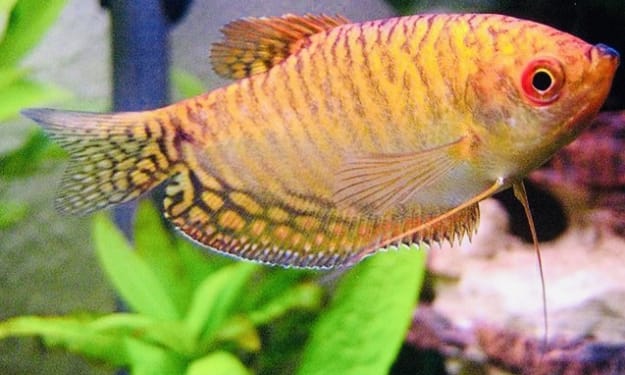
The fact that fish live only in the water make them different from all other animals.
Classifying invertebrates is hard. Butts can help
When French biologist Jean-Baptiste Lamarck set out to categorize the animal kingdom in 1801, he divided it into two groups: vertebrates, those with spines, and invertebrates, those without. The terms have stuck around for more than 200 years, but around 1900, scientists realized that they’d been categorizing wildlife wrong. Plenty of animals without spines—like starfish, invertebrates that extrude their own stomachs to eat—are more closely related to us than to their shellfish prey. Certainly, some animals have spines, and others don’t. But the spineless world is defined by much more than what it lacks. The real line that separates humans from insects, slugs, and shellfish? The answer lies partly in the anus. According to more recent thinking, the development of butts has become a key question for taxonomists cataloguing the diversity and evolution of the animal kingdom. All animals begin life as a rapidly dividing bundle of cells. Early in that process, the embryo is just a tiny sphere of cells. But to develop a gut, the round blob needs to somehow turn itself into a donut. To do so, a dimple forms on the sphere, and eventually pushes its way to the opposite wall. In humans and starfish, that dimple becomes the anus, working its way back to a second opening—what becomes the mouth. In shellfish or crabs, these openings develop in reverse; the original dimple usually becomes the mouth. That distinction separates most animals into two categories: deuterostomes, or “mouth second,” and protostomes, or “mouth first.” While all vertebrates are butt-first, not all invertebrates fit into either bucket. Even the textbook Invertebrates: A Synthesis distances itself from the word “invertebrate,” writing on the first page, “The distinction [between vertebrate and invertebrate] is hardly natural or even very sharp.” So-called invertebrates aren’t categorized by their lack of spine, so much as their approach to the anus. Or so it used to be. “It is true that deuterostomes were classically said to be defined by the development of the anus,” says Imran Rahman, a paleontologist at London’s Natural History Museum, “but we now know that some protostomes also develop in the same way.” More recently, researchers realized that certain mouth-first animals, like some species of brachiopods, a type of shellfish, developed butt-first. Others develop both at the same time, where the spherical embryo hollows out and rolls over on itself like a burrito. In 2016, a team demonstrated that the shape of the gut is actually an artifact of a more subtle process: The embryo transforms from a sphere into a stretched out, shrimp-like shape. That would mean that our common ancestor may have evolved the shrimp-like physique first, and then figured out how to build its guts. The findings, the researchers argued, suggest that anuses (or in some cases, mouths) have evolved over and over again. That could explain the case of the comb jellyfish, which branched off long before the ancestors of starfish and humans had evolved a waste disposal system. Most jellies have what are called “blind guts”—an entrance with no exit. Most gulp down food, digest it, then spit up the remains. But in 2016, an evolutionary biologist recorded footage of translucent comb jellyfish eating tiny, glowing plankton. As the animal digested, the video captured the food moving through the jellies’ bodies, and then, after a few hours, out a pair of pores on the back of their “heads.” (When the biologist played the video at a conference, the audience reportedly gasped out loud.) This ability had gone undiscovered for more than a century because the jellyfish have what researchers describe as a “transient anus”—a temporary booty that only appears when the animals really have to go. It’s possible that the anus is much older than scientists realize, and comb jellies are evidence of a common ancestor with a through-gut. But it’s also plausible that the butt is just so valuable that jellyfish have come up with it on their own. And indeed, the oldest purported ancestor of humans, starfish, and all so-called “mouth second” animals is, intestinally speaking, a lot like a jellyfish. The creature was a seafloor-dwelling animal, called Saccorhytus coronarious, or “crowned wrinkly bag.” It was about the size of a pinhead, and had a huge, gaping mouth on top of a round body. It had no anus, but was covered in pores that its discoverers believe to be a precursor to gill slits. “However, not everyone is convinced by this interpretation,” says Rahman. The name deuterostomes has stuck around, though. More recent genomic work has demonstrated that we still evolved alongside animals that basically share our intestinal toolkit, letting us know that the animal kingdom is defined as much by butts as by spines.
By Zulqarnain Haider4 years ago in Petlife
Whaling Stories
Songs About Whales And Whaling My Vocal friend Caroline published a story on whales that you can read below and it contains a poem and a trailer for “In The Heart Of The Sea”, and I thought maybe I could actually do a playlist of songs that have a whale or whaling connection.
By Mike Singleton 💜 Mikeydred 4 years ago in Petlife
Deep Observations
Silent Hunter, Ancient Relentless Killer Yes it’s an FLA as opposed to the rampant TLA )Five Letter Acronym as opposed to a three letter acronym) , but I went through a lot of permutations to come up with that one and probably someone far more intelligent and observant than I has already done it , but I did arrive at it under my own steam.
By Mike Singleton 💜 Mikeydred 4 years ago in Petlife
5 Rules For First-Time Fish Owners
Not only do fish tanks add a beautiful interior element to your space, but they can actually be good for you. Seeing the variety of colorful aquatic life flowing briskly through the backlit waters can boost your mood, reduce stress and anxiety, and make you feel more relaxed.
By Carolyn Mitchell 4 years ago in Petlife
The Ultimate Buyer's Guide to Aquariums and Aquarium Equipment
When fish weave in and out of rocks and plants, they become more engaging and enjoyable to watch. Fish are an excellent choice for satisfying a child's desire for a pet. They are not only simple to maintain, but they will also teach your youngster the value of caring for something in order to keep it alive. In this blog, we'll go through a complete tutorial to help you with your aquarium step by step.
By Tanvi Punia4 years ago in Petlife
Another fish for your aquarium!
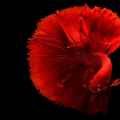
The water world is full of exciting and interesting creatures. There are a lot of varieties, shapes, sizes, colours, and species to explore and when it comes to aquatic life I cannot stop myself from discussing the unique betta fish!
By Shiwangi dwivedi4 years ago in Petlife