wild animals
Animals the way nature intended it; explore the world of wild animals and the controversies surrounding domestication and hunting of feral beasts.
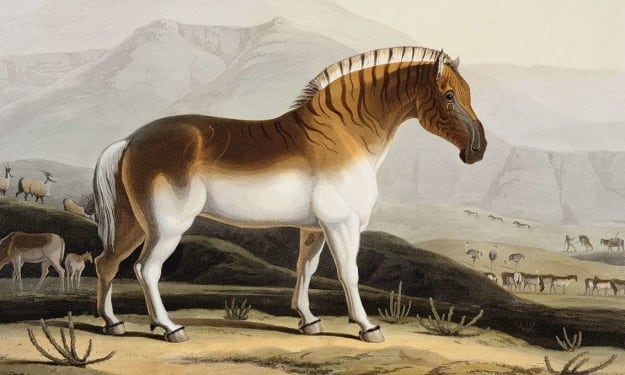
10 Animals That Were the Last of Their Kind
It's never easy being the only one of your kind. Whether it's the only girl in a group of guys, the only person of your nationality in your group of friends, or the only person of your type at work, it'll always be a bit lonely when you're the "only one."
By Ossiana Tepfenhart7 years ago in Petlife
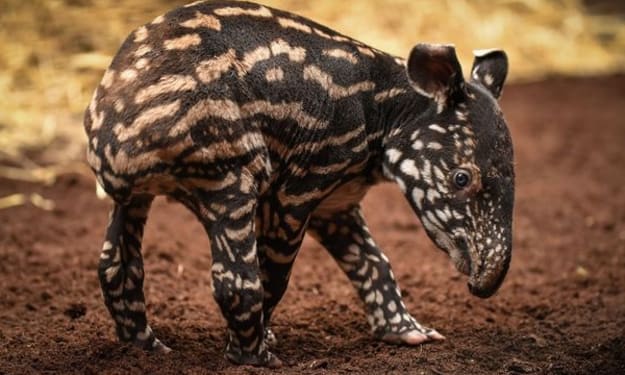
The Cutest Animals You've Never Heard Of. Top Story - October 2018.
I think we should start off by saying I'm a completely terrible person. Here I am praising the Photo Ark and my cover photo isn't even from the Photo Ark. I should be permanently cut-off from society in a large metal box with just enough food to survive but not near enough to be happy.
By Tristan Spohn7 years ago in Petlife
10 Extinct Animals That Might Not Really Be Extinct
What does it take for an entire species to vanish from this world? Does it take horrific mass killings from bloodthirsty hunters? Does it take a major shift in natural climate? Does it take a terrible disease to wipe out millions of creatures?
By Ossiana Tepfenhart7 years ago in Petlife
Dear Canada, a Ban on Cetaceans in Human Care Won't Save Marine Mammals
Recently, Canada's Senate has passed a bill dubbed as "Bill S-203," which would outlaw the keeping of cetaceans in human care for almost any given purpose. While Marineland Canada and Vancouver Aquarium, the two Canadian zoological facilities that currently house cetaceans would be exempted from this ban, the harm it would have on zoos and aquariums that currently house and care for cetaceans and other marine mammals, as well as efforts to save wild cetacean populations in Canada, is unimaginable in so many ways. However, since the Senate has passed this bill, its next step would be for it to pass through House before being signed by Canada's governor general.
By Jenna Deedy7 years ago in Petlife
The World's Most Endangered Mammals
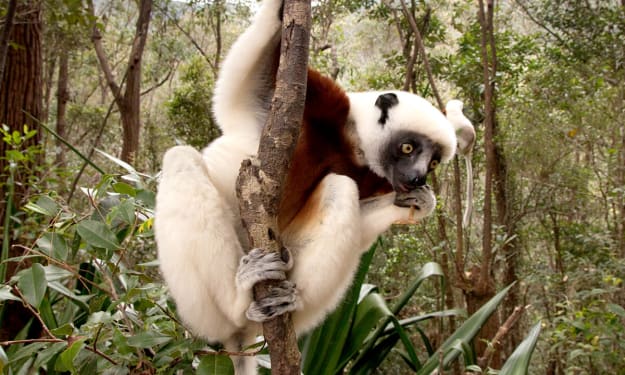
There is one island off the coast of Africa that has been adapting and evolving on its own time. There are several different species of primates on the island, there are several species of lemurs, lorises, bush-babies, and tarsiers. Like the picture above, lemurs are the biggest prosimian on Madagascar and there are many species as well. There are, ring-tailed lemurs, indri lemurs, red ruffed lemurs, sifaka lemurs, black and white ruffed lemurs, and the Aye-aye. There are many more, and most of them are either critically endangered or endangered. This could be due to habitat loss, or hunting. To put this severity into data, 91 percent of the known species of lemurs are at least threatened (there are 103 known species). This has been worsening over time, and is not getting better.
By Hanna Lund7 years ago in Petlife
11 Species That May Return from Extinction
Remember watching Jurassic Park, the film about a park that used genetic engineering to make dinosaurs live once more? It may have been one of the best sci-fi movies of the 90s, but these days, it's starting to look more like a documentary than anything else.
By Sasha Konikovo7 years ago in Petlife
Activists Target Florida with New Orca Breeding Ban
A group of radical animal rights extremists under the Animal League Defense Fund, via Representative Jared Moskowitz, have managed to get an amendment that would ban Florida-based zoos and aquariums from possibly housing, or breeding killer whales in their care. The bill, which was heavily inspired by a biased documentary called Blackfish, was originally drafted for the 2018 legislative session, but luckily, at the time, it was never voted on. A year later, these extremists are back with the bill by demanding the public to have it voted for next year's session. Extremists claim that the bill is "animal-saving" when in reality, it would do more harm than any good and there are a number of problems with these breeding "bans" when they are used as legislative methods to control the zoological community.
By Jenna Deedy7 years ago in Petlife
Farming for Bees, It’s the Bees Knees!
The news is filled with disasters. Recently Colony Collapse Disorder was a news worthy disaster. It was a large enough issue that even Doctor Who brought up the “mysterious disappearance of the bees”. It appears that this disaster evolved from a deep-rooted problem with many different sources. Beekeepers and farmers have been at odds for years over pesticides. With the recent disappearances of bees, the tension has been growing. A slightly less popularized issue is that farming is not what it used to be. The same farm that raised seven kids and allowed the baby boomers to retire comfortably is working its kids to the bone and not providing enough income to support the next generations. These two issues feel like very opposite ends of the spectrum. Farmers are calling for stronger pesticides to protect what little they are making, while beekeepers are pleading for less harsh chemicals. More land is being put into production and taking away habitats for wild animals and destroying nectar sources of bees. Something needs to change for the sake of all involved.
By Marissa shook7 years ago in Petlife
Pollution Could Kill Half of the World’s Wild Orca Populations
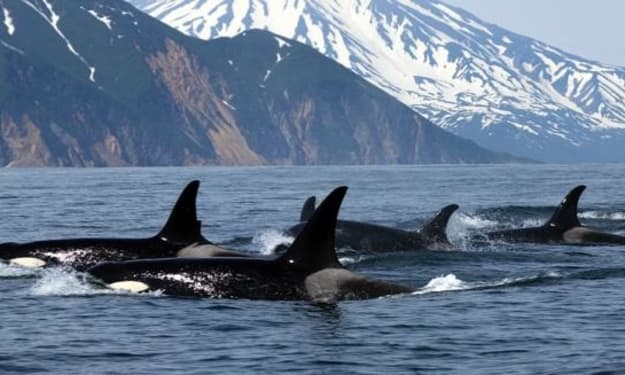
Around the world, many wild orca populations are affected by pollution caused by man-made toxins. These toxins are made of various chemicals that often are used on land for different purposes, only to end up in waterways through runoffs before making their way into the ocean as a form of pollution. These various chemicals include flame retardants, industrial pollutants, oils, and pesticides, and they have all been known to enter into oceanic waters through waterways and are now, having a major impact on marine wildlife, including the orcas. Speaking of orcas, a new study has recently confirmed that half of all of the known wild orca populations could be at risk of dying out as a result of exposure to the effects of toxins and ongoing pollution in various parts of the world.
By Jenna Deedy8 years ago in Petlife
Two More Southern Resident Orcas Are Ailing—and Three Are Pregnant
According to researchers who are focused on the Southern Resident orca population, two more whales are falling ill as a result of the lack of salmon they depend on for their survival. The first animal in question is K25, also known as Scoter. He's a 27-year-old adult male who has been documented in aerial photographs for the last decade. Researchers say that in recent weeks, Scoter has been showing signs of becoming thinner than he was in previous years. The trouble for the endangered mammal began last year when his mother, K13, also known as Skagit, died. This is because Skagit, like all orca matriarchs within the Southern Resident pods, helped her family and other pods in navigating the Salish Sea for salmon before capturing and sharing the newly caught prey. Male orcas rely on help from their mothers, sisters, female cousins, nieces, and aunts to find and track down prey and meet their much larger energy demands. Studies have shown that adult orca males tend to have higher risks of dying following their mothers' deaths. This puts Scoter at a higher risk of dying.
By Jenna Deedy8 years ago in Petlife