history
Past politicians, legislation and political movements have changed the course of history in ways both big and small. Welcome to our blast to the past.
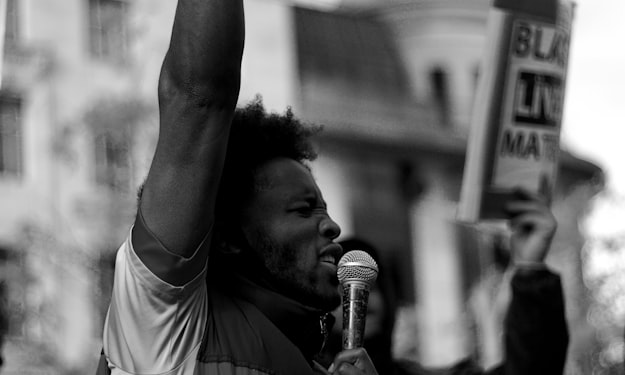
Why the Tulsa Race Massacre Matters
I had a hard time with Black Lives Matter when the movement first started. All my life, I was taught to trust cops. I had no reason not to trust cops. Suddenly, people were telling me that they gun down innocent people just because they’re black?
By Teralyn Pilgrim5 years ago in The Swamp
Child Labour
Child labor is a term that you may have heard in the news or in movies. It means crime when children are forced to work at a very young age. It is like expecting children to do tasks like working and fighting for themselves. There are certain policies that set limits and restrictions on working children.
By Sumesh Bhaila5 years ago in The Swamp
How Corruption Affects The Economy Of the Country
Corruption refers to a type of crime or dishonesty. It means an evil act committed by an individual or a group. Most importantly, this act endangers the rights and rights of others. In addition, corruption involves activities such as bribery and fraud. However, corruption can take many forms. Likely, people in positions of authority are at risk of Corruption. Corruption reflects greed and selfishness.
By Sumesh Bhaila5 years ago in The Swamp
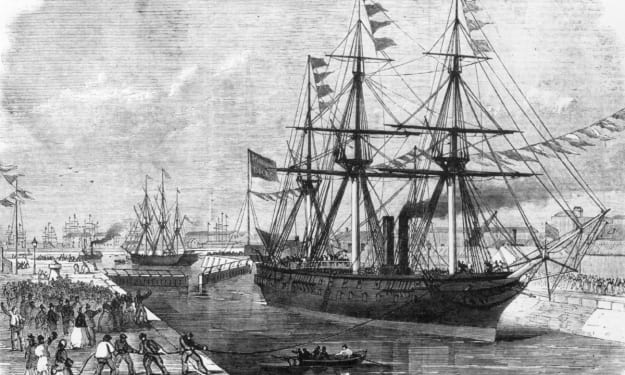
The Navigation Act of 1651
Empires of the Ancient and Early Medieval world were primarily continental in nature, in that a powerful nation pushed its borders ever wider by conquering its neighbours. However, from the mid-16th century onwards, as European explorers discovered lands across the sea that offered massive opportunities for trade or plunder, empires became trans-oceanic and intensely competitive, so that nations such as Britain, Holland, Spain and France found themselves in conflict over pieces of land across the world, as well as the sea routes that were essential for their trade and defence.
By John Welford5 years ago in The Swamp
First Nation Groups in North and South America
Millions of indigenous people have called the entire continents of North and South America their home for tens of thousands of years. They were the first ones to have arrived to the continents via the Bering Strait bridge that was existent during the last ice age. Since then, they have developed into numerous tribes and confederacies that implemented unique agricultural, cultural, culinary, hunting, foraging, spiritual, and linguistic practices that were mirrored by their way of life and construction outlook. Naturally, some of them were at war with each other. Others worked and lived together in peace and harmony. Each piece of the land they had, had distinct characteristics. I find that aboriginals knew the lands better than anyone else. They knew exactly how to tame it without harming it. They knew how much should be taken without causing grave disturbances to the ecosystem. Indigenous groups bonded with the land culturally and spiritually and respected it. They knew what they were doing and they were masters. But a gargantuan turning point for millions of aboriginals arrived during the era of navigation instigated by European quest for exploration, discovery, trade, and of course, power. Many European kingdoms at the time were competing with each other to dominate swaths of lands on different continents all over the world. They were on a quest to outmaneuver and overpower the other, to become wealthy and strong. Sadly, many aboriginals were caught in between and perished over the centuries due to the bloodlust and conquest-obsession of European powers.
By Kevin Tennert5 years ago in The Swamp
The People's Republic of China
China is one of the oldest and culturally richest countries in human history. In fact, its influence and power have been felt across continental Asia for millennia. During the middle ages and age of enlightenment in Europe, China was seen as a global power. It was arguably the most powerful kingdom in the world until its antagonistic attitude towards change and reformation led to its demise in the hands of the British.
By Kevin Tennert5 years ago in The Swamp
Bolivarian Revolution (SHORT STORY)
The memories are still fresh, nitid in my mind. It felt like I was in a movie at the moment, but I was scared, we were all scared. Venezuela has always been a really unstable country, but this was my first time really experiencing it, and I don’t think it ever had gotten this bad before. The whole city was paralyzed, and for a whole year, there were on and off protests. The police response was outrageous. You could look out the window to what once was a beautiful city with its green hills and wild, colorful parrots flying around and now there were fires, smoke, explosions, and people running to hide in every single crevice. The evil green men were everywhere and they’d break into your neighborhood and start shooting, looking for people to lock up. Across bridges and parks, there were pictures of the hundreds of teenagers that were murdered by the government, they were 16, 17, and we're just trying to get a breath of fresh air among all the black smoke.
By Jesus Eduardo Lopez Alvarez5 years ago in The Swamp
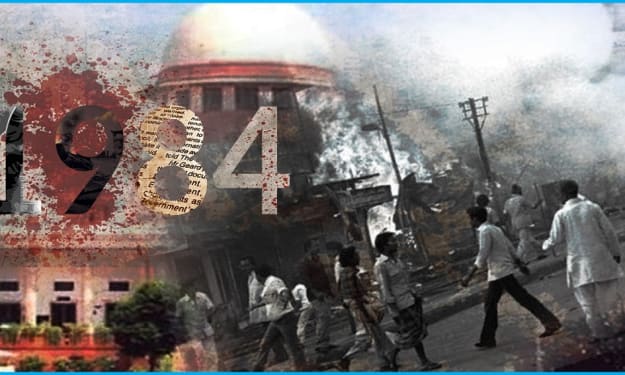
Anti-Sikh Riots 1984
All through the period from October 31 to November 5, 1984, large mobs largely formed by hooligans loyal to the ruling Indian Congress Party from many part of the country attacked Sikh community. The mobsters swarmed into Sikh neighborhoods, arbitrarily killing any Sikh men they could find. these events should not be called riots, but be described as one sided pogrom or a crime against humanity. This was a black spot on India history .
By baljeet singh5 years ago in The Swamp
Abraham Lincoln's Emancipation Proclamation
The American Civil War is often regarded as the culmination of Abraham Lincoln’s campaign to end slavery, but that is an over-simplification of his motives. His Emancipation Proclamation can be seen as having had an ulterior motive.
By John Welford5 years ago in The Swamp
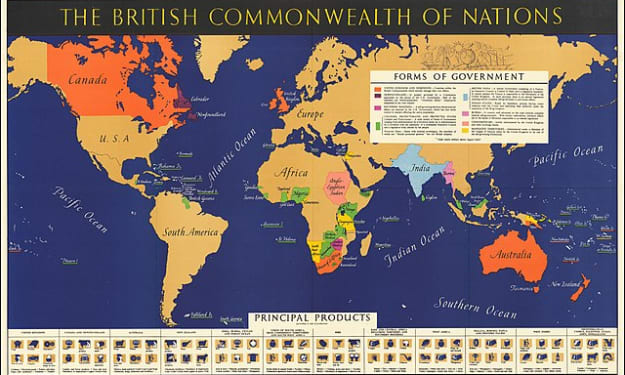
The Commonwealth Has Never Been Fit For Purpose, Why will It Be Different In The Age Of Brexit?
The commonwealth of nations, known in common parlance, as the commonwealth, is a political union of fifty four countries - mostly former nation states colonized by Britain during the time of the empire. These fifty four countries include the likes of Singapore, Malaysia, India, Nigeria, Ghana, Uganda, South Africa, Jamaica, Barbados, New Zealand and Australia.
By Adebayo Adeniran5 years ago in The Swamp