history
Past politicians, legislation and political movements have changed the course of history in ways both big and small. Welcome to our blast to the past.
Gandhi - The Mahatma
7 June 1893. It was a cold night. A man sat shivering on the Pietermaritzburg train platform. He was just thrown out of the first-class compartment of the departed train, even though he had the first-class ticket. Reason? He was a man of color. This singular event would turn out to make the man question his beliefs and faith. It would make him rethink the hopeless hardships of Indians and people of color. It would lead to a spark in his mind, which would turn into a fire engulfing him and a whole nation into the principles of Ahimsa and Satyagraha. It would later turn him into a Mahatma.
By vaisrinivasan5 years ago in The Swamp
Where modern democracy started
“Given by our hand in the meadow that is called Runnymede, between Windsor and Staines, on the 15th day of June in the seventeenth year of our reign (ie 1215) (Extract from the closing paragraph of the English translation of the Magna Carta held at The British Library).
By Alan Russell5 years ago in The Swamp
Why does Harriet Tubman deserve to be on the $20 bill?
With newly installed President, Joe Biden, bringing new life to the mission of replacing the face of controversial 7th president, Andrew Jackson, with one of famed Civil War-era abolitionist, Harriet Tubman, I have heard this question more than once: "Why does Harriet Tubman deserve to be on the $20 bill?" Even seeing mention of it zip by on various social media platforms, not just news outlets or in casual conversation, here in the Southern USA.
By Vivian Brooks5 years ago in The Swamp
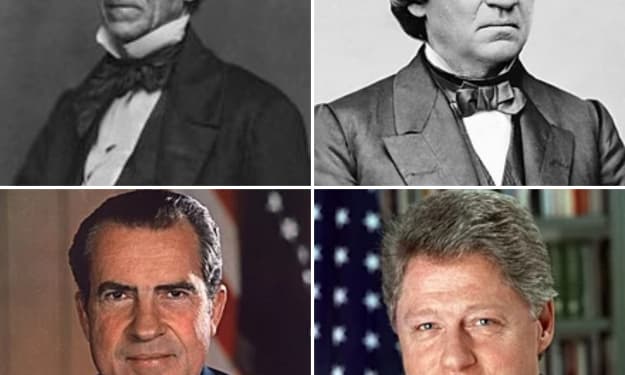
"Rendered Himself Obnoxious" Is Impeachable?
Written throughout the Constitution of the United States are checks and balances on power between the three branches of government. In theory, this balance of power ensures that the country will remain stable and resist the threat of losing the freedom and democracy that many Americans cherish. The power of impeachment is one such check.
By Nicole "ChaseThePen" Sanchez5 years ago in The Swamp
Liberals have a duty to save Trump loyalists from the brink of destruction
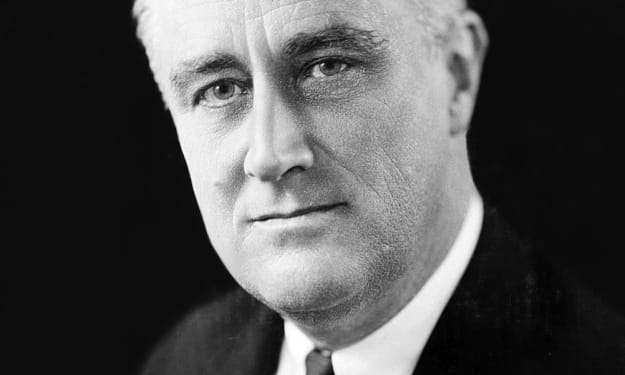
In 1933 President Franklin D. Roosevelt started the New Deal. It would run until 1939 and encompassed a series of public works and relief programs specifically targeted at rebuilding the ravages of the Great Depression. Among its infamous changes was the foundation of the Social Security Administration, minimum wage laws, and it eventually spiraled out into things like Medicare and others. The New Deal saved a dying class of Americans who were quickly being left behind by the modern world. Many had grade-school educations; they were carpenters, tradesmen, and laborers. Without Roosevelt’s New Deal, they would have been economically extinct, relegated to a short-life of extreme poverty. It was Roosevelt’s New Deal that cemented the Democratic Party as the party of the working class. He lifted working people up, and what followed were the worker’s unions, manufacturing jobs and decent salaries that built the American middle class into a force to be reckoned with. Despite Roosevelt’s liberal stance on social issues, many socially conservative workers voted for him each of the four terms he ran. Not because they were social justice warriors, but because Roosevelt had saved their asses, and they knew it.
By Jeremy Gosnell5 years ago in The Swamp
The Last Musketeer
Through-out the course of history there have been those events orchestrated by man that defined a generation. So it was that in the 18th century saw a generation on two continents become embroiled in revolution. These separate revolutions were the two most singular events during the latter half of the 1700's. A period which altered the course of history. The world in 1781 marked the end of the American Revolution which gave birth to what was to become that great noble experiment of Democracy. But, across the Atlantic seeds of another rebellion were already being sewed. A way of life for the Monarchy and the French Nobility was about to come to a violent tragic end.
By Dr. Williams5 years ago in The Swamp
History of Roman Slavery in Eastern Europe.
To understand why the history of Porrajmos, or slavery in eastern Europe has been forgotten or erased from memory, it lies in two main aspects of the problem of memory construction: the intra-cultural aspect of the Roman community and the socio-cultural dimension and the relationship between them.
By Viona Aminda5 years ago in The Swamp
What the Tsarnaevs Didn’t Know
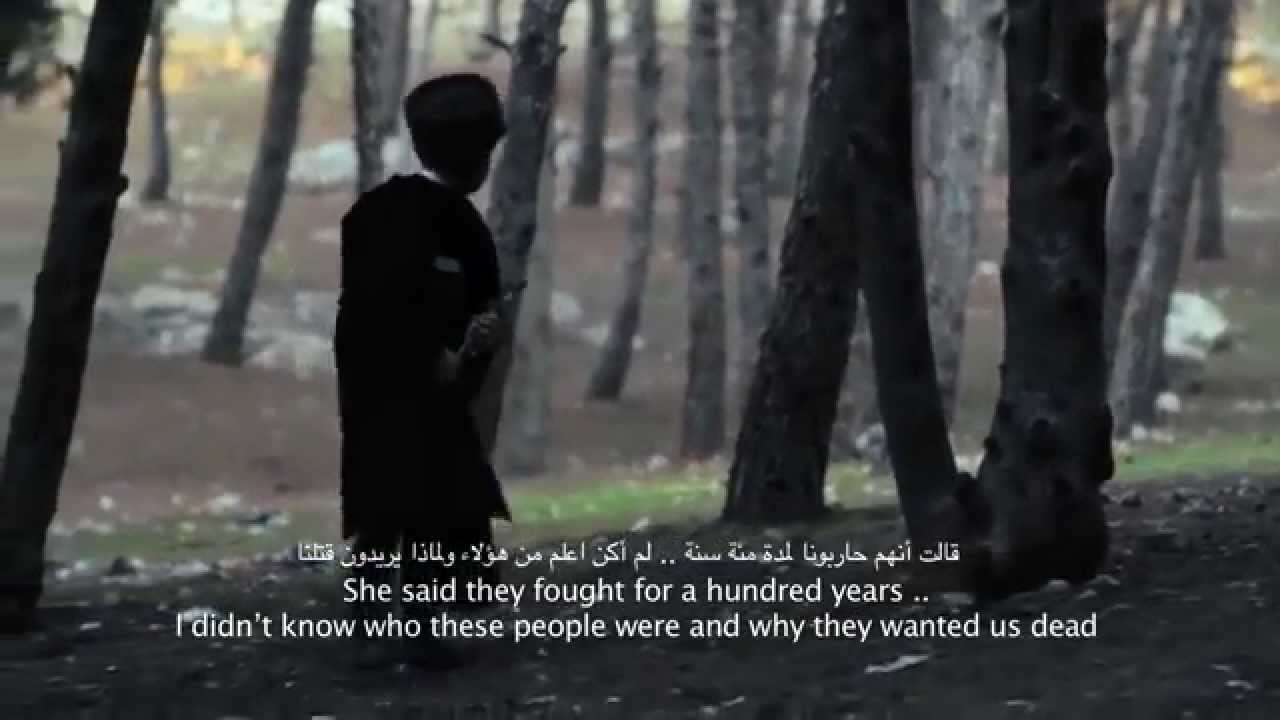
When the Boston bombing trial dominated the media, its perpetrators, the Tsarnaev brothers, were associated with a geography scarcely known by Americans: Chechnya. If there was any examination in Chechnya’s history, rarely did it go beyond this: the bombers hailed from a Republic whose leader, Dudaev, had briefly made a bid for independence in 1992, the upshot of which was a catastrophic twenty-year-long war that decimated the local population.
By Rebecca Ruth Gould5 years ago in The Swamp