
Why Mexico’s Building Facade Market Is Evolving Around Sustainability and Smarter Design
Mexico’s building facade market is growing as developers adopt sustainable materials, smart technologies, and more performance-driven architectural designs.

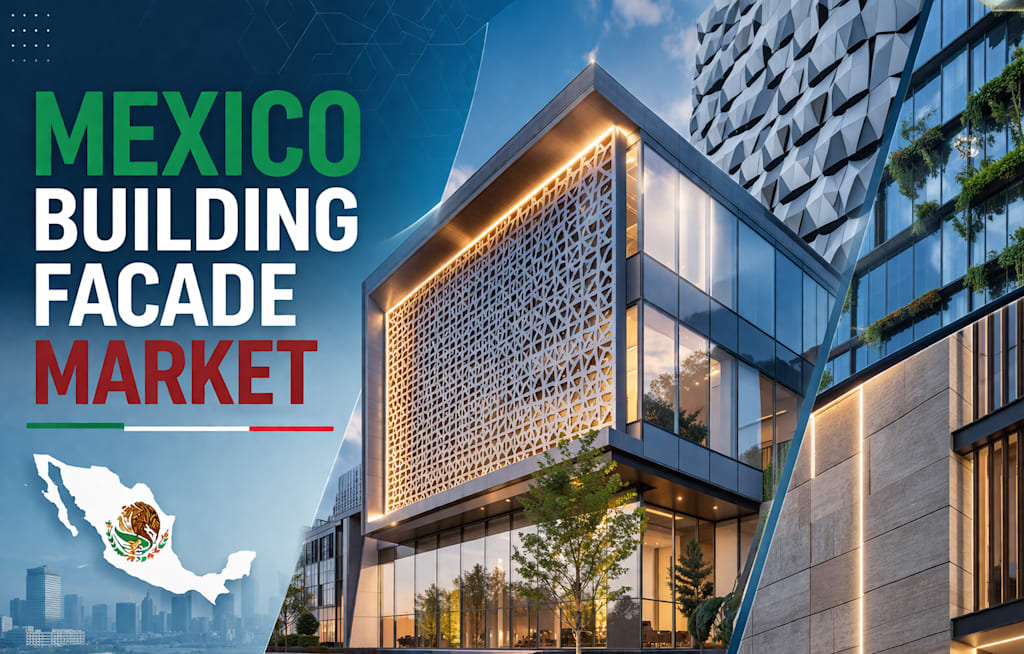
The facade of a building has a major role to play in the energy performance, comfort of the users, weather protection and how a project will be viewed in the future, resulting in facades being an increasingly important factor for developers, architects, and construction companies in Mexico as the demand for high performance, sustainable and modern designs increases․ The facade is no longer seen just as a cladding for buildings, but as an integral part of the building's operation․
According to IMARC Group's report, the Mexico facade market is expected to grow at a compound annual growth rate (CAGR) of 8․30% from 2025 to 2033․ The growth is driven by demand for energy-efficient buildings, aesthetically pleasing facades, sustainable materials, innovative facade technologies, and designs and the growing demand for smart buildings․
One of the trendiest developments in the market has been the increased use of sustainable building materials․ IMARC notes that LEED and EDGE green building certifications are growing in Mexico, and developers are increasingly using recycled materials, low-e glass, and natural materials in constructions․ The facade is one of the most visible, and most impactful systems when it comes to the energy performance of a building․ Better materials can reduce heat gain, provide insulation, increase efficiency, and promote the sustainability goals of a project․
As recently as January 2025, for example, IMARC reported that Grupo DAGS had completed its Moranta Tower skyscraper, near Saltillo, featuring Holcim's ECOPact concrete, where it was hoped that it would reduce CO2 emissions by 30%․ Such examples show how sustainability is becoming part of real facade and structural decisions in Mexico's construction landscape, rather than just branding․
Another trend is the increased use of smart building facades․ A report from IMARC cited automated shading systems, self-cleaning glass, and solar panel facades as becoming popular in Mexico․ These systems are able to react to their environments in real time, allowing them to improve energy efficiency and performance․ In practice, this means facades are becoming less of a static enclosure and more of an active part of the building․
The above is especially true in urban areas where there is pressure on developers to make a building more efficient and flexible in use․ In this context, smart facades could optimize HVAC and lighting control and possibly result in building cost reduction over time․ This would support the belief that facade design will have a growing relevance within the building intelligence and lifecycle efficiency discourse․ It is imperfectly inferred from IMARC's treatment of smart systems and real-time building management․
According to the IMARC, the architecture of Mexico is undergoing a shift toward the use of more dynamic, distinctive, and functional facades that combine corten steel, glass, and composite panels with angled and curved surfaces․ Across a diverse range of projects, the buildings are not simply responding to a brief to provide insulation, sun control, and acoustic performance, but they are also highly sculptural in the way they are expressed․
That combination of visual appeal and functionality is important because it indicates that this market is changing․ Facade no longer just refers to appearances․ The facade is part of expected contributions to comfort, efficiency and differentiating the building, and is one of the clearest avenues available for making a distinctive branding statement as competition increases in residential, commercial and mixed-use buildings․ This is an interpretation based on design and application trends described by IMARC․
The global facade market is segmented based on material type into glass, brick, stone, metal, composite, and wood, and based on product type into prefabricated, modular, cladding, unitized, rain screen, and custom-designed facades, according to IMARC․ By application, the market includes residential, commercial, industrial, institutional, civic buildings, and mixed-use buildings․ By end user, the market includes architects and designers, construction companies, real estate developers, building owners and managers, government and regulatory bodies, and consultants and engineers․ Regionally, these include the Northern Mexico, Central Mexico, Southern Mexico, and other regions․
This suggests a broader opportunity beyond a single material or type of building, and that facade demand in Mexico is driven by architectural aspiration, regulatory pressure, building growth, and building performance․ In other words, markets like this will grow when multiple stakeholders come to see value in the same component, for different reasons․ It is an inference from segmentation and trend framing by IMARC․
What makes the Mexico building facade market especially interesting is that it is at the nexus of building construction, sustainability, and design innovation, as buildings are being asked to do more: consume less energy, look more distinctive, and respond more cleverly to their environment․ As these expectations evolve, the facade may become one of the most important planned features of contemporary building in Mexico․ This closing thought is an interpretation of the forces and trends represented in the IMARC report․
About the Creator
michael matthew
I’m a market researcher passionate about understanding people, markets, and motivations. My work blends data analysis, consumer psychology, and strategic insight to help brands and businesses make informed, human-centered decisions.
Keep reading
More stories from michael matthew and writers in Trader and other communities.
Why the United States Industrial Packaging Market Is Growing Alongside Supply Chain Demands
Industrial packaging may not hold the glamour of its consumer counterpart‚ but it is nevertheless an integral cog in the modern supply chain․ As goods are moving through manufacturing plants‚ warehouses‚ distribution centers and long-haul transportation systems‚ the packaging around industrial goods has a lot more to do than look good․ It also must protect products under pressure‚ be safe to handle‚ be convenient for storage‚ and be resistant to temperature changes and pressure variations․ In the United States‚ these needs combine to help drive growth in industrial packaging․
By michael matthewa day ago in Trader
Nifty 50 Market Signals: What Smart Investors Are Watching Before the Next Move
Nifty 50 is one of the most trusted indicators of the Indian stock market. It tracks the top 50 companies and shows how the market is performing. Because of this, many investors follow the nifty 50 every day. At present, the nifty 50 is showing mixed signals. Some trends suggest growth, while others point to risk. This creates confusion for many investors who are trying to decide their next step. They will learn what signals the nifty 50 is giving right now, what smart investors are watching, and how you can make better decisions.
By John.doe7987 days ago in Trader
Simpsons Review: "So It's Come to This: A Simpsons Clip Show"
Happy April Fools' Day, all! It's been a while since I've written a review of a Simpsons episode, and with today being the aforementioned holiday, I just have to talk about this episode. It's a landmark episode, in more ways than one, so let's get to it.
By Clyde E. Dawkinsa day ago in Geeks



Comments
There are no comments for this story
Be the first to respond and start the conversation.