Akhil Monga
Stories (12)
Filter by community
Advantages of Minimally Invasive Techniques for Thyroid Swelling Treatment
Did you know that thyroid swelling affects millions of people worldwide, with many turning to surgical treatments? But, minimally invasive techniques have emerged as a modern, effective solution to manage thyroid swelling without the need for traditional surgery. If you are dealing with thyroid swelling, read on to discover how these advanced techniques can offer relief with fewer risks and a quicker recovery.
By Akhil Monga11 months ago in Writers
Can Varicocele Embolization Improve Male Fertility Without Surgery?
Did you know that 15% of men suffer from varicocele, which can be a leading cause of male infertility? Fortunately, varicocele embolization offers a non-surgical, minimally invasive solution to treat this condition and improve fertility. This blog explores how varicocele embolization works, its benefits, and how it compares to traditional surgical methods. We’ll also discuss how this procedure can enhance male fertility without the need for open surgery.
By Akhil Monga11 months ago in Writers
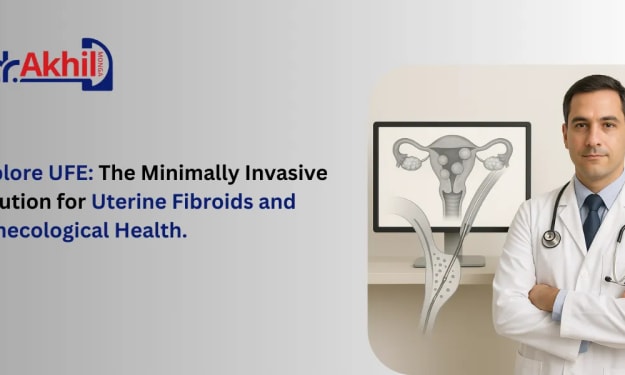
The Role of Interventional Radiology in Treating Uterine Fibroids and Other Gynecological Conditions
Did you know that between 20% and 50% of women of reproductive age currently have uterine fibroids, and around 77% of women will develop them at some point during their childbearing years? Fortunately, interventional radiology (IR) offers a minimally invasive solution to treat uterine fibroids and other gynaecological conditions, eliminating the need for traditional surgery. This blog explores the growing trend of non-surgical treatments for fibroids, helping you understand how interventional radiology can provide effective, lasting relief.
By Akhil Monga12 months ago in Writers
Endovascular Treatment For Acute Ischemic Stroke
Sudden onset of weakness involving one half of the body, facial deviation, slurring of speech, loss of balance and loss of vision. These are symptoms of an acute ischemic stroke, a medical emergency caused by a blood clot in the brain where every minute counts; timely intervention may be the difference between recovery or lifelong disability. The most advanced medical interventions for stroke include endovascular treatment for stroke - specifically, mechanical thrombectomy - that removes the blockage and restores blood flow.
By Akhil Monga12 months ago in Writers
Carotid Angioplasty and Stenting: A Key Treatment for Stroke Prevention
A clot developing in the carotid artery (artery supplying the brain) is one of the major causes of stroke, and for most patients, carotid angioplasty and stenting is a solution to restore blood flow and prevent further complications. When the carotid arteries, which carry oxygen-rich blood to the brain, get narrowed or blocked by plaque, it can heighten the risk of a stroke several times.
By Akhil Monga12 months ago in Writers
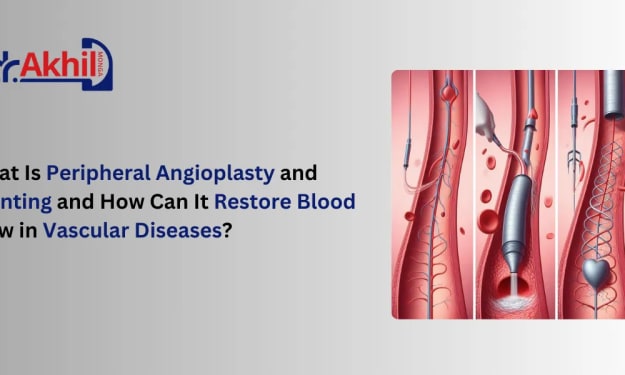
What Is Peripheral Angioplasty and Stenting and How Can It Restore Blood Flow in Vascular Diseases?
Did you know that vascular diseases can cause serious health issues, but some treatments don’t require open surgery? One of the most effective, minimally invasive options is peripheral angioplasty and stenting, which can restore blood flow to blocked arteries and improve overall circulation. Read on to learn about angioplasty and stenting in more detail, and how they help restore normal blood flow, improve circulation, and significantly enhance a patient's quality of life.
By Akhil Mongaabout a year ago in Writers
Are You Aware of the Hidden Dangers of Blood Clots in Your Legs (DVT)?
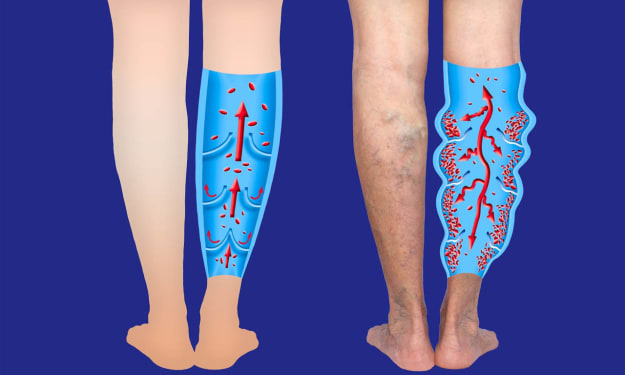
Blood clots in the legs, also known as Deep Vein Thrombosis (DVT), happen when a blood clot develops in any of the deep veins in the legs. DVT can be a serious health concern because if the clot breaks loose, it can travel to the lungs, causing a pulmonary embolism, which can sometimes be life-threatening. There have been studies published from India proving that venous thromboembolism (VTE) is as common as it is in the West.
By Akhil Mongaabout a year ago in Writers
What Is Interventional Radiology and How It Treats Stroke Without Surgery?
Stroke is a leading cause of death and disability worldwide, but thanks to advances in interventional radiology, many stroke patients can benefit from minimally invasive treatments that don’t require traditional surgery. These procedures, including mechanical thrombectomy, help remove blood clots with reduced risks and faster recovery times. In this blog, we’ll explain the role of interventional radiology in stroke treatment, how it works without surgery, and why it's becoming the preferred method for many patients.
By Akhil Mongaabout a year ago in Writers
Surgery Vs Laser Treatment for Varicose Veins
It is not something from far past when the patients used to bear the discomfort associated with painful and unsightly varicose veins only because of the fear of vein ligation and stripping. These are actually surgical procedures to eliminate tortuous veins from the legs or thighs. With this speedy advancement in the treatment of varicose veins, laser procedures have shown dominance over the typical surgical varicose vein treatments because of several patient-centric supremacies.
By Akhil Mongaabout a year ago in Writers
What Are the Risks of Leaving Deep Vein Thrombosis (DVT) Untreated?
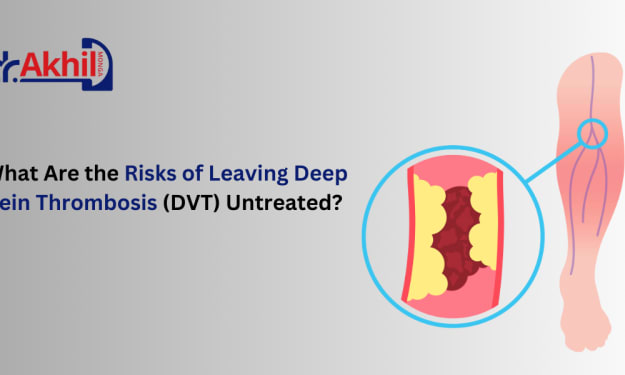
Deep Vein Thrombosis (DVT) is a silent threat that can lead to severe complications if ignored. A report revealed that venous thromboembolism (VTE), which includes DVT and pulmonary embolism (PE), occurs in 1 out of every 1,000 people globally, causing between 60,000 and 100,000 deaths annually. Despite it being so common, many people remain unaware of the dangers of leaving DVT untreated. This blog is here to highlight why early diagnosis and timely treatment are fundamental in managing DVT and preventing potentially life-threatening outcomes.
By Akhil Mongaabout a year ago in Writers
How to Prevent Complications After an Aortic Embolism?
An aortic embolism is a serious ailment that can have life-threatening outcomes if not managed effectively. It ensues when a blood clot obstructs the aorta, the largest artery in the body, disrupting blood flow to vital organs. While medical intervention is crucial, post-embolism care plays an equally significant role in ensuring a smooth recovery and minimising the risk of complications. In this blog, we’ll provide essential tips for recovery and strategies to prevent complications after an aortic embolism.
By Akhil Mongaabout a year ago in Education
7 Essential Facts About Peripheral Artery Disease
1. What is Peripheral Artery Disease (PAD)? Peripheral Artery Disease is a condition where the blood vessels in your legs become narrowed or blocked, reducing blood flow to your limbs. This is typically caused by the buildup of plaque (atherosclerosis), which can be further exacerbated by factors like smoking, high cholesterol, and diabetes.
By Akhil Mongaabout a year ago in Education