Annie Kapur
Bio
I am:
🙋🏽♀️ Annie
📚 Avid Reader
📝 Reviewer and Commentator
🎓 Post-Grad Millennial (M.A)
***
I have:
📖 300K+ reads on Vocal
🫶🏼 Love for reading & research
🦋/X @AnnieWithBooks
***
🏡 UK


Stories (2866)
Filter by community
"Haunted Castles" by Ray Russell
I first read this book as a teenager because I had found it amongst a bunch of 70s paperback horror novels when I bought Peter Straub’s “The Throat” from the marketplace in my hometown (unfortunately, said book seller no longer is with us, rest his soul). But, my initial copy of Ray Russell’s three-story collection was tattered, torn and definitely second-hand. It was missing the publication page and it was dusty and raw. When I went home, I put down the Straub book and got stuck into the Russell collection almost straight away. It was amazing but it also scared the living daylights out of me. It was absolutely terrifying and a gothic masterpiece. There was an obvious relation to older horror novels and gothic texts in Russell’s attempt at showcasing the more dubious and deceptive side of human nature. But most of all what I liked about it is that when I came to re-read the book, I had actually completely forgotten about what I’d experienced the first time. I had a brand new copy which was published by Penguin and it was immaculate. I remembered reading the book but not what I had thought of it and so, sitting in the back of the car, on my way to the seaside, I re-read the whole thing. I ended up having a massive anxiety attack in the car because of the wide open spaces and since, I have constantly associated the book with being absolutely terrified. The book itself was not the initial reason for the attack but I think it may have contributed. Books can terrify me in ways that films only dream that they could. It just feels far more immersive when it is in a book and there are clear parallels between some of the stories in this book and older, wiser, darker books of our past - like Victor Hugo’s “The Man Who Laughs” and a number of others.
By Annie Kapur6 years ago in Horror
"The Man in the Picture" by Susan Hill
When I first read “The Man in the Picture” by Susan Hill I must have been around thirteen and then, I re-read it when I was about twenty-one. I like doing that with books because you discover things about the book you didn’t realise initially because you were so young. The things I unfolded when I was twenty-one were extreme in the field of psychological torture. It was actually far more frightening the second time I read it than the first. When I first read it, I was on a sort of ghost-story binge and so I was reading things like MR James, EF Benson, HP Lovecraft, Charles Dickens and others. But, in Susan Hill’s works I noticed a more modern gothic with a definite old flavour to it, it is something I absolutely fell in love with when it came to her works and “The Man in the Picture” was one of her newer ones. By then I had already read “The Woman in Black” and “Mrs. De Winter” and so, I was used to her gothic, atmospheric and often terrifying writing style. I would say that her books are best read at night, whilst it is raining, next to a dim lamp or better yet, by candlelight. Top it off with a slight thunderstorm and you might just have the perfect setting in which to read a Susan Hill novel. “The Man in the Picture” is no exception. It is a chilling book that you really need to read more than once in order to really get it.
By Annie Kapur6 years ago in Horror
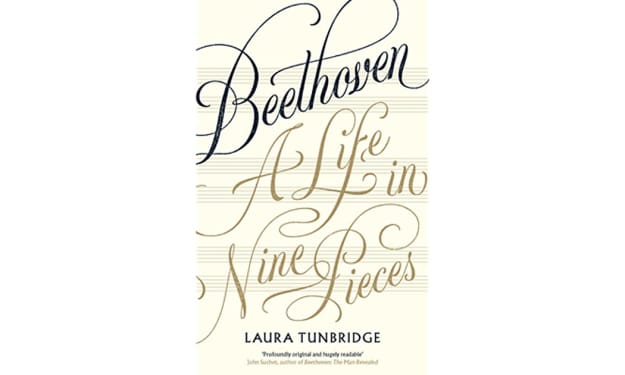
Book Review: “Beethoven: A Life in Nine Pieces” by Laura Tunbridge
Many may just call this a great biography about Beethoven, but that really isn’t it at all. This book is more like a celebration of his life whilst also filling in the gaps that had previously been marred by popular culture. The latter presents us with a scowling image of a man toiling over a masterpiece in a famous piece of artwork, but Tunbridge argues that this isn’t actually it at all. Beethoven was far more than just a discontent who worked day and night on his music - he was a three dimensional personality and a man who was way ahead of his time whilst also being a product of it. Tunbridge seeks to let us explore into the world of Beethoven and how he really went about his pieces and his masterpieces in the contexts of the social, cultural and political realms. It is a wonderful book that I’m sure that Beethoven himself would be very proud to have written about him.
By Annie Kapur6 years ago in Beat
"Julius Caesar" by William Shakespeare
When I was thirteen years’ old I went through a massive Shakespeare phase and the first thing I did was re-read all the plays that I had read before and then, I finalised to start a new one. The new play I started first and foremost was “Julius Caesar” and I can honestly say that even though I did not have high hopes for the play to begin with, I was absolutely entranced by the end of it. I did not want to play to be over, it was absolutely fascinating to see exactly how the conspiracy worked, and ultimately, why it didn’t work. The characters were each individual, even the guy who has his identity mixed up with a guy who has the same name as him and gets himself arrested. The symbols, ghosts and violence of the play is extreme and even the language is just what you’d expect from Shakespeare - multiple layers in which you definitely won’t get it all first time. From the plot which climaxes with the assassination of Julius Caesar to the downfall in which suicide and war are the only options, this play has everything you could want in a terrifying tragedy. It has the supernatural, the satirical, the murderous, the torturous, the conspirators, the violent, the fiery, the brutal and ultimately, the suicidal. It is possibly one of Shakespeare’s most violent plays after “Titus Andronicus” and I can honestly say that every time I have taught this play, it has been nothing but appreciation for Shakespeare’s over-the-top violence and gore. From start to finish, it was a masterpiece that thirteen-year-old me first opened up, only to be consumed by future re-reads throughout my teen years and beyond. It was like reading into a great painting from history. You don’t quite get it all first time - but when you see Rome covered in blood, you think you’re finally on your way to understanding what it is all about. At least, you hope so.
By Annie Kapur6 years ago in Geeks
"The Prince" by Niccolo Machiavelli
I first read this book as an early teen after hearing the word “machiavellian” pop up around public figures at the time like George Bush Jr. and Tony Blair (yes, I grew up in that era). I had no idea what this word meant as a thirteen-year-old and so, when I looked it up and saw that it was related to a person, I was looking through the works by him in no time. When I first found the list, I was initially thinking about reading the “Discourses on Livy” and when I realised I had to look up a word in the title, I proceeded on to an easier title: “The Prince” is what I read instead. Honestly, I’m glad I chose this one first because it really does explain a lot. It is written quite simply and so, I didn’t need to do much looking up, annotating and researching. I noticed immediately that the first part concerns gaining power and the second part concerns maintaining it. I can honestly say that I was shocked that many political figures were actually so much like this in real life - especially concerning the second half of the book. When I re-read it, I like to concentrate a lot of my attention on to Chapters 17-19 because these are the ones I believe to hold the key to the machiavellian identity. When I went to university, I was 20-years-old when I wrote my essay on machiavellian authorities and powers on the Renaissance stage and how they had an impact on to how certain characters of a play were viewed. If we apply this to real life, we can’t actually be much further from the truth as a machiavellian is not a particularly villainous person or a psychopath - just one who knows how to gain and maintain power and they know how to do it very well. I have read this book over ten times in my life and I still own the first copy I bought when I was thirteen (it is the same copy I re-read). It now contains various annotations from over the years and never fails to shock me into realising what people will do for power, some of the quotations are absolutely timeless in every sense of the word. They will make you shudder to see that the rules of the machiavellian prince are applicable from every world leader from the malevolent Genghis Khan to the charismatic golden-boy, Barack Obama.
By Annie Kapur6 years ago in The Swamp
Book Review: "Breath" by James Nestor
This is a book about, you guessed it, breathing and how to breathe. The science of breathing is an interesting story because it is only when you actually think about your breathing that you begin to breathe manually. James Nestor admittedly has his own sinus problems when it comes to breathing but there are things that are better about his explanations of these experiences than other aspects. First of all, he has massive chunks of anecdotes and autobiographical information followed by explanations on top of scientific explanations on top of just a one-sentence seeming ‘example’ from some time in history. The book, though easy to read, is badly organised and has though it grabs your attention at the beginning with the brilliantly written prologue, it falters to keep your attention throughout the blocks and blocks of scientific stuff and various pieces of information about various sects and histories. So, I want to have a look at the main pros and cons of this book and how they come into play throughout the text.
By Annie Kapur6 years ago in Longevity
"The Iliad" by Homer
This is a book I first read when I was fifteen years’ old and honestly I can say that I was so entranced by it and so invested in it, I really didn’t want it to end. It took me a while to read because upon first time, there was a lot of stuff about Ancient Greece and the Trojan War I had to look up whilst doing so, especially the stuff concerning geographical locations and the section about the ships. However, when I finished it, I felt some sense of loss, like I had finished something that had just changed my life entirely and I had no idea what it would do to me in the coming future. From the raging wrath of Achilles to the burial of Hector, breaker of horses - this book came to change everything I had once believed about war. In war, there’s always a side that’s less violent, a side that’s right and a side that’s moral - but not here. Not in “The Iliad”. In this text, both sides were as violent and blood-thirsty as each other and both had a complete disregard for the well-being of anyone on the other side. They were trained to hate each other and racially, though they may not be so different - they were completely different in all of their views concerning the key woman and her status - Helen of Troy. This book was one of the most immersive things I had ever read in my life and I have read it a few times since, I have even taught it to students who have called it one of the greatest war books they have ever read. Why? Well because it’s not all out war. It’s rage, it’s difference, it’s backstabbing and deception, it’s regret and sadness and finally, it’s a one-on-one showdown between the two great heroes of the epic from the two opposing sides: Achilles of the Greeks and Hector of the Trojans. And the prize? Well, nothing but the dignity of their side over the death of innocent Patroclus. Patroclus who meant zero harm whatsoever and only want to fight on behalf of Achilles, who would not. All in all, we could say that this is Agamemnon’s fault for stealing Briseis from Achilles in the first place. But this is not a feasible excuse for Achilles’ behaviour of rage, wrath and ignorance.
By Annie Kapur6 years ago in Geeks
"The Turn of the Screw" by Henry James
I was fairly young the first time I read this - around ten or eleven. I’m not going to lie to you, I had my dictionary at the ready and was looking up strange words left, right and centre. First time around, I didn’t really get it, so I went back and read it again and scared myself half to death because, after reading it once, I knew what all the words meant now. For a few days, I didn’t get much sleep and I was up most nights thinking about those weird children and the haunting coldness of Bly Manor. I would re-read the book over the years because the way in which the ghosts psychological enrapture the children is so incredibly intense even though the text itself is relatively short. You’d imagine you would need a long novel to build that kind of atmosphere, but Henry James does it in a short amount of time, leaving you with a shivering and shuddering feeling long after the text has ended. The last time I read it was when I was teaching it, maybe last year some time in the Spring. The students I was teaching it to often admitted that the text felt very dark because of the fact the bad things were happening to children. I think that much like novels such as “The Exorcist” by William Peter Blatty and “Suffer the Children” by John Saul, Henry James offered us a darker look at hauntings and horror through his writing of the innocence and child-like nature of Flora and Miles. It is not only frightening, in some cases it is rather disturbing too.
By Annie Kapur6 years ago in Horror
The Five Advantages of Being a 'Plain Jane'
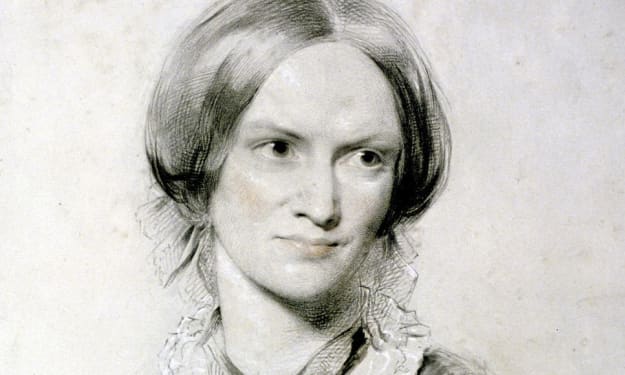
I am admittedly a ‘Plain Jane’ type or person. There is nothing interesting about me, nothing that intrigues anyone about my being and my interests are conventional and appropriate to who am I overall. I am in no way a person of interest to anyone and my character is in no means extraordinary. And that is exactly how I want it to be. Being a ‘Plain Jane’ does not mean resigning yourself to a life of indifference, content and often boredom, it actually means that your personality never gets challenged by communities and your willingness to ‘open up’ emotionally, psychologically etc. to others is within your own grasp so tightly that you only give out what you want people to see. But what is a ‘Plain Jane’? A ‘Plain Jane’ is often a woman who is considered by others to be boring, uninteresting and in nature, morals and ethics, plain and unadventurous. The way in which it is named is somewhat after the character from the book “Jane Eyre” by Charlotte Bronte - the ‘Plain Jane’ being the eponymous narrator in comparison to the character that the love interest, Edward Rochester, is interested in - the decorated Blanche Ingram.From this novel, I learnt to live with my ‘Plain Jane’ abilities and more than often, it has worked in my advantage - and so, this is what I want to go through today. Here are five advantages to being the ‘Plain Jane’ of the family.
By Annie Kapur6 years ago in Humans
"A Lesson Before Dying" by Ernest J Gaines
I first read this book in school whilst I was first reading “To Kill a Mockingbird” by Harper Lee and even though Harper Lee’s book absolutely wowed me, this book hurt me in ways I couldn’t even imagine. If you want to read about how African American people are mistreated by the justice system, and how they are systemically made to look evil and violent then you definitely need this book. I recently re-read it and it made me cry yet again like it did last time. There’s something incredibly dark and uncomfortable about this book and yet, it is enlightening because it teaches us so many things about injustice, prejudice and the value of human life as seen by three different sides: the teacher, the individual and the reader. It is unbelievably moving in its writing style, its storytelling technique, its politics, its time, era and order, the way in which America is prejudice against the outsider and finally, we get various lessons in what it means to be alive and what it means to die. The high emotional stress of this book gets me every time I pick it up and ever since I first read it, I have been moved by it every single time. There’s nothing more emotional than seeing someone convicted of something they didn’t do and absolutely nobody believes them. They turn to their teacher and yet, it almost feels like it could never be enough. There’s something holding it back and stopping it from having a contented ending. You’re left feeling a little hollow and a little guilty, as if you wanted to scream out that this man is innocent. It is heartbreakingly good and the book will always remain with me for as long as I live.
By Annie Kapur6 years ago in Geeks
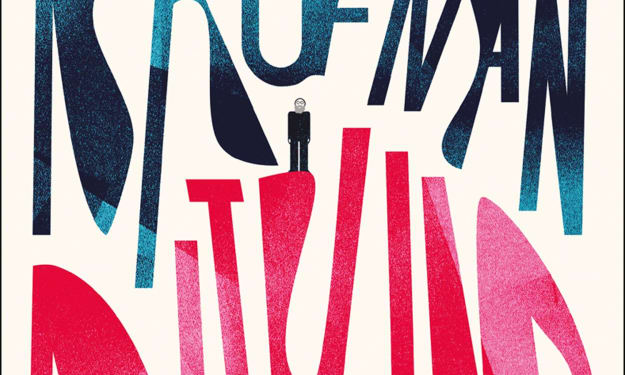
Book Review: "Antkind" by Charlie Kaufman
The debut novel by the director behind one of my all-time favourite movies - “Synecdoche, New York” - has come to light and though it may not be a great work of fiction, it is definitely an interesting one for the beginning of the book does not reflect the middle and again, the middle does not reflect the end. The writing style that pervades through the novel changes as the character encounters more details of his own personality mixed with this ‘lost film’ discovery of stop motion animation of puppets that we see come from a friend of an old age. The book on the whole is a great discovery for post-modern pseudo-biography, but in terms of interest, it leads back and forth on a scale of moderately immersive to flat-out boring. Though the language style is often diverse and packed with second meanings, I fear that the character os Rosenberg himself is a cliché of the now cookie-cutter character given to us in pieces by Chuck Palahniuk’s “Fight Club” and was practically perfected by Bret Easton Ellis in his novels “Less than Zero” and “Imperial Bedrooms”. On the whole, the book is average in its approach to being a post-modern novel, great in its attempt to be a linguistic roller coaster, and terrible in its attempt to create a character that is both believable and someone the reader would care about enough to read such a long book on their ramblings and references.
By Annie Kapur6 years ago in Geeks
"Columbine" by Dave Cullen
I read this book for the first time whilst I was in university and honestly, it scared the living daylights out of me. When I first bought it, I already knew what it was about but seriously, I couldn’t resist but read it. I was hoping it wasn’t overly gory with details of the actual shooting but I was also hoping that there was a good amount of investigation in the books into why, where and when. The fact that it was Columbine that caused a number of other school shootings in America with a lot of them doing it in order to feel belonging and fame, means that this book is highly relevant not only to its own time and decade but to ours as well. When it comes to school shootings, there is one thing that they all have in common - they have a child or young person with a high temper, emotional strain and anxieties and depression wielding a weapon in which they have no or very little control of their actions. This book seeks to prove that not only that is true but influence and this almost cult worship culture has intensified the culture and association around the school shooting and massacre history over the years.
By Annie Kapur6 years ago in Geeks