Annie Kapur
Bio
I am:
🙋🏽♀️ Annie
📚 Avid Reader
📝 Reviewer and Commentator
🎓 Post-Grad Millennial (M.A)
***
I have:
📖 300K+ reads on Vocal
🫶🏼 Love for reading & research
🦋/X @AnnieWithBooks
***
🏡 UK


Stories (2865)
Filter by community
The Best Works: Cormac McCarthy
Cormac McCarthy was born on the 20th of July, 1933 in Rhode Island in the USA - he was one of six children born to an Irish-Catholic couple called Gladys and Charles. When McCarthy was 4, his family relocated to Knoxville, Tennessee because of his father's job and by 1941, after moving to various places over Knoxville, the family finally settled in the south section of the city.
By Annie Kapur6 years ago in Geeks
“Les Miserables” by Victor Hugo
It’s been a long time since I first read “Les Miserables” by Victor Hugo and I am going to be perfectly honest with you that I was about fourteen when I first tackled it. I kept a notebook with all the characters and how they interacted with each other. I had a flowchart as well and after two weeks or so I had finished the book. Again, I’m not going to pretend that I found it easy - I sat there with a dictionary some of the time and mostly I was kind of scratching my head over some of the concepts. It was definitely a difficult read and when I had finished the book, I felt a sense of massive accomplishment that I hadn’t felt before. I felt like I’d done something a lot of people don’t do at 14, no matter how long it took me. The book actually changed my perception of French History and really got me into studying the revolutions in France. I read a multitude of books on the French Revolutionary Wars, the Napoleonic Wars and the June Rebellion after that. The history of the book was absolutely electrifying. It really made you want to get up and seek out a revolution.
By Annie Kapur6 years ago in Geeks
20 Books of 2020 (Pt.38)
I would first like to say how shocked and amazed I am at the response I have gotten for wanting to open up my network and beginning talking to people a lot more. Many, many people have followed me on Instagram since I've gone public and they are all such nice people as well. Everyone seems to be a part of this giant book network in which everyone follows everyone else and they talk about certain books and types of book on a per monthly or, per genre basis. It is really quite something and may be able to help me in my first stages of socialising and improving the social skills I require.
By Annie Kapur6 years ago in Geeks
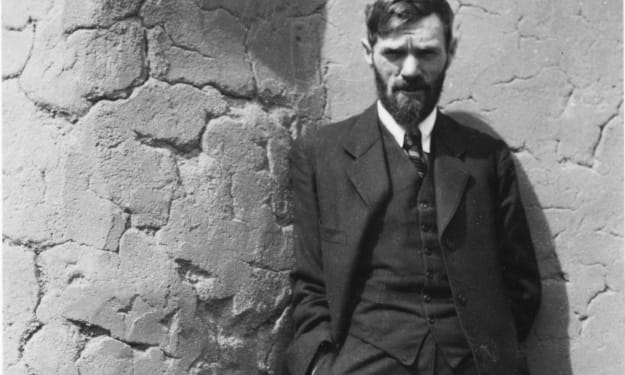
"Life with a Capital L" by DH Lawrence
I only read this book recently in the past two years or so. I discovered it whilst looking for an essays book to read and initially, I was considering the essays of Saul Bellow - but when DH Lawrence popped up, I knew I couldn’t miss that opportunity. I had already read so much by DH Lawrence and I remember enjoying “Sons and Lovers” in a cafe whilst by myself some years before. Unlike Saul Bellow, every memory I had of DH Lawrence was relatively good. My first experience of reading this book though, was incredible. I would lie on the floor in the summer’s heat and mark my favourite quotations because it was just so satirical. I would then proceed to write small quotations from the book on a piece of card and then, place the pieces of card inside a jar (which I still have) because there were some quotations in that book that you just don’t miss out on for your life. It completely changed my opinion of DH Lawrence just as this slightly humorous provincial writer. He was now a master of humour, darkness and had risen to the status of literary genius in my eyes. I thought this book was fantastic and it has become my favourite DH Lawrence book of all time. Even surpassing “Sons and Lovers”.
By Annie Kapur6 years ago in Geeks
17th July, 1918 - The Execution of the Russian Monarchy
There's something almost spooky about looking back and seeing a country call for the murders of not only its king and queen, but also their children - including the youngest boy who already suffered greatly through life. I personally have no opinion on this since I don't feel like I have read enough on the Russian Revolution to give an informed statement, but there is no doubt that this war will always make entertaining and shocking viewing material.
By Annie Kapur6 years ago in The Swamp
Ten Books About Catherine the Great
On the 17th of July, 1762, Catherine II, better known as Catherine the Great, became the official Tsarina of Russia after her husband, Peter III was murdered. She was known as not only a great ruler, but as an intelligent woman who was very involved in the cultural shifts and literary movements of Europe at the time - her letters prove this to us.
By Annie Kapur6 years ago in The Swamp
"The Flowers of Evil" by Charles Baudelaire
Charles Baudelaire’s poetry is often considered one of the beginnings of ‘carcass writing’ and so, it is only obvious that the reader would notice the numerous different ways in which death and dying are discovered, written, analysed and iterated throughout the anthology. Dying is especially important because of the fact it can be attached to various different ideas such as: religion - the reader sees the Devil and God ready at the dead’s moment of new being, violence - the amount of violence required to inflict death may not be so great, but the graphic descriptions of the violent actions are numerous and often linked to the mangling of the human body through pain and suffering. After this, the reader encounters themes such as: images and symbols of death - the way in which images of death (coffins, corpses and graveyards) change the narrative or the atmosphere of the poem either make the poem darker and yet, in the darker poems, the reader often sees a peacefulness brought to the violence, suffering, pain or anguish through the inevitable act of death. This shows that death is not only used as a darkness or evil in which the narrator and characters often fear and hate the own thought of their demise or the demise of those they love, but it is also the tranquility after the storm-like narrative in which the narrator and characters experience something terrifying in life, or are being purposefully hindered from doing something, completing something or are experiencing intense amounts of pain, depression or are suffering upon earth in any extreme way. When investigating the theme of death within this anthology, there are so many different things that the reader has to take into account that the image of death often overtakes the idea at hand or, it adds to it. Whether it is of suffering and pain or of peace and tranquility, death often makes the poem seem bearable for either the narrator or the subject of the poem, in the fact that either it is the beginning and therefore the lesser of the sufferings, the most important section of the grieving process that makes the narrator’s thoughts beautiful and picturesque or the end of the suffering that the narrator or character has suffered for what seems like too long according to the poem. Blended with the themes of the poem, this leads the reader to believe certain ideas such as whether the narrator or character has a belief in God, or whether they have faith in the Devil, whether they are emotionally violent or whether they are emotionally detached - but all in all, the reader will realise that there is often more than one dimension to the characters and the narrators of Baudelaire’s poems.
By Annie Kapur6 years ago in Poets
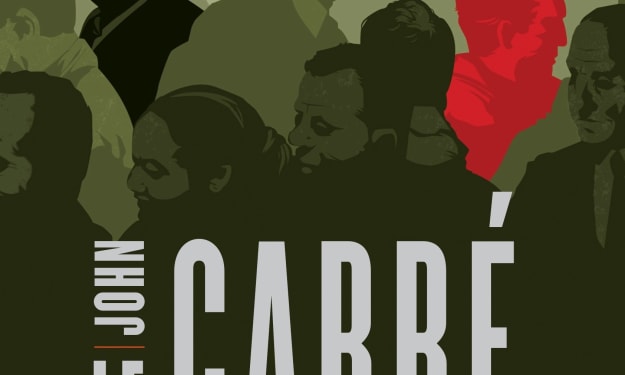
"Tinker, Tailor, Soldier, Spy" by John Le Carré
I read this book when I was about fourteen years’ old - it was a year before the film came out and I’m going to be perfectly honest with you that I only read the book because I knew there was going to be a film with a lot of big names. I’d heard of George Smiley before that, being interested in spy fiction - I was incredibly into the James Bond series as my guilty pleasure reading growing up (and I’m re-reading the entire series at the moment, it really brings back some serious memories) and I was also a big fan of things like Poirot and Sherlock Holmes. To be honest, I didn’t think I’d like all the dullness of the Cold War involved in the novel, but I was so definitely wrong because everything about this book is contained within that historical context. It was like releasing a beast into a circle that already had these dark, shady creatures of its own. It made for the perfect atmosphere. This book ended up changing my opinion of spy novels altogether because of the fact it was so intense, it was so suspenseful and it was definitely one of the darkest spy novels I’d ever read. My first reading experience of it, you could say, was completely immersive.
By Annie Kapur6 years ago in Geeks
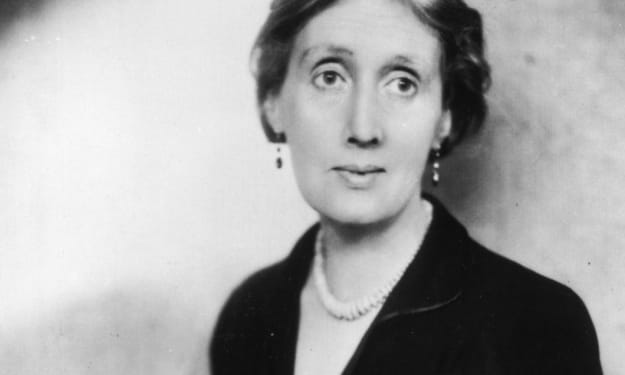
"The Mark on the Wall and Other Short Fiction" by Virginia Woolf
Virginia Woolf is often known as a revolutionary of prose and often used themes that were new and hyper-realist. When it comes to existentialism, Woolf often uses realistic observations of the modern world to captivate the reader, sending them on a journey of language through her wild and yet, poetic style of prose in which she will compare the tiniest molecule of life to the entire universe and the object and idea itself all at once. This style of realism is often considered to drift from the storyline, but within these existential ideas is Woolf’s own thoughts veer the reader back to the main plot via an observation on life that is something to do with the actual title and plot. This shows that there is far more to the plot than what the title may suggest and also shows that there may be more than one meaning to the title of which we have not realised until we have read the entire thing. Virginia Woolf also uses thrilling ideas of nature and the natural state of being that constitutes life and death - stating that the anthology was written in “a flash, as if flying, after being kept stone breaking for months…” - the idea seems to be to make the anthology look as if it had been written in only a few drafts and from most ideas that came from the top of her head and from the depths of her heart. There are many themes that link us to other books by Virginia Woolf such as the themes of existentialism and hyper-focus that are worked in to the depths of “Jacob’s Room” (1922) and the realism of emotion in the acts of the mundane that are most often associated with “Mrs Dalloway” (1925) are seen in many of the short stories within this particular text. With darker themes than many Woolf readers may be used to and the arguments of philosophy are introspective to a new degree since the stories are shorter than Woolf’s usual writings. Therefore, when the reader analyses the text for details, there are perceptions that seem a lot longer than the perceptions of the same situations and philosophies the reader encounters in Woolf’s novellas and novels. However, the themes are relatively the same.
By Annie Kapur6 years ago in Geeks
20 Books of 2020 (Pt.37)
Now that we're well underway into the 700s, I would not only like to say thank you to my readers, friends and online pen-pals, but I'd also like to say thank you to people who have, in real life, had to spend more than five minutes with me. I have realised that I am a pretty one-sided human being from being in lockdown for so long that I'm pretty much stuck with myself. However, it has given me time to improve upon my reading goals that I think I've met so far. Here are the ones I have completed:
By Annie Kapur6 years ago in Geeks
5 Books About the French Revolution
On the 14th of July, 1789, the people of France took matters into their own hands for once and stormed the Bastille Prison, reducing it to nothing as an act of revolution against the monarchy - Louis XVI and Marie Antoinette. After this, there were riots, acts of violence and war against their current regime. It was a revolution that would, along the way, eat itself up and be thrown back up with incredible irony.
By Annie Kapur6 years ago in The Swamp
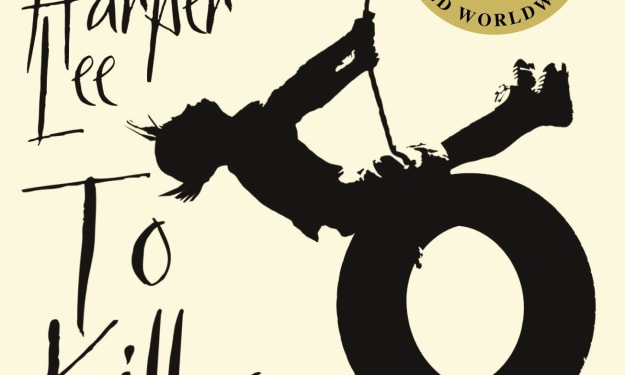
"To Kill a Mockingbird" by Harper Lee
Possibly one of the most well-known and well respected books of all time, "To Kill a Mockingbird" is the best-selling Southern Gothic Novel to ever be published. Released by JB Lippincott and Co. this book became not only an instant success, but also is still widely studied in schools all over the world to this day. Still an important book about prejudice and race relations, this book's main character ("Scout") is famed for growing up in a turbulent political period and her father, the heroic Atticus Finch is known for his strength and his attitude towards the changing American scene.
By Annie Kapur6 years ago in Geeks