Annie Kapur
Bio
I am:
🙋🏽♀️ Annie
📚 Avid Reader
📝 Reviewer and Commentator
🎓 Post-Grad Millennial (M.A)
***
I have:
📖 300K+ reads on Vocal
🫶🏼 Love for reading & research
🦋/X @AnnieWithBooks
***
🏡 UK


Stories (2865)
Filter by community
20 Books of 2020 (Pt.30)
Now that we've reached a milestone in these lists, I just want to say how happy I am that you've all come on this journey with me so far. I managed to get more reading done because of the international lockdown situation that's been going on but slowly, I want to ease away from reading four or five books a day purely out of the fact that I'm not really going anywhere or doing anything. I want to get back to normal, my two to three books a day are more than enough to see me through. I'm starting a bunch of new projects as you've seen and more will be on the way hopefully.
By Annie Kapur6 years ago in Geeks
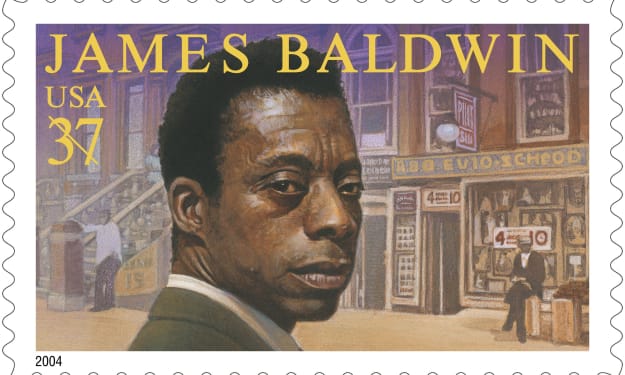
"Go Tell it on the Mountain" by James Baldwin
The first time I ever read “Go Tell it on the Mountain” by James Baldwin I was probably about sixteen years’ old. The way in which I discovered the book was through reading a review about it in another book. Realising I hadn’t read the book it was talking about, I sought out the book, read the book and then re-read the review after falling absolutely in love with the novel. This book really did change the way I thought about African American Novels and opened up a whole new world of literature to me in which children and adults alike were well aware of the experience of growing up African American in a White American Society at what was a pretty turbulent period in modern history. It really influenced my view on African American writing and allowed me to keep it as the standard or the bar for what was to become my investigation into the Harlem Renaissance and its most famous novels.
By Annie Kapur6 years ago in Geeks
A Guide to the Works: JF Powers
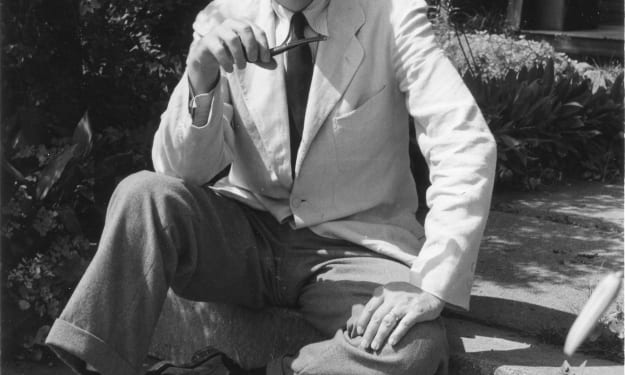
Illinois born author JF Powers is probably best known for his work during the Catholic Revival Era of literature and his characters such as Father Urban from "Morte D'Urban" showcase this in some of the best ways possible. In his work on "The Catholic Imagination in American Literature", theorist Ross Labrie writes about Morte D'Urban as presenting the 'bifurcated nature of the role of the priest' (Labrie, p.183) - which is possibly the clearest way of explaining what most of Powers' fiction. It is a critique of how religion changed in America after the second world war and not only does it have themes of Christianity, it has themes that are linked to the changing view of Christianity at a critical turning point in American industry. There are so many great things about the works of JF Powers and we're going to discuss some of them here today on the anniversary of his death.
By Annie Kapur6 years ago in Geeks
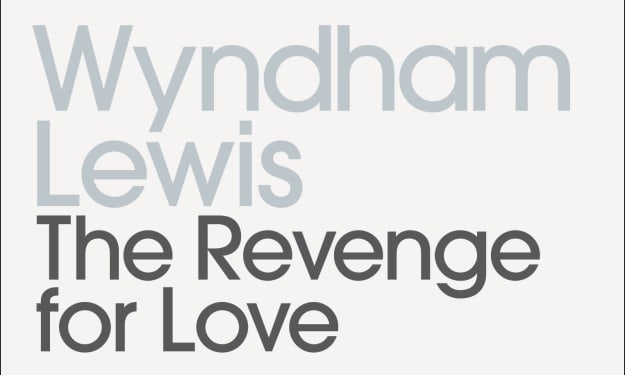
“The Revenge for Love” by Wyndham Lewis
Wyndham Lewis’ “The Revenge for Love” is set in the days of the Spanish Civil War and stars a cast of characters who each have damning secrets, each of them fail to fit in with the rest and they each have some sort of Shakespearean Fatal Flaw that seeks to eat them up from the inside. The book bases itself on the deception of feelings, face, situations and the manipulations of power that are, in most ways, typical of a machiavellian character. Especially where the protagonist, Percy, is concerned - he goes as far as calling Machiavelli’s “The Prince” the book with the most truth ever written. Throughout the novel, masks and deceits play out as complex tensions between various characters and foremost, we have the fact that the protagonist is in jail. From this, the reader is spun off into a turmoil that threatens every character that has dared to become involved with him at all. Whilst the war becomes a political wave of destruction, the characters fail to keep up with the Spanish when it comes to revolution as fast as physically possible. The non-Spanish characters fail to also meet the standards required and find themselves lying even about their own identities to appear to be all on the same side. It is this that leads the reader to the end of the novel and yet, there is no real ending at all.
By Annie Kapur6 years ago in Geeks
"Less Than Zero" by Bret Easton Ellis
I first read “Less Than Zero” by Bret Easton Ellis when I was sixteen years’ old and I was just about to finish school and go to sixth form. I discovered the book on a shelf at the library whilst I was looking at Nick Cave’s “The Death of Bunny Munro”. It was a bright yellow, like a light bulb with pink capital letters that said “Less than Zero” across it. A silhouette of every American teenaged boy ever and a look of almost complete despair about the book even though it was brightly coloured, made me want to read that one and put Nick Cave on hold until the next day. Little did I know that I would become obsessed with this book for just over a year and everything I did, even to the way I spoke, contained lines that came from this text.
By Annie Kapur6 years ago in Geeks
"The Island of Dr. Moreau" by HG Wells
The first time I read “The Island of Dr. Moreau” by HG Wells, I was possibly about twelve years’ old and really only read it because the cover looked really cool. It was pretty short and I asked myself how long it would really take me to finish and whether I could make it last the whole weekend because it was a Friday. I ended up taking two books home and the other one was ‘Heart of Darkness’ by Joseph Conrad, so I had a somewhat interesting weekend ahead of me. My first reading experience of Dr. Moreau was intense. I actually couldn’t put it down, I was scared I would miss something. I read it like it was the last book I was ever going to read. I was absolutely immersed in the story of Edward Prendick’s doomed journey. The book really did change my perspective on the fine line between adventure books and sci-fi/horror novels. There was a very fine line and I really couldn’t tell where this book was on it. Sometimes it felt like an adventure and other times it was absolutely terrifying.
By Annie Kapur6 years ago in Geeks
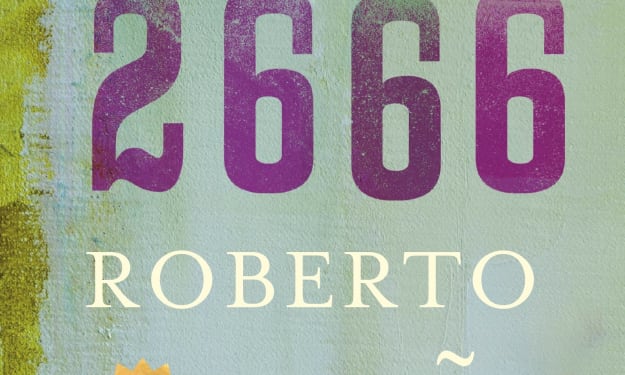
“2666” by Roberto Bolaño
This book is based around a series of murders that happen in the location of Santa Teresa whilst a strange German man is committing acts of hedonism through his life. The plot is very strange because the two, upon first glance, have little to no connection. The book is divided up into five different sections, starting with “the part about the critics” and ending with “the part about Archimboldi”. Along the way, we meet a series of wonderful and enlightening characters each with their own experience of being human and yet, each of them have had something to say about the way in which they perceive death as both a physical and an idea. The book’s genre eluded me to begin with. At first, I believed it was more of a thriller, maybe mixed with a saga or romance section here and there. But as I read on and on through the parts about Fate, crime etc. I came to the conclusion that the book itself is a piece of social commentary. Though the genre may be a psychological thriller, the book serves as social commentary on the safety of the individual when they are/are not connected to other individuals who do wrong and how you can often get dragged into things that do not directly involve you.
By Annie Kapur6 years ago in Geeks
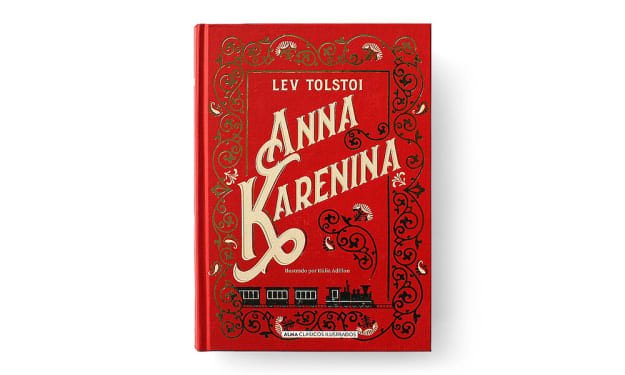
"Anna Karenina" by Leo Tolstoy
I read the book “Anna Karenina” when I was around fifteen years’ old and I’m not going to lie to you when I say that I bought a special notebook in which I wrote down the names of the main characters and who they were married to, who they were related to, who they were friendly and not friendly with. I would write key points about the places they lived and their personalities, I would write things about their often strained marriages - starting with the obvious affair that Stefan Oblonsky had with a French Maid. Therefore, you can imagine that my first reading experience of this novel was pretty intense stuff. I was entirely consumed and obsessed with it. Every detail fascinated me and I spent ages looking for that very particular point for when Anna becomes ostracised from high society Russia. This book entirely changed my perception of sorrow and grief in literature because no matter what Anna did wrong, it was normally done in good faith in order to escape a lifestyle in which she was either dealt a bad hand, or pushed and coaxed towards dulling or muting herself for the sake of another. Whether these can therefore truly be called ‘mistakes’ on her part is still a question I have to answer.
By Annie Kapur6 years ago in Geeks
20 Books of 2020 (Pt. 29)
Today I would like to say a few words about pairing classic literature with a favourite drink. Now, I've always been one to love a drink whilst doing some classic reading not only because it helps with the mood and ease into it, but also because it helps somewhat with the atmosphere. I say 'somewhat' because it helps with the atmosphere when you've got the correct drink for the book. Now, you can interpret this 'correct drink' as you wish, but here are a few of mine that I would like to share with you:
By Annie Kapur6 years ago in Geeks
A Filmmaker's Guide to the Best Performances: Dean Martin
An original member of the famed 'Rat Pack' and nicknamed 'The King of Cool', Dean Martin is remembered as a great singer and actor and also a massive influence on to the music scene of jazz, blues and big band along the same lines as his good friend, Frank Sinatra.
By Annie Kapur6 years ago in Geeks
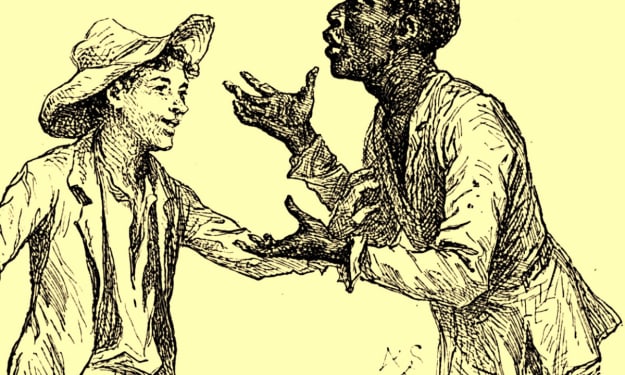
"The Adventures of Huckleberry Finn" by Mark Twain
It has been a long, long time since I have first read Huckleberry Finn. When I was a little girl of about seven or eight, there was an illustrated version that was written for very small children, a simplification of the story that I would read. When I was about eleven, I sought out the real thing and pretty much skipped Tom Sawyer because I heard it wasn’t very good. I only read it when I was thirteen and managed to slip my fingertips into Don Quixote. I really don’t remember how that happened at all, I just remember having the book. No idea where i got it from. Huckleberry Finn managed to change my opinions of the possibilities for children’s literature. Apparently, children’s literature could be sophisticated and hyper-realistic even though it was written in a dialect and contained some questionable language uses. It was one of those books that when you first read it, it moves you in its sheer realism, its heartbreaking emotion and the way it takes you away on one of the greatest journeys the Mississippi River has ever seen.
By Annie Kapur6 years ago in Geeks
50 Great American Novels
The Great American Novel (or the GAN as it is sometimes called) is something that has always been up for debate because of the fact America has had such an incredible output of literature in a far shorter space of time than other countries. The question of which epic best represents America was never really there, but the question of which piece of literature best represents the American experience has always been there since the country first put out its literary culture upon the world.
By Annie Kapur6 years ago in Geeks