Irshad Abbasi
Bio
Ali ibn Abi Talib (RA) said 📚
“Knowledge is better than wealth, because knowledge protects you, while you have to protect wealth.
Stories (597)
Filter by community
Lost Islamic History
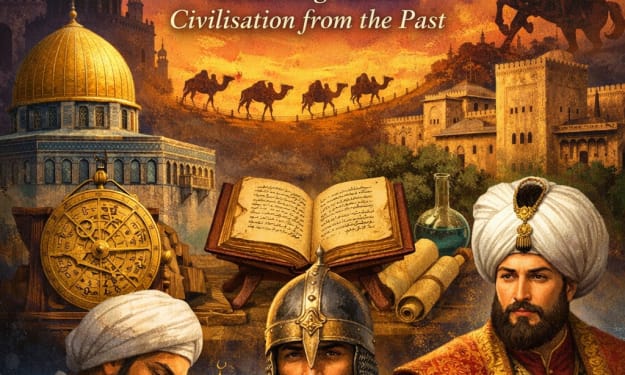
In recent years, the book Lost Islamic History: Reclaiming Muslim Civilisation from the Past has The book was written by Firas Alkhateeb, an American researcher, educator, and historian who specialises in Islamic history and thought. First published in 2014 in the United Kingdom by Hurst & Co., it has since been republished in expanded editions (including a 2017 revised version) and translated into several languages including Urdu, Turkish, Bengali, and Indonesian.
By Irshad Abbasi 14 days ago in BookClub
The Golden Islamic Era
Insights from Baroness Saeeda The Islamic Golden Age, spanning roughly from the 8th to the 14th century, stands as one of the most remarkable periods of intellectual, cultural, and scientific development in human history. Scholars, scientists, and philosophers flourished in an environment that highly valued learning, reason, and documentation. Among the towering figures of this era, Imam Muhammad ibn Ismail al-Bukhari (810–870 CE) occupies a place of unparalleled significance, not only in Islamic scholarship but in the history of knowledge itself.
By Irshad Abbasi 14 days ago in History
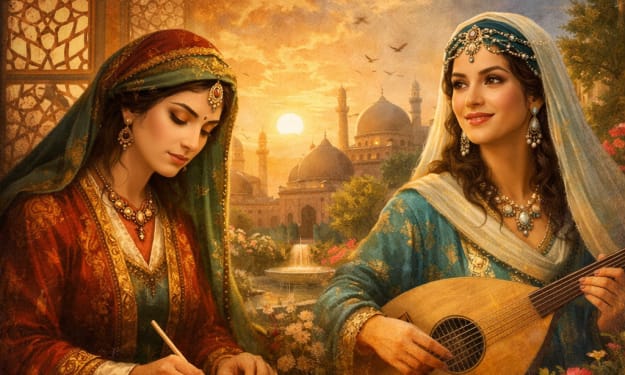
How Music Bridged Faith and Humanity
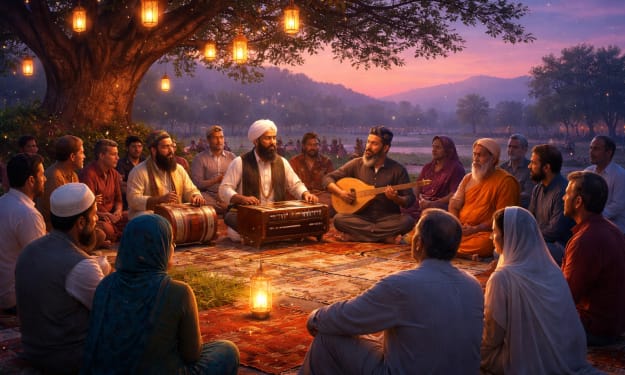
Throughout human history, music has been more than mere entertainment—it has been a universal language capable of transcending boundaries of culture, language, and even religion. One of the most profound examples of this is the tradition of evening music gatherings, where melodies and rhythms have served as bridges between diverse communities, softening rigid social and religious walls and creating spaces of shared humanity.
By Irshad Abbasi 14 days ago in Beat
Lucknow Beyond Borders
When people hear the name Lucknow, they often think of the historic city in northern India—a place renowned for its refined culture, poetic language, royal cuisine, and architectural elegance. Known as the heart of the former Awadh region, Lucknow symbolizes grace, etiquette (tehzeeb), and a rich blend of traditions shaped by centuries of history. However, what many may not realize is that Lucknow is not confined to India alone. Its name, identity, and influence stretch far beyond geographical borders.
By Irshad Abbasi 14 days ago in Beat
Echoes of London in the Heart of Kolkata
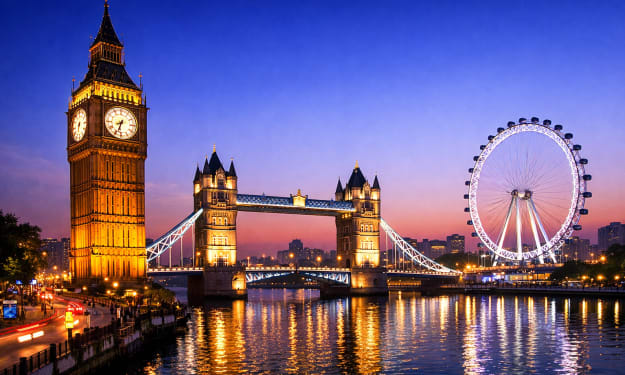
Title: Subtitle: Article (≈700 words): In a surprising blend of cultures and architectural inspiration, the bustling Indian city of Kolkata has embraced echoes of London through the creation of replicas inspired by some of the British capital’s most iconic landmarks. From the towering silhouette reminiscent of Big Ben to structures evoking the grandeur of Tower Bridge and even a version of the famous London Eye, Kolkata presents a fascinating example of how global architecture can be reimagined in a local context.
By Irshad Abbasi 14 days ago in Beat
From Sanctuary to Symbol of Fear
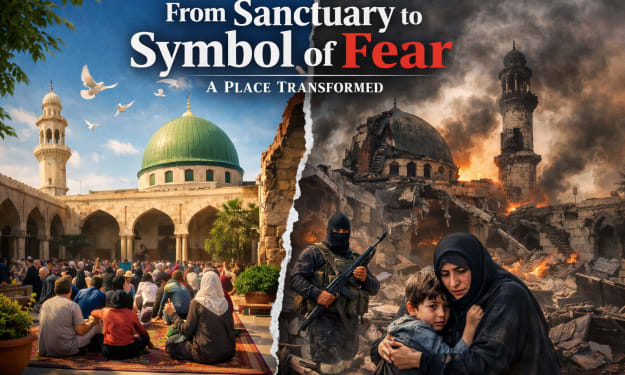
Article (≈700 words): There are places in the world that once stood as powerful symbols of peace, unity, and human connection. These were spaces where communities gathered not only to worship or reflect, but also to find comfort, belonging, and hope. Over time, however, some of these sanctuaries have undergone tragic transformations. What was once a center of harmony has, in certain cases, become a symbol of fear—its meaning reshaped by conflict, violence, or neglect.
By Irshad Abbasi 14 days ago in History
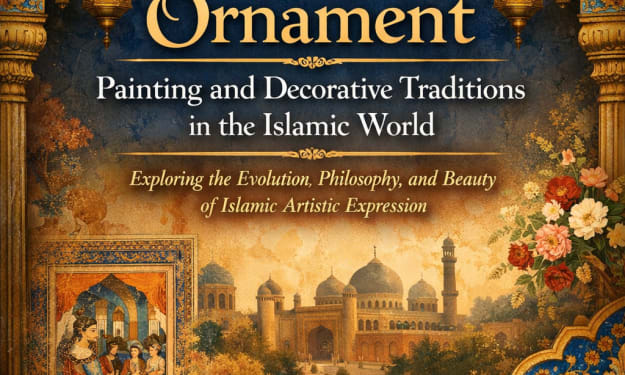
The Art of Ornament
The world of Islamic art is rich, diverse, and deeply rooted in both spiritual and cultural traditions. Among its many forms, painting and decorative arts—often referred to as “naqashi”—hold a unique place. Unlike Western artistic traditions that emphasize realism and human depiction, Islamic painting developed its own distinctive language, shaped by religious values, regional influences, and a profound appreciation for geometry, nature, and symbolism.
By Irshad Abbasi 14 days ago in Art
The Rise of Glassmaking in the Islamic Era
The craft of glassmaking reached remarkable heights during the period often referred to as the Islamic Golden Age. While glass production existed long before this era in regions such as ancient Egypt and Rome, it was under Islamic rule that the industry truly flourished, blending artistic expression with scientific advancement. From the 8th to the 14th centuries, Muslim artisans and scholars transformed glassmaking into a sophisticated and highly influential craft that would shape industries across Europe and beyond.
By Irshad Abbasi 14 days ago in Art
The Golden Age of Islam
The name Harun al-Rashid often evokes images of dazzling palaces, wise rulers in disguise, and tales filled with intrigue and adventure. Known as one of the most famous Abbasid caliphs, his legacy exists at the crossroads of history and legend. While his reign marked a true golden age of Islamic civilization, much of what people believe about him comes from literary imagination, particularly stories like One Thousand and One Nights. Understanding Harun al-Rashid requires separating documented historical achievements from the myths that later surrounded his name.
By Irshad Abbasi 14 days ago in History
Voices of Love and Defiance
The Islamic Golden Age is often celebrated for its intellectual brilliance—its advancements in science, philosophy, and literature. Yet, within this flourishing cultural landscape, the voices of women are frequently overlooked. Among the most compelling figures to emerge from medieval Persian literature are Rabia Balkhi and Mahsati Ganjavi, two (women poets) who infused poetry with deeply personal expressions of love, longing, and resistance. Their works not only challenged social norms but also expanded the emotional and linguistic boundaries of Persian poetry.
By Irshad Abbasi 14 days ago in Beat
The Lost Greek Monastery
For over a century, historians, archaeologists, and adventurers have been captivated by the mystery of a “lost” Greek monastery said to be hidden in a remote and rugged landscape. The story began with a fragile, hand-drawn map believed to date back several hundred years. Passed through generations and rediscovered in the early 20th century, the map pointed to a secluded location where a once-thriving monastic community was thought to have vanished without a trace. However, after decades of tireless searching, a surprising conclusion has emerged: the map that inspired the quest was wrong.
By Irshad Abbasi 14 days ago in History
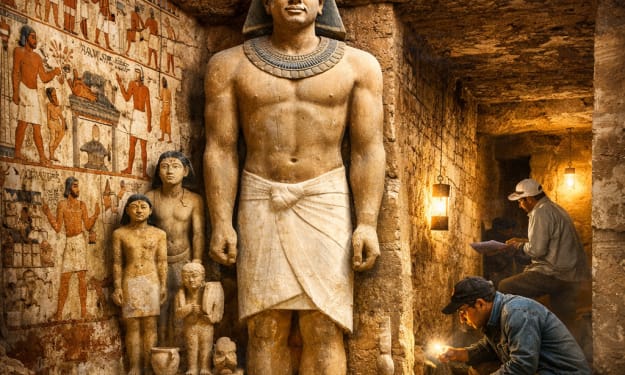
4,400‑Year‑Old Priest’s Tomb Unearthed in Saqqara
Archaeologists in Egypt have made a remarkable discovery that is captivating historians and Egyptologists around the world: an exceptionally well‑preserved tomb belonging to an ancient priest that dates back approximately 4,400 years. The burial site, found in the vast necropolis of Saqqara just south of Cairo, reveals extraordinary insights into the life and religious beliefs of a high‑ranking official during Egypt’s Old Kingdom period.
By Irshad Abbasi 14 days ago in History