Irshad Abbasi
Bio
Ali ibn Abi Talib (RA) said 📚
“Knowledge is better than wealth, because knowledge protects you, while you have to protect wealth.
Stories (600)
Filter by community
Voices of Love and Defiance
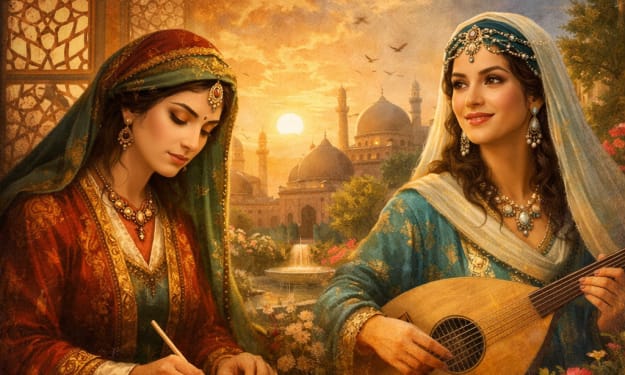
The Islamic Golden Age is often celebrated for its intellectual brilliance—its advancements in science, philosophy, and literature. Yet, within this flourishing cultural landscape, the voices of women are frequently overlooked. Among the most compelling figures to emerge from medieval Persian literature are Rabia Balkhi and Mahsati Ganjavi, two (women poets) who infused poetry with deeply personal expressions of love, longing, and resistance. Their works not only challenged social norms but also expanded the emotional and linguistic boundaries of Persian poetry.
By Irshad Abbasi 15 days ago in Beat
The Lost Greek Monastery
For over a century, historians, archaeologists, and adventurers have been captivated by the mystery of a “lost” Greek monastery said to be hidden in a remote and rugged landscape. The story began with a fragile, hand-drawn map believed to date back several hundred years. Passed through generations and rediscovered in the early 20th century, the map pointed to a secluded location where a once-thriving monastic community was thought to have vanished without a trace. However, after decades of tireless searching, a surprising conclusion has emerged: the map that inspired the quest was wrong.
By Irshad Abbasi 15 days ago in History
4,400‑Year‑Old Priest’s Tomb Unearthed in Saqqara
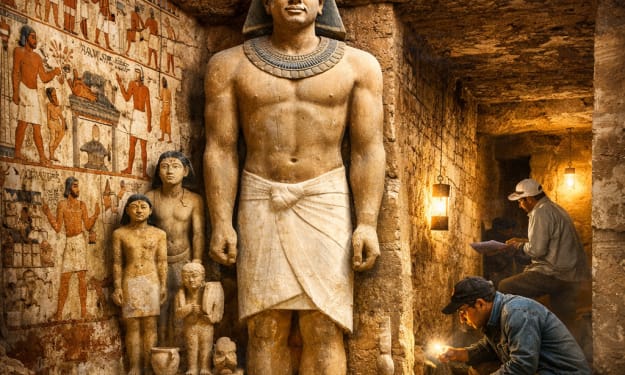
Archaeologists in Egypt have made a remarkable discovery that is captivating historians and Egyptologists around the world: an exceptionally well‑preserved tomb belonging to an ancient priest that dates back approximately 4,400 years. The burial site, found in the vast necropolis of Saqqara just south of Cairo, reveals extraordinary insights into the life and religious beliefs of a high‑ranking official during Egypt’s Old Kingdom period.
By Irshad Abbasi 15 days ago in History
Rumours of a Pharaoh’s Curse Spark Panic After Ancient Sarcophagus Unearthed in Egypt
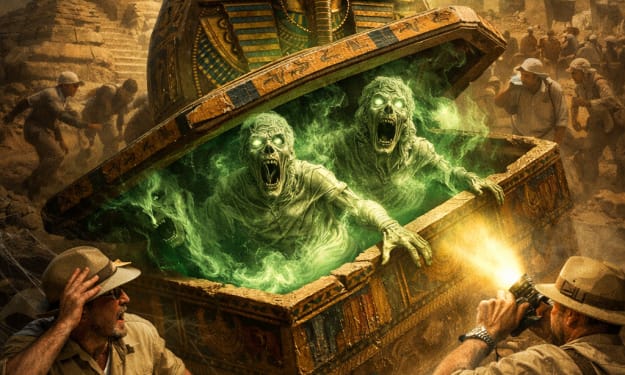
In recent days, a bizarre wave of rumours has swept across Egypt following the unveiling of an ancient stone sarcophagus, purportedly dating back to the time of the pharaohs. The rumours claimed that opening the coffin had unleashed a supernatural disaster or curse upon the country, igniting fear on social media and among local communities. However, experts in archaeology and Egyptology have firmly dismissed these claims as myths rooted in folklore rather than fact.
By Irshad Abbasi 15 days ago in History
Did Alexander the Great’s Beloved Plot to Drown Him?
The life of Alexander the Great, the legendary Macedonian conqueror, is filled with extraordinary military campaigns, political intrigue, and legendary romances. Among these tales, one of the most enduring—and controversial—is the story involving his wife, Roxana of Bactria. According to some historical anecdotes and later legends, Roxana, the young and beautiful princess whom Alexander married during his campaigns in Central Asia, may have harbored intentions of betrayal. One particularly dramatic narrative claims that she tried to drown him—a story that continues to captivate historians and storytellers alike.
By Irshad Abbasi 15 days ago in History
The Skeleton Lake of the Himalayas
High in the rugged mountains of the Indian Himalayas lies one of the world’s most mysterious and haunting archaeological sites—Roopkund Lake, often called Skeleton Lake. Located at an altitude of about 5,029 meters (16,500 feet) in the Indian state of Uttarakhand, the small glacial lake is surrounded by steep snow-covered peaks. What makes this remote location extraordinary is the presence of hundreds of ancient human skeletons scattered around its shores and beneath its icy waters.
By Irshad Abbasi 15 days ago in Earth
The Mystery of Skeleton Lake
Hidden high in the rugged mountains of the Indian Himalayas lies one of the world’s most mysterious archaeological sites: Roopkund Lake, widely known as “Skeleton Lake.” Nestled at an altitude of more than 5,000 meters (16,500 feet), this small glacial lake becomes visible only when the snow melts during warmer months. What makes the site extraordinary is the eerie discovery of hundreds of human skeletons scattered around and inside the lake, creating one of the greatest unsolved mysteries in the Himalayas.
By Irshad Abbasi 15 days ago in Earth
The Fall of Nimrud
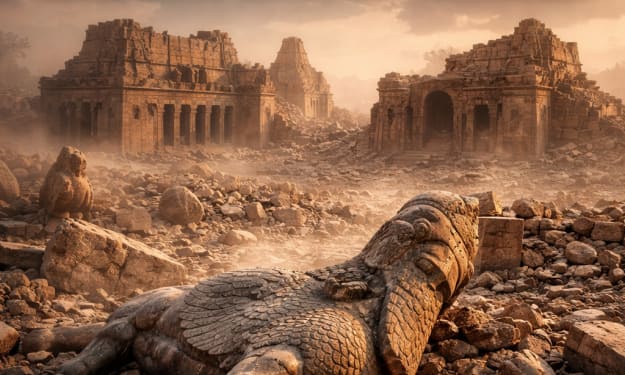
The ancient city of Nimrud—one of the most important archaeological treasures of the ancient world—has reportedly been completely destroyed, according to a statement from a militia commander operating in northern Iraq. The claim that the historic site has been “100 percent destroyed” has sparked renewed concern among historians, archaeologists, and international organizations dedicated to protecting cultural heritage.
By Irshad Abbasi 15 days ago in History
The World’s Largest Natural Pressure Cooker
Hidden beneath the beautiful landscapes of Yellowstone National Park lies one of the most powerful geological systems on Earth. Famous for its geysers, hot springs, and colorful thermal pools, Yellowstone is not just a national park—it is the surface expression of a gigantic volcanic system known as the Yellowstone Caldera. Because of the immense heat, pressure, and gases trapped beneath the ground, scientists often describe this system as the world’s largest natural pressure cooker.
By Irshad Abbasi 15 days ago in Earth
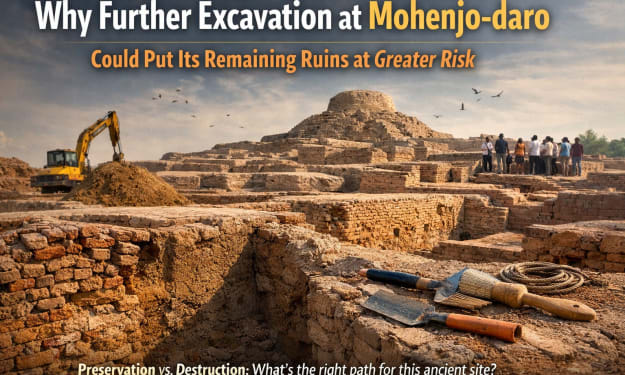
Why Further Excavation at Mohenjo-daro Could Put Its Remaining Ruins at Greater Risk
Mohenjo-daro is one of the most important archaeological sites in the world. As a major city of the Indus Valley Civilization, it offers rare insight into one of the earliest urban cultures in human history. Located in present-day Sindh, Pakistan, the site is admired for its advanced town planning, drainage systems, brick architecture, and organized streets. Yet despite its historical greatness, Mohenjo-daro is also extremely fragile. This is why the question must be asked seriously: why should further excavation be allowed if it may place the remaining ruins in even greater danger?
By Irshad Abbasi 15 days ago in History
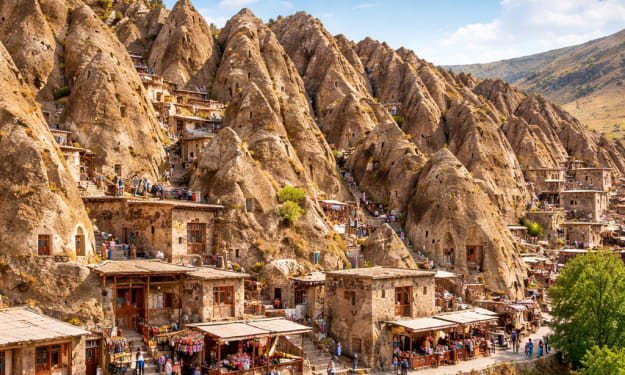
Have You Seen Iran’s Cave Village?
Have you ever seen a village where people still live inside caves? In Iran, there is such a place, and it feels almost like something from a fantasy story. The village is called Kandovan, and it is one of the most unique and beautiful places in the country. Located in the East Azerbaijan province, near the city of Tabriz, Kandovan is famous for its rocky homes that were carved into cone-shaped cliffs formed by volcanic activity thousands of years ago.
By Irshad Abbasi 15 days ago in History
India’s Jewel in the Global Cultural Heritage
Ahmedabad, the largest city in the western Indian state of Gujarat, has recently been recognized as part of the global cultural heritage, a testament to its historical, architectural, and cultural significance. Founded in the 15th century by Sultan Ahmed Shah, the city has grown from a strategic trading hub into a thriving metropolis that harmoniously blends history with modernity. Its inclusion in the list of global cultural heritage sites highlights not only Ahmedabad’s unique past but also its ongoing contributions to art, architecture, and culture.
By Irshad Abbasi 15 days ago in 01