World History
The “Bhagat Singh of Sindh” Remembered in India but Forgotten in His Own Homeland
History is filled with stories of brave individuals who sacrificed everything for the freedom of their people. Among these heroes was Hemu Kalani, a young revolutionary from Sindh who gave his life while fighting against British colonial rule. Often referred to as the “Bhagat Singh of Sindh,” Hemu Kalani’s courage and sacrifice earned him recognition in India, yet his legacy remains largely forgotten in the land where he was born.
By Irshad Abbasi 27 minutes ago in History
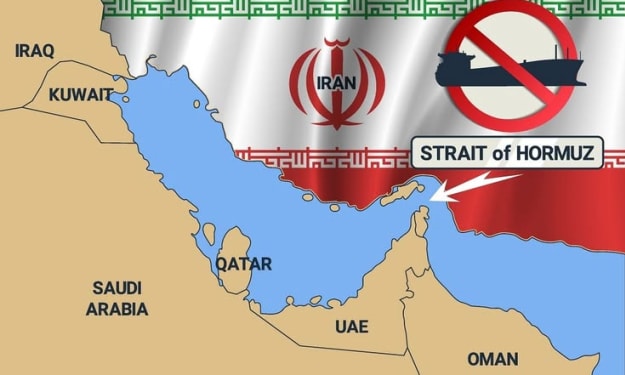
The Strait of Hormuz: When the World Held Its Breath
The sea was calm, but the tension in the air was anything but peaceful. At the narrow waters of the Strait of Hormuz, one of the most important shipping routes on Earth, warships began to appear on the horizon. Oil tankers slowed down, merchant ships changed their routes, and the world watched nervously.
By Imran Ali Shahabout 2 hours ago in History
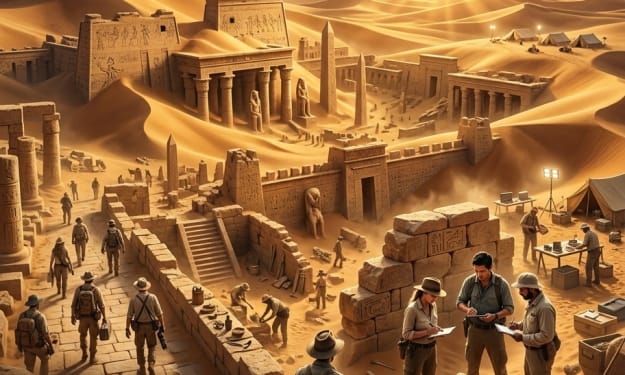
The Hidden City Beneath the Desert: A Discovery That Shocked the World
For centuries, vast deserts around the world have been seen as empty and lifeless landscapes. Endless waves of sand stretch for miles, hiding whatever once existed beneath them. But sometimes, the desert keeps secrets—secrets so extraordinary that when they are finally discovered, they can change history itself.
By Irshad Abbasi about 8 hours ago in History
The ‘Lone Warrior’ of Freedom Who Declared an Independent Pashtun State
The history of the subcontinent’s struggle against colonial rule is filled with famous leaders, mass movements, and political negotiations. Yet hidden within these narratives are figures whose stories remain lesser known but deeply fascinating. One such personality was Fakir of Ipi, a tribal leader from the rugged mountains of Waziristan who spent decades resisting British authority and later opposed the creation of Pakistan. Known to many as the “lone warrior of freedom,” Fakir of Ipi became a symbol of tribal resistance and a controversial advocate for an independent Pashtun homeland.
By Irshad Abbasi about 8 hours ago in History
The “Rebel” Who Faced Karachi’s First Military Court in the 19th Century
In the early decades of the 19th century, Karachi was far from the bustling megacity it is today. It was a small but strategically important coastal town whose control became crucial after the British East India Company expanded its influence in Sindh. Amid this transformation emerged a dramatic and largely forgotten story—the trial and execution of Chakar Notak Kalmatī, a local tribal figure who became the first person to receive the death penalty from Karachi’s earliest military court.
By Irshad Abbasi about 8 hours ago in History
The Munshi Whom Even Kings Admired
Throughout history, the power of knowledge has often stood quietly beside the power of the throne. While kings ruled with authority and armies, there were individuals whose influence came not from swords but from words. Among them were the Munshis—scholarly scribes, advisors, and masters of language—whose intellect and skill earned them admiration even from the most powerful rulers.
By Irshad Abbasi about 9 hours ago in History
The Economic Cost of Empire: How British Rule Drained India’s Wealth
For nearly two centuries, the Indian subcontinent remained under British colonial rule. From the mid-18th century until 1947, British policies reshaped India’s political, social, and economic systems. While the British administration introduced railways, legal systems, and modern institutions, historians and economists widely argue that colonial rule resulted in a massive transfer of wealth from India to Britain. This economic extraction has often been described as the “drain of wealth,” a concept that attempts to estimate how much financial loss India experienced during colonial rule.
By Irshad Abbasi about 10 hours ago in History
Giants of the Ancient Jungle: Dinosaurs’ Reign and Extinction
Imagine stepping into a misty prehistoric jungle where the ground trembles beneath your feet. Towering conifers and giant ferns stretch toward the sky, forming a dense green canopy under a warm, humid climate. Strange sounds echo through the forest—deep roars, snapping branches, and the distant thunder of massive footsteps. In this ancient world, survival is a constant struggle.
By imtiazalamabout 10 hours ago in History
When the Portuguese Turned the Tide of Indian History
The arrival of the Portuguese in India at the end of the 15th century marked a turning point in the history of the Indian Ocean and the Indian subcontinent. What began as an ambitious maritime expedition soon transformed into a powerful political and economic presence that reshaped trade routes, introduced new cultural influences, and altered the balance of power in the region.
By Irshad Abbasi about 10 hours ago in History
Hasan-i Sabbah’s Garden of Paradise: Legend or Historical Reality?
Among the many legends of medieval history, few stories are as fascinating and controversial as the tale of the “Garden of Paradise” associated with Hasan-i Sabbah. He was the founder and spiritual leader of the Nizari Ismaili movement in Persia during the 11th and early 12th centuries. From his mountain stronghold at Alamut Castle, Hasan-i Sabbah built a powerful and mysterious network of followers who became known in Western literature as the “Assassins.” One of the most enduring legends about him is the claim that he created a secret garden designed to resemble paradise, where young recruits were tricked into believing they had experienced heaven.
By Irshad Abbasi about 11 hours ago in History