feature
Pet Life featured post, a Pet Life Media favorite.
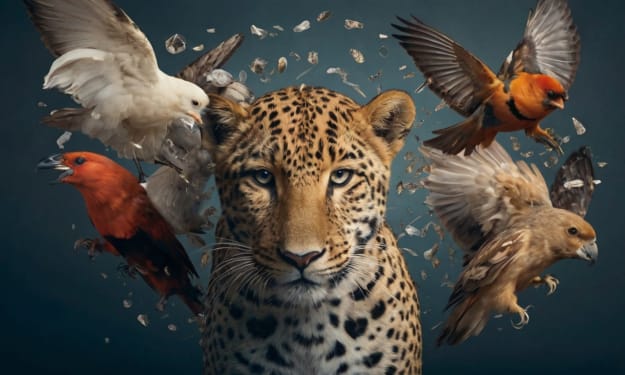
Inside the Animal's Mind A Symphony of Senses [an unofficial challenge]
For centuries, mankind has looked at the collective of animals with a blend of interest and dissatisfaction. We wonder about their effortlessness, their power, and their apparently outsider ways of behaving. However, the subject of what really happens inside their psyches stays an enrapturing secret. We can't take advantage of their viewpoints, yet through a blend of science, perception, and a smidgen of creative mind, we can endeavor to look into their reality.
By Bikash Purkait2 years ago in Petlife
Welcome, Levi!
Back many moons ago, when I was still working for the orthodontist who started my love affair with dairy goats, I had a favorite buck named "Erroll." He was a super-special purebred LaMancha buck, sweet and gentle even though he weighed close to 150 pounds. I could lead him around with a rope around his neck, although he was strong and could have crushed me like a bug in his paddock. Erroll was born what most people would consider "red," but his color faded over time to an almost clear white. His massive forelock and his ridiculous long beard gave him a nearly comical expression. I was crushed when we discovered that the abscess on his jaw was symptomatic for Caseous Lymphadenitis (CL), a disease probably brought in by a buck or a doe that had been purchased within the previous three years.
By Kimberly J Egan2 years ago in Petlife
EXPERIENCE IN CULTIVATION OF AQUATIC MOSS. AI-Generated.
1. What is the most technically correct way to grow moss in an aquarium? Moss is a very beautiful plant and can be present in all aquarium designs from Asian aquariums, Dutch aquariums to the simplest home aquariums. Moss can be trimmed to shape and used in fish breeding as well as providing foraging, sheltering and growing areas for small ornamental fish and shrimp. Usually tied or glued to driftwood or rocks.
By Ken Daklak2 years ago in Petlife
Dolphins Remember Each Other . AI-Generated.
Long-term social memory, a crucial cognitive faculty, holds ecological significance as it facilitates the identification of memorable social bonds. For species such as the bottlenose dolphin, possession of such memory could serve as a vital tool in evaluating social threats and alliances within their intricate and dynamic social structure, which encompasses socialization, hunting, and other group-related activities. A noteworthy study conducted in 2013 provided evidence that dolphins possess the ability to recognize each other over extended periods, challenging the prevailing perception of their memory span.
By Jenna Deedy2 years ago in Petlife
Why Dairy Goats?
As I sit here, getting ready to write, it occurs to me that I am blessed. I don't have a perfect life, not by any means. Last week, such a tough one, was testament to that. Fortunately, we came through it. No one died, although my car was comatose for a bit, and I'm capable of smiling and shaking my head about it as I sip my coffee, cooled by fresh goat milk. I've just come inside from the garden, where I've spent a half an hour walking, weeding, taking pictures, and getting adoration from my cat, Little Brown. I've done my morning walk-by with the goats, and, as soon as I'm done here, I'll be out to milk Sunshine.
By Kimberly J Egan2 years ago in Petlife
Nicole The Show-Stopper
Nicole, a cat with striking black stripes on her orange fur, still vividly occupies my memory with her playful demeanor and unique presence in our family. She was a star, a really image of joy that until now is still engraved in my heart. Among the nine feline members, Nicole stood out as our version of Garfield—charismatic and unmistakably special, my child, a show-stopper.
By Dominique Alcantara2 years ago in Petlife
Aquarium Belugas Have Playful Mouth-to-Mouth Interactions
Within the animal kingdom, physical contact makes up a vital modality of social interaction. For mammals, a diverse array of social contact types exists, including affiliative contact (e.g., nuzzling, rubbing, holding), maternal-infant contact, sociosexual contact, social grooming, and aggressive contact (e.g., biting, scratching, wrestling). These behaviors present distinct forms and functions. Mother-infant contact, for instance, encompasses maternal behaviors that foster social bonds and development during the initial year of an infant's life. Remarkably, many animal species rely upon social contact as an essential aspect of their existence. It facilitates the consolidation of bonds within their social groups and mediates conflicts. Juvenile bottlenose dolphins exemplify this, as they engage in sociosexual contact, often leading to enduring bonds.
By Jenna Deedy2 years ago in Petlife
The Greedy Lion
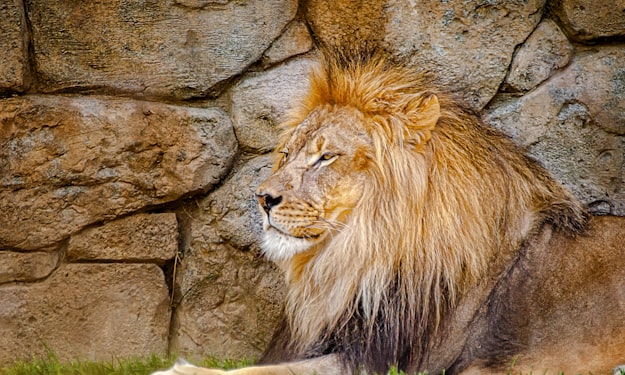
Once upon a time, in the heart of a lush jungle, there lived a magnificent lion named Leo. With his golden mane and powerful roar, Leo was revered by all the creatures of the jungle. He ruled over his domain with grace and wisdom, ensuring harmony among the various animal clans.
By quizat karim2 years ago in Petlife
Right Whale Mother’s Death Raises Concerns About Vessel Strikes. Content Warning.
On March 30th, 2024, off the coast of Virginia, marine researchers regretfully discovered the deceased body of "Catalog #1950," a 35-year-old North Atlantic right whale mother, shortly after giving birth to her sixth calf. This tragic incident marks the fourth documented mortality of a North Atlantic right whale in United States waters this year.
By Jenna Deedy2 years ago in Petlife
Orca: Two Different Species?
For several decades, researchers have acknowledged the existence of three distinct killer whale ecotypes in the world's oceans: the fish-eating residents, the mammal-eating transients, and the offshore killer whales that feed primarily on sharks in the open ocean. In the Pacific Northwest, researchers have extensively studied both resident and transient killer whale populations, particularly their cultural practices related to hunting. Recently, there has been a scientific debate about whether these two killer whale populations belong to the same species but exhibit different hunting abilities or make up separate species. A new study published in The Royal Society Open Science on March 27, 2024, suggests that these two killer whale populations may indeed be distinct species.
By Jenna Deedy2 years ago in Petlife