Discoveries
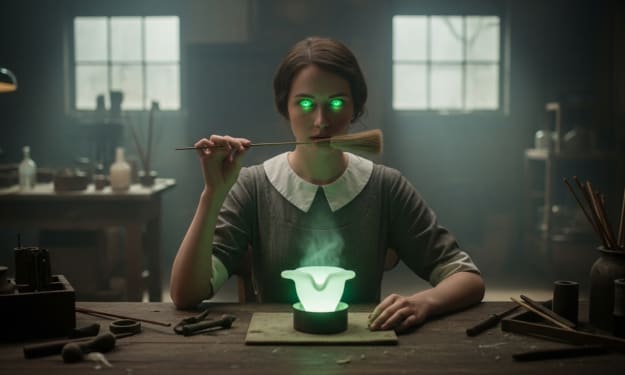
The 1920s Radium Girls: The girls who "glowed in the dark" while their jaws literally fell off from painting watches.
The camel-hair brush felt soft against her lower lip, a fleeting, tickling sensation that tasted faintly of copper and gritty sand. Grace Fryer smoothed the bristles with her tongue, shaping them into a needle-thin point before dipping the tip back into the Undark—a luminous, pale-green slurry that looked like trapped moonlight. It was a rhythmic, almost meditative dance. Lip. Dip. Paint. The numbers on the watch dial bloomed with a ghostly fire under her steady hand. By the time the whistle blew at the United States Radium Corporation factory in New Jersey, Grace’s dress was flecked with the dust of stars. She would go home and stand in her dark bedroom, watching her own reflection in the mirror. She glowed. Her hair shimmered; her buttons burned with a soft, visceral light. She was a living lantern.
By The Chaos Cabinet3 days ago in History
Inside the Hunt for the Other Humans
The first sign that something was wrong wasn’t the silence—it was the absence of interruption. No distant engines, no chatter bleeding through thin walls, no sudden bursts of laughter from unseen neighbors. Just a stillness so complete it felt intentional, as if the world had paused mid-breath and forgotten how to continue.
By Irshad Abbasi 3 days ago in History
The Rise and Fall of the Neanderthals
Neanderthals, scientifically known as Homo neanderthalensis, were a group of archaic humans who lived across Europe and parts of western Asia for hundreds of thousands of years. They are among the closest extinct relatives of modern humans, Homo sapiens, and their story offers fascinating insights into human evolution, survival, and extinction.
By Irshad Abbasi 3 days ago in History
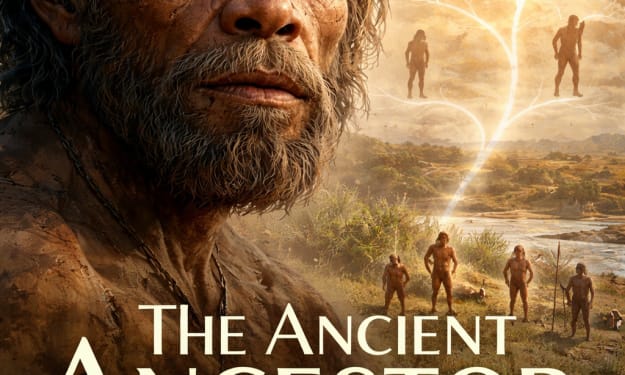
Tracing the Roots of the Homo sapiens Family Tree
The story of human evolution is a vast and intricate tapestry woven over millions of years. For decades, scientists have worked to piece together this complex narrative, searching for clues that reveal where we came from and how we became who we are today. Recently, a remarkable discovery has reignited this quest, pointing to an ancient human ancestor who may lie at the very root of the Homo sapiens family tree.
By Irshad Abbasi 3 days ago in History
Parkdale: A Work in Progress
Parkdale, located in Toronto’s west end between High Park and Liberty Village, is one of the city’s most historically rich and layered communities. It began as a wealthy Victorian suburb in the late nineteenth century, later transforming into a vibrant, working-class neighbourhood shaped by generations of immigrants. Today, Parkdale continues to evolve, often surprising even its harshest critics. While gentrification is on the rise, the neighbourhood has always been defined by its resilience, and that spirit remains as strong as ever.
By Julius Karulis3 days ago in History
Royal nanny to Prince William and Kate's children honored with special medal
In a moment that quietly highlighted the people working behind the scenes of royal life, Maria Teresa Turrion Borrallo—the longtime nanny to the children of Prince William and Catherine Middleton—was honored with the prestigious Silver Royal Victorian Medal. The award was presented on March 24 during a formal investiture ceremony in Windsor, with Prince William himself leading the recognition.
By Shirley Oyiadom3 days ago in History
5 Battles in History Where Divine Intervention Changed Everything
War has been a part of human history for as long as we can remember. From defending territories to protecting loved ones, humans have always found a reason to fight. While strategy, planning, and leadership often decide the outcome of battles, there are moments when fate or perhaps something greater intervenes to tip the scales. Here are five of history’s most decisive battles that were allegedly won thanks to divine intervention.
By Areeba Umair3 days ago in History
Did ‘Hobbit’ Humans Craft Ancient Tools a Million Years Ago?
The discovery of ancient stone tools dating back nearly one million years on the Indonesian island of Flores has reignited one of the most fascinating debates in human evolution: who made them? Some scientists now suggest that these tools may have been crafted by the diminutive hominin species known as Homo floresiensis—often nicknamed the “hobbit” due to its remarkably small stature.
By Irshad Abbasi 4 days ago in History
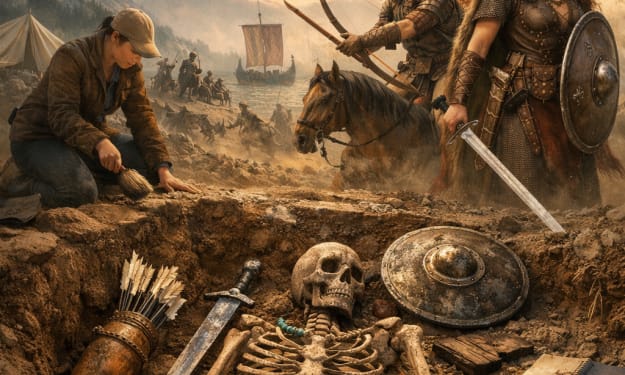
Warrior Women Unearthed
Across windswept степes, frozen northern landscapes, and long-forgotten burial grounds, archaeologists are uncovering a powerful truth: the ancient world may not have been as male-dominated as we once believed. Graves long assumed to belong to male warriors are now revealing something surprising—many of them contain women. These discoveries are reshaping our understanding of gender roles in ancient societies and challenging deeply rooted assumptions about the past.
By Irshad Abbasi 4 days ago in History