Research
The Vanishing Civilization
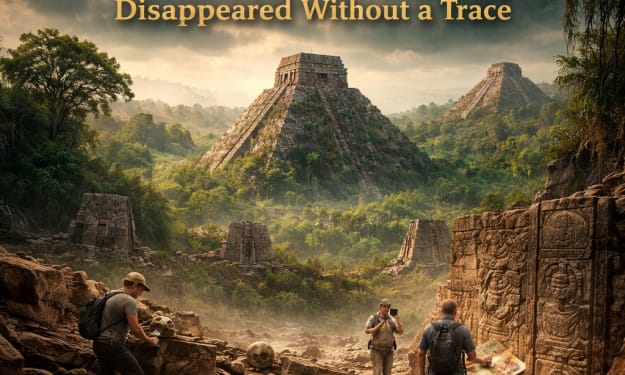
Throughout human history, civilizations have risen, flourished, and eventually declined. Yet some disappearances are so sudden and mysterious that they continue to puzzle experts for centuries. One such case is that of a thriving society that seemed to vanish almost overnight, leaving behind silent cities, abandoned homes, and unanswered questions.
By Irshad Abbasi about 11 hours ago in History
Who Killed Ramesses III?
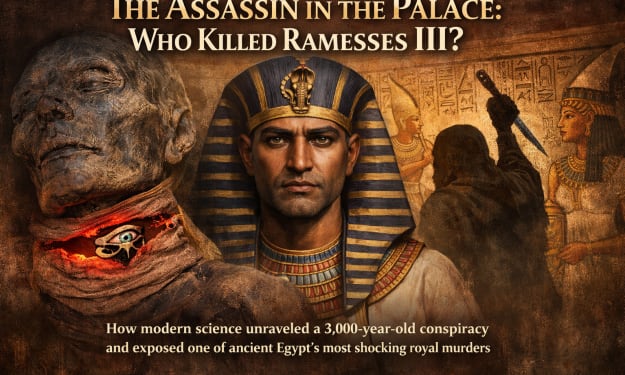
For centuries, the death of Pharaoh Ramesses III—one of ancient Egypt’s last great rulers—remained shrouded in mystery. Historians knew he died around 1155 BCE, but whether his death was natural or the result of foul play was unclear. Ancient texts hinted at intrigue, betrayal, and a palace conspiracy, yet definitive proof remained elusive. It wasn’t until the 21st century that science finally uncovered the truth, revealing a chilling tale of assassination at the heart of the royal court.
By Irshad Abbasi about 11 hours ago in History
The Photographs That Saved the Endurance Expedition from Oblivion
In the most unforgiving place on Earth, where temperatures plunge far below freezing and survival itself becomes a daily battle, a collection of photographs nearly vanished forever beneath the Antarctic ice. These images—captured during the ill-fated voyage of the Endurance—were not just visual records. They were silent witnesses to one of the greatest survival stories in human history. Against all odds, they endured, transforming a near-tragedy into a timeless legend.
By Irshad Abbasi about 12 hours ago in History
Iran’s Mosaic Doctrine Rising
The Mosaic Doctrine: Is Iran Following Israel’s Strategic Playbook? From Defense to Pre-Emptive Intelligence Power In modern geopolitical warfare, few strategic doctrines have shaped intelligence operations like the Mosaic Doctrine, more widely known as the Begin Doctrine. Originally developed by Israeli leadership, this doctrine focuses on preventing enemies from becoming powerful enough to threaten national security — even if that requires covert operations, sabotage, or pre-emptive strikes.
By Wings of Time about 20 hours ago in History
Middle East War: Next Phase Incoming
Middle East War Update: A Dangerous New Phase May Be Approaching The Middle East is once again moving toward a tense and uncertain moment as new developments suggest that the next phase of conflict may be approaching. Military movements, diplomatic warnings, and increased security alerts across several countries have created growing concern among global leaders and analysts. While no official declaration of war has been made, the situation appears to be evolving rapidly, and the coming days may prove critical for regional and global stability.
By Wings of Time 2 days ago in History
“Alone in the Death Zone”
The silent tragedy of David Sharp on the slopes of Mount Everest High above the world, where the air becomes too thin to breathe and the sky turns a darker shade of silence, lies a place climbers fear most—the Death Zone. It begins above 8,000 meters on Mount Everest, where even the strongest bodies start to shut down, and every step feels like a negotiation with fate.
By imtiazalam2 days ago in History
How Isis Conquered the Ancient World
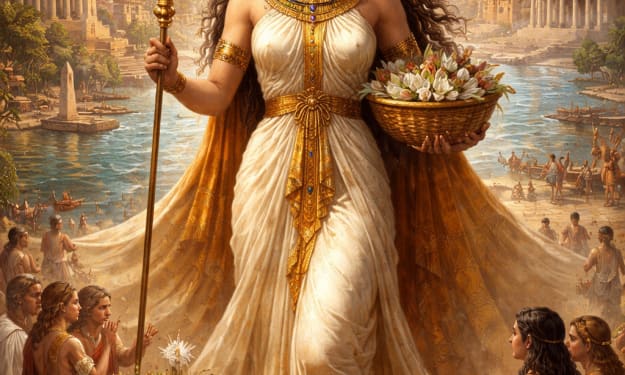
In the ancient world, few deities achieved the level of devotion and international influence as Isis, the great goddess of ancient Egypt. Originally worshipped along the fertile banks of the Nile, Isis evolved from a local deity into a global spiritual figure whose influence stretched across continents—from Egypt to Greece, Rome, and even as far as Roman Britain.
By Irshad Abbasi 3 days ago in History
Animal Worship in Ancient Egypt
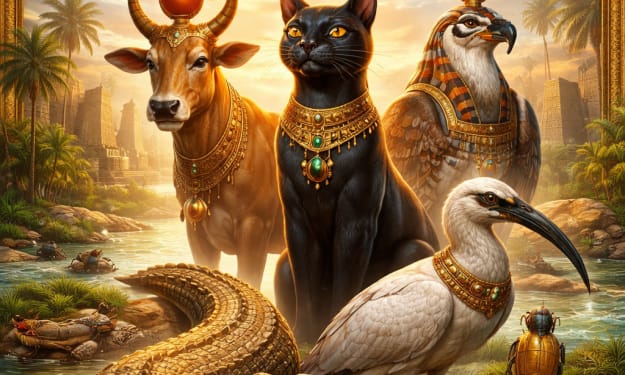
Ancient Egyptian civilization is often remembered for its monumental pyramids, intricate hieroglyphs, and powerful pharaohs. Yet one of its most fascinating aspects lies in its deep reverence for animals. From cats and cows to crocodiles and ibises, animals were not merely part of daily life—they were seen as living manifestations of divine forces. This unique blend of religion and nature shaped Egyptian culture for thousands of years.
By Irshad Abbasi 3 days ago in History
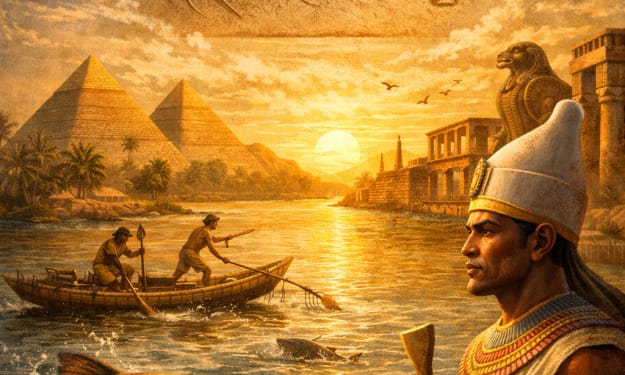
Why Egypt’s First Pharaohs Revered the Humble Catfish
Long before pyramids pierced the desert skyline and monumental temples defined the banks of the Nile, ancient Egypt’s earliest rulers were forming a culture deeply rooted in nature. Among the many creatures that thrived in the life-giving waters of the Nile River, one stood out in both practical and spiritual life: the catfish. To modern readers, the idea of powerful pharaohs revering such a modest creature might seem unusual. Yet for Egypt’s first rulers, the catfish was far more than a source of food—it was a symbol of power, survival, and divine connection.
By Irshad Abbasi 3 days ago in History
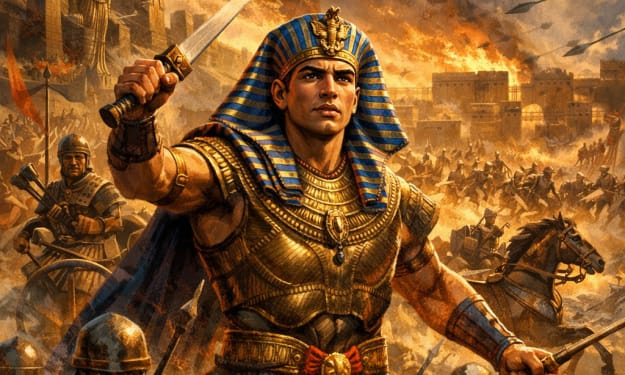
How One Young Pharaoh Changed Egypt Forever
History often turns on moments that seem, at first glance, like just another clash of armies. But every so often, a single battle—shaped by the ambition of one leader—reshapes the destiny of an entire civilization. Such was the case in ancient Egypt, when a young and determined pharaoh led his forces into a confrontation that would elevate his kingdom into one of the greatest powers of the ancient world.
By Irshad Abbasi 3 days ago in History